
Consumer confidence in the United States has grown slightly in March, despite pessimism on the labour market and anticipated higher inflation over the next year amid surging gasoline prices.
The Conference Board’s consumer confidence index unexpectedly edged up 0.8 points to 91.8 points in March.
“Consumer confidence ticked up again in March, as a modest improvement in consumers’ views of current conditions outweighed a slight downshift in expectations for the future,” The Conference Board chief economist Dana M Peterson said.
This is higher than the median estimate of 87.9 points from economists surveyed by Bloomberg.
The present situation index also rose 4.6 points to 123.3. However, the expectations index, which measures consumers’ short-term outlook for income, business, labour, and market conditions, declined by 1.7 points to 70.9.
Peterson also said that consumers’ write-in responses on factors affecting the economy continued to skew towards pessimism.
“Comments about prices and the cost of goods suggest that the cost of living remained at the top of consumers’ minds,” she said.
“As the war in Iran overlapped significantly with the survey sample period, comments about oil/gas and war/conflict spiked, while specific mentions of trade and tariffs decreased notably.”

Amid the Iran war shock, consumers' average and median 12-month inflation expectations surged in March to levels last seen in August 2025.
Consequently, the percentage of consumers stating that interest rates over the next 12 months will be higher on net skyrocketed from 34.9% to 42.4%.
Expectations for higher stock prices a year from now plunged.
This comes as the U.S.-Israel war on Iran has sent global oil prices surging more than 50%, due to the closure of the Strait of Hormuz, where around 20% of the world’s oil is shipped through.
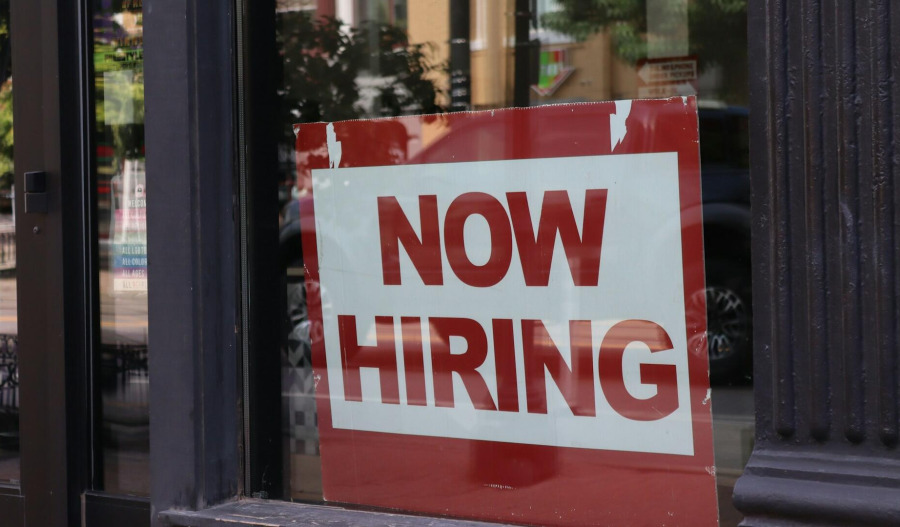
These results come as the unemployment rate rose 4.4% in February from 4.3% in January.
Though economists expect the jobless rate to have been unchanged in March, they acknowledged the risk of it rising to 4.5%.
Job openings decreased 358,000 to 6.882 million by the last day of February, according to the Labor Department’s Bureau of Labor Statistics.
The hiring rate also dipped from 3.4% om January to 3.1% in February.
The Fed left its benchmark overnight interest rate in the 3.50%-3.75% range this month.