United Parcel Service (NYSE: UPS) reported first-quarter earnings that exceeded expectations on both the top and bottom lines. However, shares fell around 4% following the release as investors focused on declining revenue and cautious forward guidance.
The logistics group posted adjusted earnings per share of $1.07, ahead of forecasts of $1.01, while revenue came in at $21.2 billion, slightly above expectations of $20.98 billion.
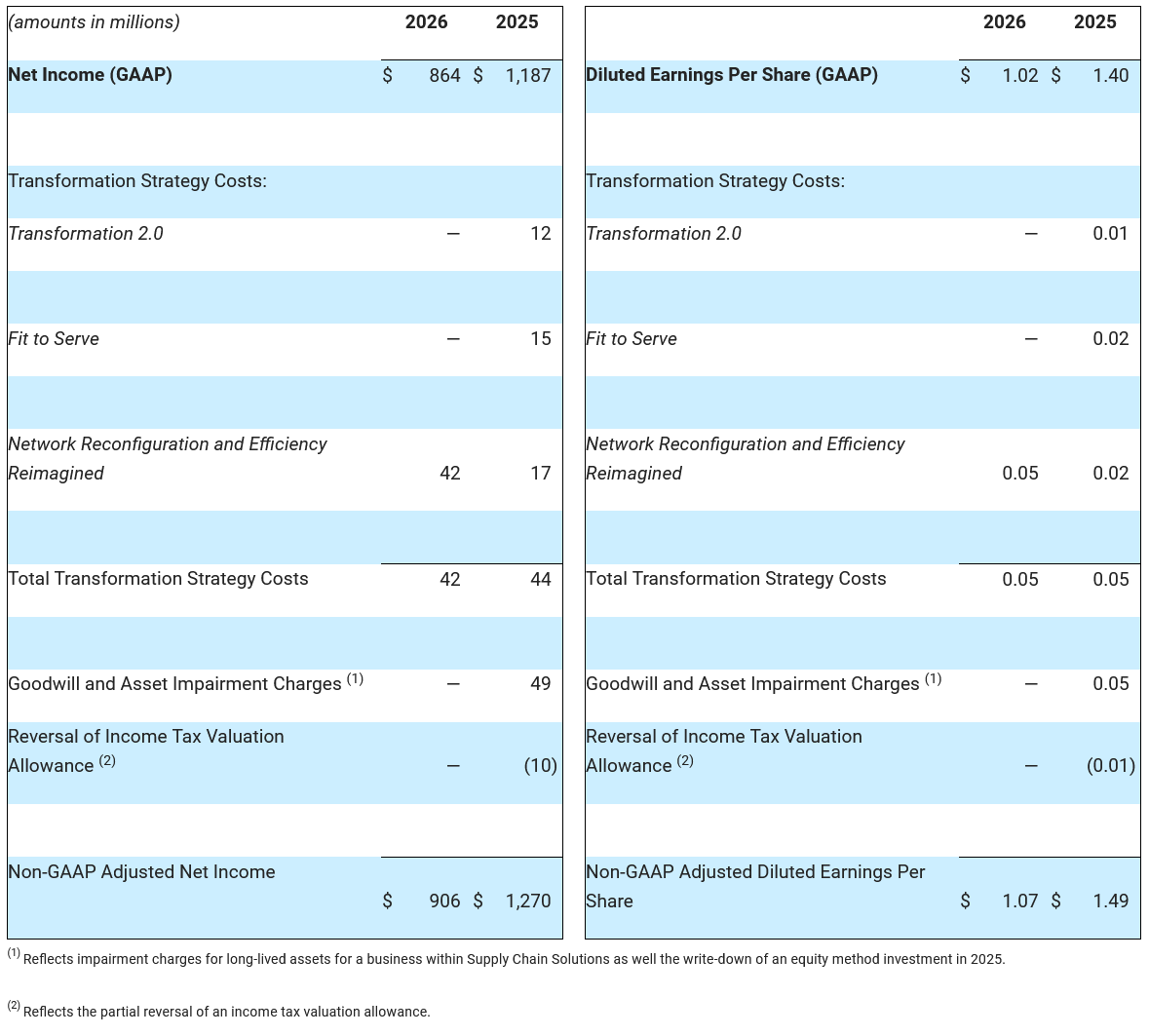
For the quarter ended 31 March, UPS reported net income of $864 million, or $1.02 per share, down from $1.19 billion, or $1.40 per share, in the same period a year earlier.
After adjusting for one-off items, profit totalled $906 million, or $1.07 per share. Revenue declined to $21.2 billion from $21.5 billion a year ago.
“The first quarter of 2026 marked a critical transition period for UPS in which we needed to flawlessly execute several major strategic actions and we delivered,” CEO Carol Tomé said in the earnings release.

“With that behind us, we expect to return to consolidated revenue and operating profit growth, and adjusted operating margin expansion in the second quarter of this year.”
Despite the earnings beat, the company maintained a cautious stance on its outlook. UPS reaffirmed its full-year 2026 guidance, projecting consolidated revenue of $89.7 billion and a non-GAAP adjusted operating margin of 9.6%.
“It is early in the year to raise [guidance],” Tomé said on a call with analysts, adding that there are no indications to be concerned about the health of the business.
Within its core domestic segment, revenue declined 2.3%, largely reflecting an anticipated drop in shipment volumes.
UPS continues to advance its broader turnaround strategy, with a focus on increasing automation across its logistics network. The company reported $600 million in cost savings during the first quarter through its network efficiency programme and reiterated its target of achieving $3 billion in year-over-year savings in 2026.
Executives also noted that fuel surcharges have not materially affected the business, while adding that it remains too early to assess the full impact of the ongoing conflict in the Middle East on operations.
The company maintains a market capitalisation of US$88.34 billion.