United States President Donald Trump has ordered a federal development bank to underwrite political risk insurance for all commercial shipping transiting the Persian Gulf. In a move aimed at containing a surge in global energy prices following joint U.S.-Israeli strikes on Iran, Trump also flagged the deployment of U.S. naval escorts through the Strait of Hormuz.
In a statement posted on Tuesday, Trump said he had directed the U.S. International Development Finance Corporation (DFC) to provide “political risk insurance and guarantees for the financial security of all maritime trade, especially energy, travelling through the Gulf”.
Trump also made it clear that the U.S. Navy would begin escorting tankers “if necessary”.
The intervention comes as Brent crude briefly tested US$80.80 a barrel in Asian trade, its highest level in nearly 15 months, amid fears Iran could disrupt traffic through the world’s most critical oil chokepoint.
The escalation matters directly to Australia.
According to the Australian Department of Industry, Science and Resources, around 90% of Australia’s refined fuel is imported, with a significant share of crude and refined product shipments transiting Middle Eastern sea lanes.
While Australia sources most of its refined fuel from Asia, those refineries depend heavily on Gulf crude.
Any sustained disruption through Hormuz would feed into higher wholesale fuel costs, inflation and transport expenses domestically.
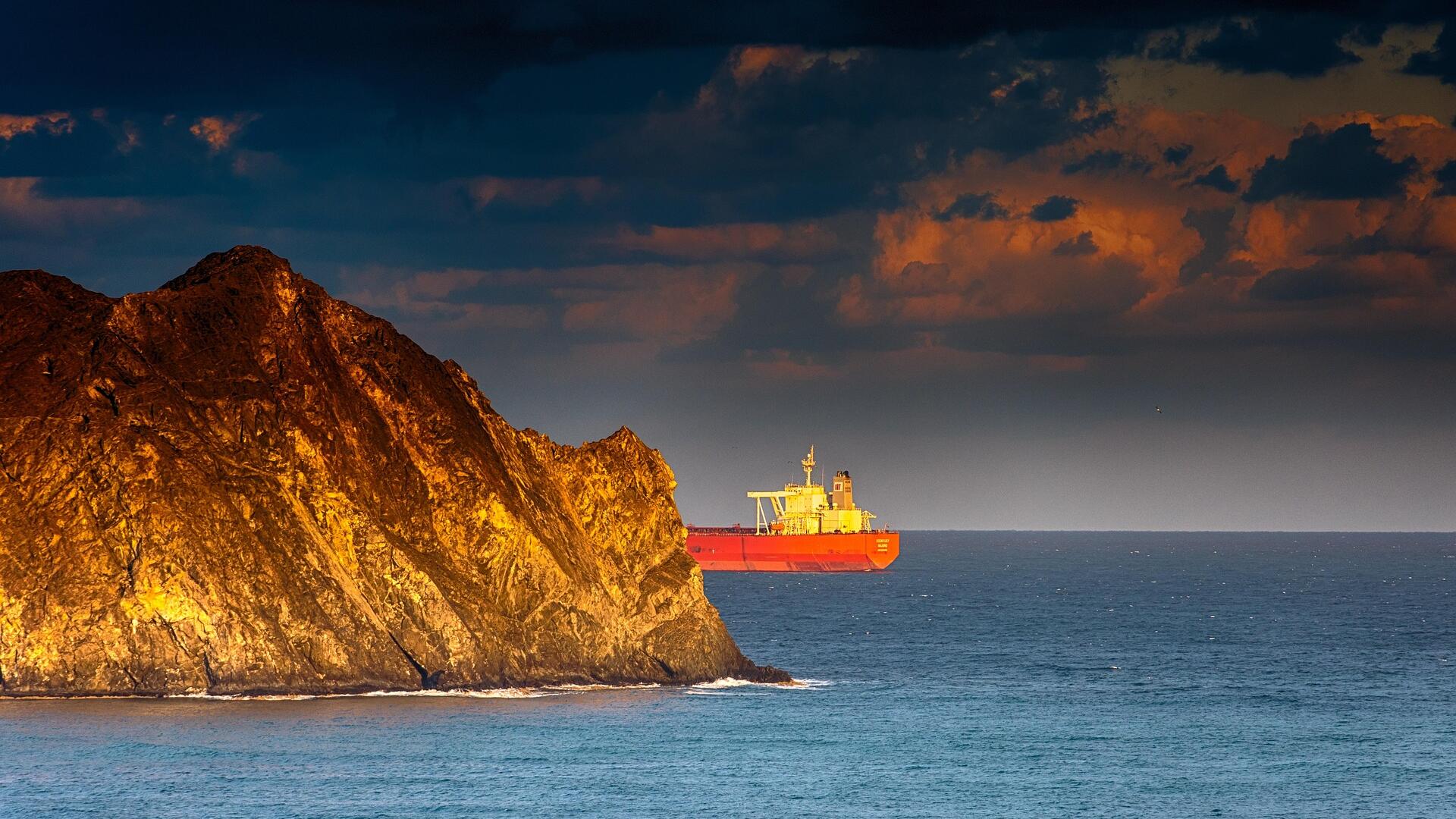
Shipping data compiled by S&P Global Commodities at Sea and reported by U.S. media showed only two oil and chemical tankers transited the strait on Monday, compared with a typical daily average of about 60 vessels.
The corridor normally carries roughly 20% of global oil flows.
Oman’s Maritime Security Centre reported multiple vessel attacks on Sunday, including a U.S.-sanctioned tanker, intensifying market anxiety.
Oil markets had already been trending higher before the weekend strikes.
On 27 February, Brent settled up 2.8% at US$73 a barrel, and West Texas Intermediate rose 2.6% to $67.17.
After markets reopened on March 2, Brent climbed 7.1% to $78.15, while WTI gained 6.2% to $71.33.
Traders attributed the spike to an accumulated geopolitical risk premium following U.S. and Israeli attacks that reportedly killed senior Iranian leaders, including Supreme Leader Ayatollah Ali Khamenei.
The White House has not released detailed terms of the DFC underwriting program.
The DFC traditionally provides political risk insurance against expropriation and political violence for U.S.-linked overseas investments.
Extending cover to “all maritime trade” through Hormuz would represent a significant expansion of its mandate.
Energy analysts told CNN that commercial insurers, including mutual marine underwriters operating in London and Scandinavia, have begun withdrawing war risk cover or sharply increasing premiums for voyages through the Gulf.
Tom Kloza, an independent oil analyst advising Gulf Oil, said the practical effect of Iran’s threats was less about physically blocking the strait and more about rendering transit commercially unviable without insurance.
For Australia, the immediate concern is price transmission.
The Australian Competition and Consumer Commission (ACCC) has previously noted that international benchmark prices flow through to domestic petrol prices with a lag of one to two weeks.
A sustained US$10 a barrel increase in crude can add several cents per litre at the bowser, depending on exchange rates and refinery margins.
There are also strategic implications.
Australia is a U.S. treaty ally and has previously contributed naval assets to coalition maritime security operations in the Middle East.
Any formal U.S.-led escort mission through Hormuz could prompt requests for allied support, raising operational and diplomatic considerations for Canberra at a time when Defence resources are stretched across Indo-Pacific commitments.
Trump said further measures would be announced.