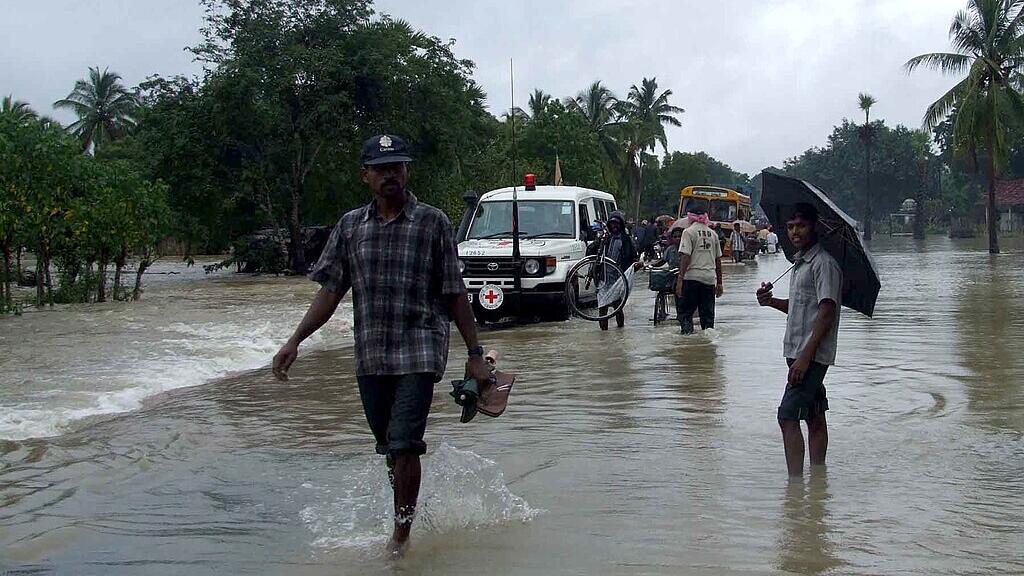
Sri Lanka has declared a state of emergency following floods and mudslides that have killed more than 330 people.
The Disaster Management Centre reported that more than 200 people are missing and around 20,000 homes have been destroyed, sending 108,000 people to state-run temporary shelters.
A state of emergency was declared in the aftermath of Cyclone Ditwah, which officials say has left around a third of the country without electricity or running water.
India was the first to respond to the state of emergency with relief supplies and two helicopters, followed by Japan, which will send in a team to assess immediate needs and provide further assistance.
Evacuation orders are in place in some areas as the water levels of the Kelani River continue to rise rapidly.

President Anura Kumara Dissanayake said this is the "most challenging natural disaster" in the country's history, as the destruction is so severe that estimates for reconstruction were staggering.
The highest number of deaths was recorded in Kandy and Badulla, where many areas remain cut off.
According to Al Jazeera’s Minelle Fernandez, Sri Lanka is struggling to cope with the aftermath of the cyclone.
“Some neighbourhoods are completely buried under mud, and each one brings more despair,” she said.
“Communication has also broken down, and there are some areas that have yet to send updates.”
This is Sri Lanka’s most deadly natural disaster since 2017, when flooding a landslides claimed more than 200 lives and displaced hundreds.