

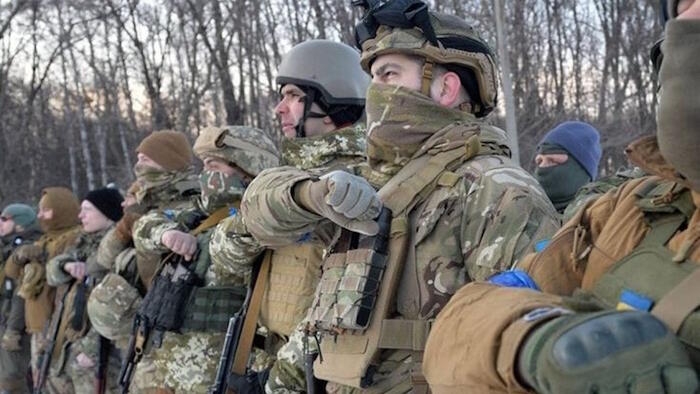
Russia has reportedly increased its military presence along the Ukrainian border, with satellite images showing new troop deployments and heavy equipment.
In response, Ukraine has bolstered its defences by mobilising additional forces and conducting joint exercises with NATO allies.
These movements have heightened tensions and raised concerns about escalation in the region.
A warning was issued by Ukrainian President Volodymyr Zelensky on Friday that Russia planned to send North Korean troops into battle against his country as early as Sunday.
As a result of the training, he has claimed that North Korea is supporting Russia by training 10,000 soldiers.
Here are the latest developments in the Russia-Ukraine dispute:
- Increased Drone and Missile Attacks: Russia launched over 130 drones and missiles targeting Ukrainian cities, including Kyiv. Ukrainian air defences intercepted 51 drones, but a fire ignited at an industrial site in Ternopil, requiring rapid emergency response.
- US Defense Secretary's Visit: Lloyd Austin visited Kyiv to discuss Ukraine's weapons needs and how the US can continue to support the country's military. He emphasised the importance of Ukraine defending its territory and capitalizing on gains in the Kursk region.
- India-Germany Joint Statement: India and Germany expressed deep concerns over the ongoing war in Ukraine, emphasizing its tragic humanitarian consequences and rejecting the use or threat of nuclear weapons. They also highlighted the adverse effects of the war on global food and energy security.
- Economic Sanctions and Aid: German Chancellor Olaf Scholz announced an additional 1.4 billion euros ($1.53 billion) in military aid for Ukraine by the end of 20244. The aid will be given jointly with Belgium, Denmark, and Norway and includes more air defence, tanks, combat drones, and artillery.
These developments underscore the ongoing complexity and severity of the conflict, with international efforts continuing to support Ukraine and address the humanitarian crisis.

The international community has expressed deep concern over the potential for conflict and called for diplomatic solutions to prevent further escalation.
The United Nations and several world leaders have urged both parties to engage in dialogue, stressing the importance of maintaining peace and stability in the region.
Sanctions and economic measures are also considered as potential responses to deter further aggression.
The Russia-Ukraine dispute has deep historical roots, largely stemming from the Soviet Union's dissolution in 1991, when Ukraine gained independence.
Tensions have been fuelled by issues such as Russia's annexation of Crimea in 2014 and the ongoing conflict in Eastern Ukraine, where Russian-backed separatists seek greater autonomy.
These events have led to a complex geopolitical struggle involving territorial claims, national identity, and international alliances.
International organisations such as the United Nations and the Organization for Security and Co-operation in Europe (OSCE) play a crucial role in mediating diplomatic negotiations and monitoring ceasefire agreements.
They can facilitate dialogue between the involved parties to de-escalate the situation and prevent further conflict.
Additionally, these organisations can provide platforms for multilateral discussions and peacekeeping missions to stabilise the region.