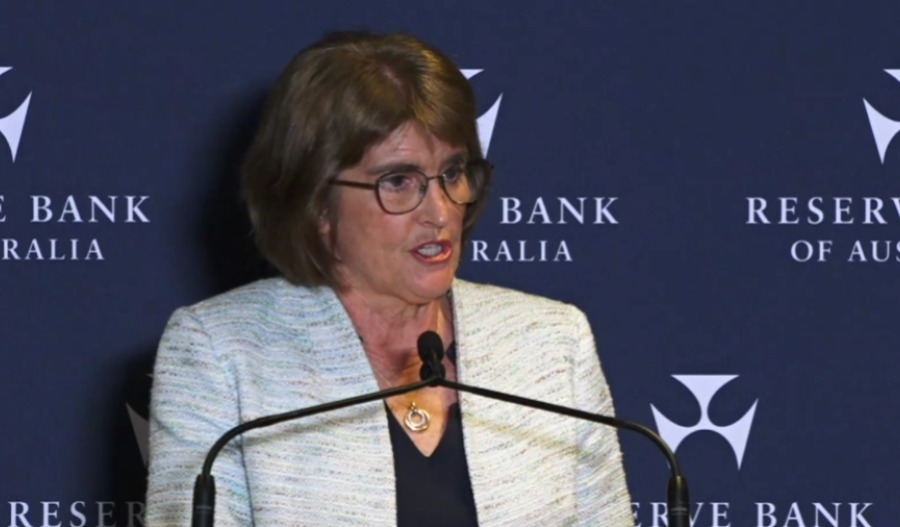

The Reserve Bank of Australia (RBA) was unsure if inflation would return to its target in a reasonable period of time, and that it was too early to assess the economic impact of the rising Middle East conflict, Governor Michele Bullock said on Tuesday.
Bullock said a large part of the unexpected increase in the consumer price index (CPI) since the middle of last year was due to sector-specific demand and price pressures that it expected to ease in the coming quarters.
But economy-wide capacity pressures in the economy were also playing a role and, overall, it thought underlying demand in the economy was further from its supply potential than the central bank had assessed six months ago.
“A range of indicators tell us that labour market conditions are tight. And it is uncertain whether financial conditions are sufficiently restrictive to return inflation to the midpoint of the target in a reasonable timeframe,” she said in a speech to the Australian Financial Review Business Summit.
Bullock said the RBA Board judged that the inflation outlook warranted the 25 basis point lift in the official cash rate to 3.85% in February.
“The staff’s view is that the data we’ve seen since then broadly support their assessment of the outlook at the time of that decision,” she said.

In the statement after its decision and the subsequent minutes of the meeting, the Board noted inflation was too high, and some of the recent increase in inflation was likely to persist.
Staff forecasts did not see inflation coming back into the target band until mid-2027 and thought CPI data for January released after the February meeting broadly supported this assessment.
Headline inflation was 3.8 per cent in the year to January and would continue to be boosted for a time by the unwinding of electricity rebates but underlying inflation, which strips out some large temporary price moves, was also above the top end of the RBA’s 2–3% band.
Bullock said it was too early to estimate the economic impact of the escalating Middle East conflict, which could play out in different ways.
“A supply shock could, for example, add to inflation pressures. And the potential implications for inflation expectations are something we are very alert to,” she told the audience.
“But at the same time, a prolonged impact on energy markets could have adverse effects on global economic activity and result in downward pressure on inflation. It is not obvious how this might play out.”