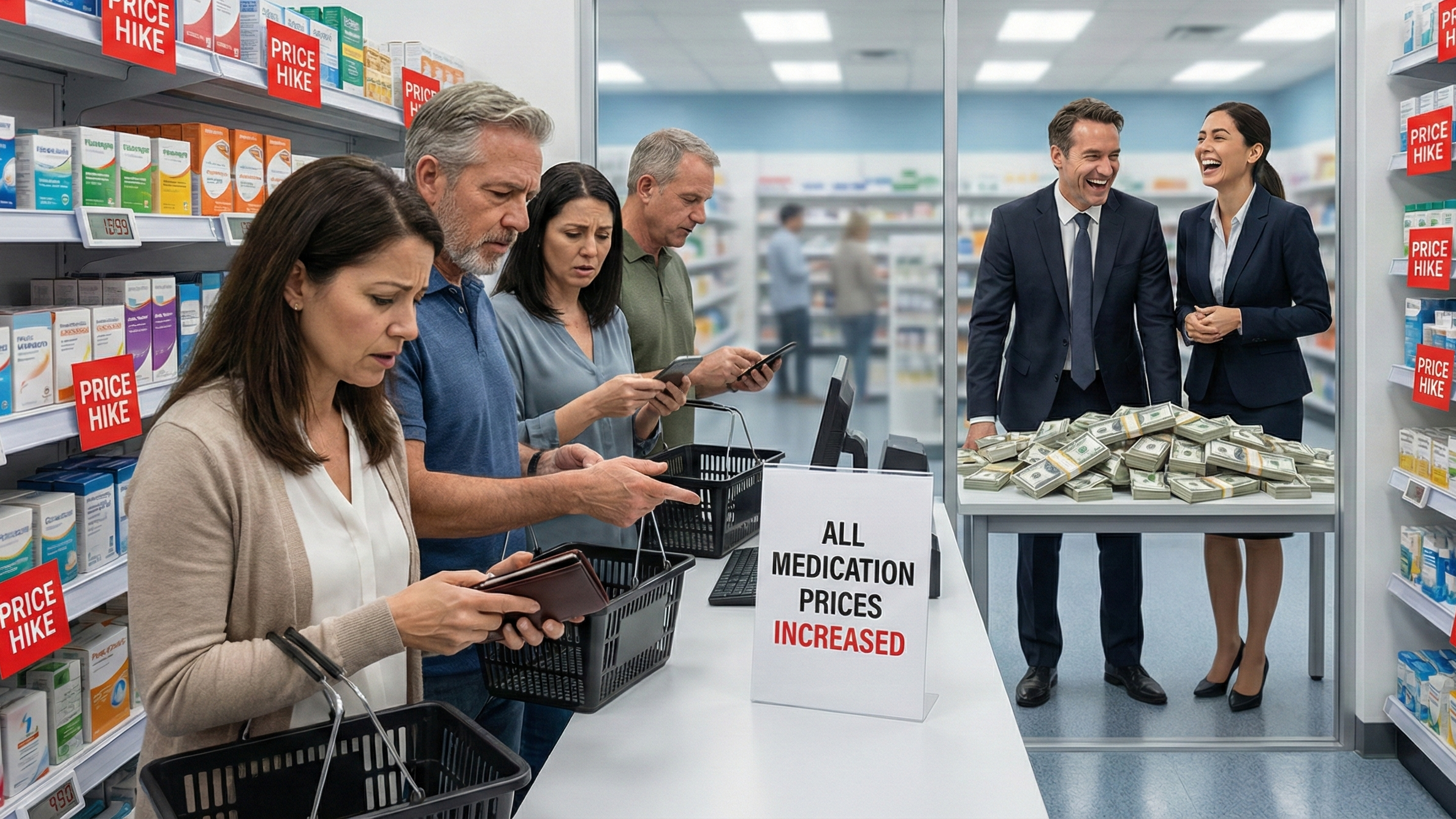
Drugmakers have unleashed a synchronised price hike across over 350 brands, effectively daring the White House to act on its affordability agenda, leaving millions of patients caught in the crossfire of a multi-billion-dollar tug-of-war.
While the administration touts high-profile deals, manufacturers are quietly ratcheting up costs on everything from life-saving cancer therapies to essential vaccines.
Reported by Reuters, pharmaceutical industry leaders such as Pfizer, GSK and Saniofi appear to be front-loading these increases to insulate margins against a looming regulatory crackdown and the onset of federal price controls.
Product data from 3 Axis Advisors captures a staggering 40% jump in the volume of price escalations compared to the same period last year.
Pfizer’s margin preservation
New York-based heavyweight Pfizer has emerged as the most prolific participant in this round of pricing revisions, implementing hikes on ~80 different products.
Revisions cover a wide spectrum of the company’s assets, including the oncological staple Ibrance, migraine treatment Nurtec, and the antiviral Paxlovid.
Notably, Pfizer has boosted the cost of its COVID-19 vaccine, Comirnaty, by 15%, even as global demand for the shot enters a post-pandemic steady state.
Hospital procurement officers have been blindsided by several legacy injectables, such as morphine and hydromorphone, which have seen unit costs 4X.
Justifying the move in a formal statement, Pfizer claimed that average list price movements for its innovative pipeline remain below the overall rate of inflation.
Maintaining these tactical adjustments is vital, according to the manufacturer, to underwrite the massive R&D required for next-generation therapies and to manage rising operational overheads.
Across the Atlantic, UK-headquartered GSK is following a similar script, with plans to hike prices on 20 drugs and vaccines by between 2% and 8.9%.
Manoeuvres like these are essential, GSK insists, to sustain a globally competitive R&D engine and to ensure the delivery of preventative medicine.

Policy v reality
Jarring contrasts exist between the timing of these price surges and the latest optics from the Trump administration.
The White House has recently trumpeted deals with 14 major labs, including Pfizer, GSK, and Sanofi, designed to lower out-of-pocket costs via the TrumpRx platform.
These pacts serve as the cornerstone of a Most Favoured Nation policy, which aims to peg U.S. pricing to the lower benchmarks seen in other wealthy OECD nations.
However, the same entities signing onto these high-profile government deals are simultaneously ratcheting up list prices for the commercial insurance market.
A "gross-to-net" bubble is the result, where the sticker price rises for the public while confidential rebates are negotiated behind closed doors with pharmacy benefit managers (PBMs).
"These deals are being framed as seismic when, in reality, they merely nibble at the fringes of the true cost drivers," notes Dr Benjamin Rome, a health policy specialist at Brigham and Women’s Hospital.
Medicare negotiation
Despite the upward trend in the private sector, 2026 marks a watershed moment as negotiated rates for 10 high-spend drugs finally yield tangible results for the elderly.
A primary example of this shift is the SGLT2 inhibitor Jardiance, co-marketed by Boehringer Ingelheim and Eli Lilly.
Settlement terms have seen the list price for the diabetes therapy trimmed by over 40%, following a deal that slashed its Medicare cost by nearly two-thirds.
This downward adjustment underscores the mounting pressure on legacy blockbusters that have enjoyed years of market exclusivity without significant competition.
Inroads are finally being made by the government into the "rebate wall" that has historically protected high-cost drugs from price erosion.