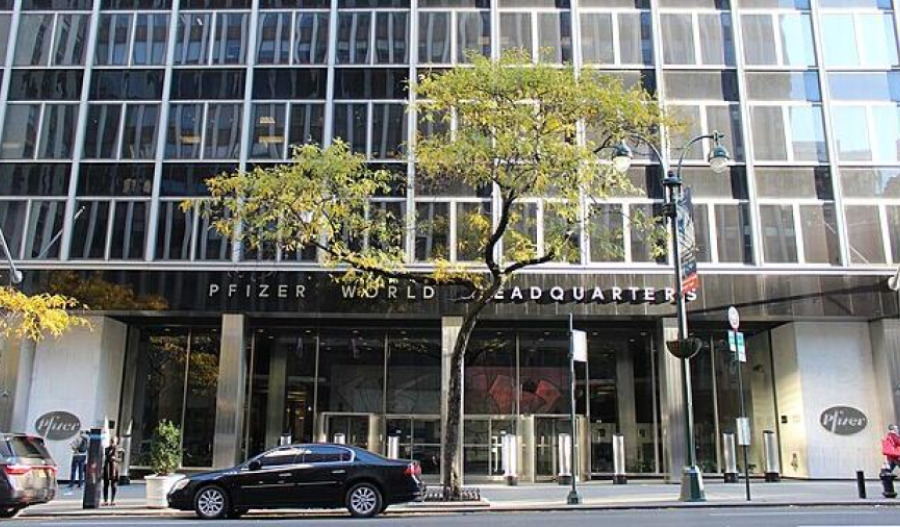

Pfizer has reaffirmed its 2025 earnings per share (EPS) guidance of $3 to $3.15 as it looks to continue its strategy to capture a bigger slice of the global obesity market.
For 2026, the forecast is more tempered, with Pfizer anticipating revenues in the range of US$59.5-$62.5 billion, with adjusted diluted EPS expected to fall between $2.80 and $3.00.
The company attributes this projection to several factors, including a predicted drop in COVID-19 product revenue of about $1.5 billion relative to 2025.
There's also the expiration of patents for key legacy medicines, which is expected to result in another $1.5 billion hit due to loss of exclusivity.
Pfizer says the upcoming period is a transition, with 2026 acting as a potential trough year before the new portfolio assets begin to scale.

Going large on obesity
The company expects to return to revenue growth by 2029, relying on the commercialisation of its newly acquired assets to offset the declining sales of its COVID-19 portfolio and older medicines.
Adjusted R&D expenses for 2026 are projected to be between $10.5 billion and $11.5 billion as the company invests in its late-stage pipeline.
Despite these near-term financial pressures, Pfizer is aggressively pursuing growth through external business development, particularly in the metabolic space.
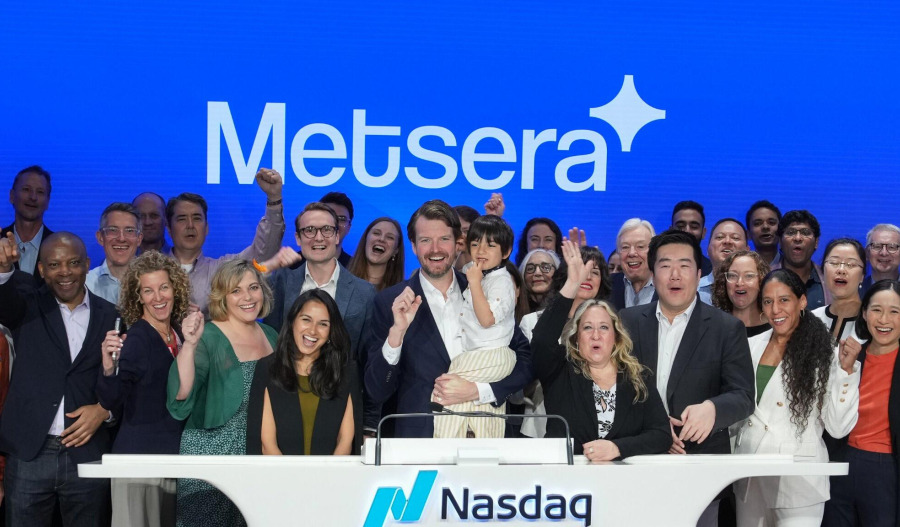
The company recently prevailed in a bidding contest against Novo Nordisk to complete the acquisition of biotech firm Metsera.
Valued at ~$10 billion, the deal gave Pfizer a portfolio of next-gen weight-loss candidates.
Key among them included MET-097i, a monthly injectable GLP-1 receptor agonist, and MET-233i, a monthly amylin analogue, both of which are intended to compete with existing weekly treatments.
Complementing this acquisition, Pfizer has looked to Asia to bolster its oral weight-loss offerings.
The company signed a licence agreement with YaoPharma, a subsidiary of Fosun Pharma, for the investigational asset YP05002.
Pfizer will pay $150 million upfront for the rights to this small molecule GLP-1 candidate, with potential milestone payments bringing the total deal value to $1.9 billion.
The drug is currently in Phase I trials, adding another oral option to Pfizer's clinical program.
And the integration of Seagen, following a $43 billion takeover completed in late 2023, continues to be a primary driver for the company’s long-term plans.
The addition of Seagen’s proprietary antibody-drug conjugate (ADC) technology has doubled the size of Pfizer’s oncology pipeline.