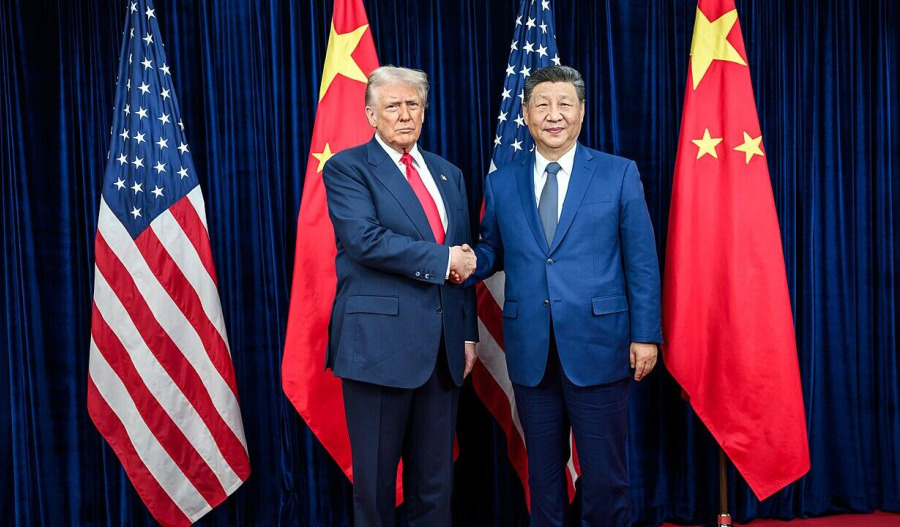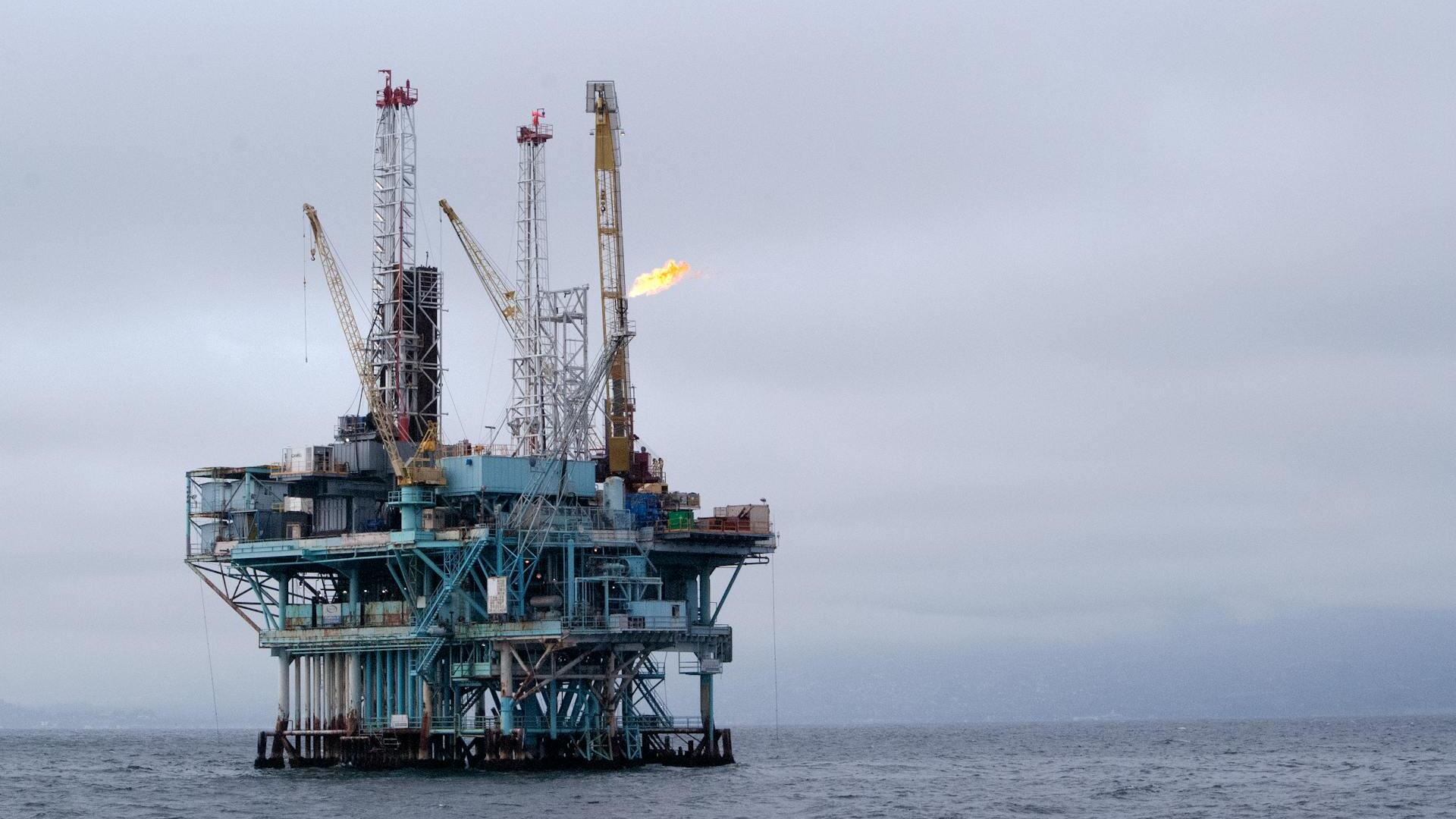
Oil prices edged higher during Thursday's Asian trade as investors closely monitored the high-stakes meeting between U.S. President Donald Trump and Chinese President Xi Jinping for any signs of progress toward easing the Iran conflict, which has severely disrupted global oil supplies.
By 2:30 pm AEST (4:30 am GMT), Brent crude futures rose $0.42 or 0.4%, to US$106.05 per barrel, while U.S. West Texas Intermediate crude futures gained $0.50 or 0.5%, to $101.52 per barrel.
Both benchmark contracts fell 2% and 1.1%, respectively, on Wednesday as investors weighed the possibility of U.S. interest rate hikes amid rising inflationary pressures driven by higher fuel prices.
Trump received a ceremonial welcome at Beijing’s Great Hall of the People ahead of talks with Xi, expected to cover the fragile U.S.-China trade truce, the Iran conflict and U.S. arms sales to Taiwan.
"Oil prices are in a wait-and-see mode," ING commodity strategists noted in The Commodities Feed on Thursday.
“The market could be pinning too much hope on the U.S.-China talks yielding some positive results on Iran.
"Some hope that China could exert pressure on Iran to reach a deal with the U.S., to end the war and lead to a resumption of energy flows through the Strait of Hormuz.”
The Strait of Hormuz, a critical global energy shipping route, has remained largely closed since the conflict began at the end of February.

Although Trump has publicly stated he does not believe he needs China’s assistance to end the war, the president is nevertheless expected to seek Xi’s support in resolving the increasingly costly and politically unpopular conflict.
Meanwhile, the International Energy Agency’s (IEA) Oil Market Report for May showed global oil supply declined by a further 1.8 million barrels per day in April, bringing total supply losses to 12.8 million barrels per day since the U.S.-Israeli conflict with Iran began on 28 February.
“More than ten weeks after the war in the Middle East began, mounting supply losses from the Strait of Hormuz are depleting global oil inventories at a record pace,” the IEA wrote.
The agency also warned of worsening demand destruction as the war weighs on the global economy, forecasting oil demand would contract by 420,000 barrels per day by the end of 2026 to 104 million barrels per day.
“The petrochemical and aviation sectors are currently most affected, but higher prices, a weaker economic environment and demand-saving measures will increasingly impact fuel use,” the IEA said.
Iran has also strengthened its control over the Strait of Hormuz, striking agreements with Iraq and Pakistan to transport oil and liquefied natural gas from the region, according to Reuters, citing five sources with knowledge of the matter.
Reuters also reported that a Chinese supertanker carrying two million barrels of Iraqi crude successfully passed through the Strait of Hormuz on Wednesday, citing LSEG and Kpler ship-tracking data, after remaining stranded in the Gulf for more than two months because of the conflict.
It was only the third oil tanker to exit the strait since hostilities began.