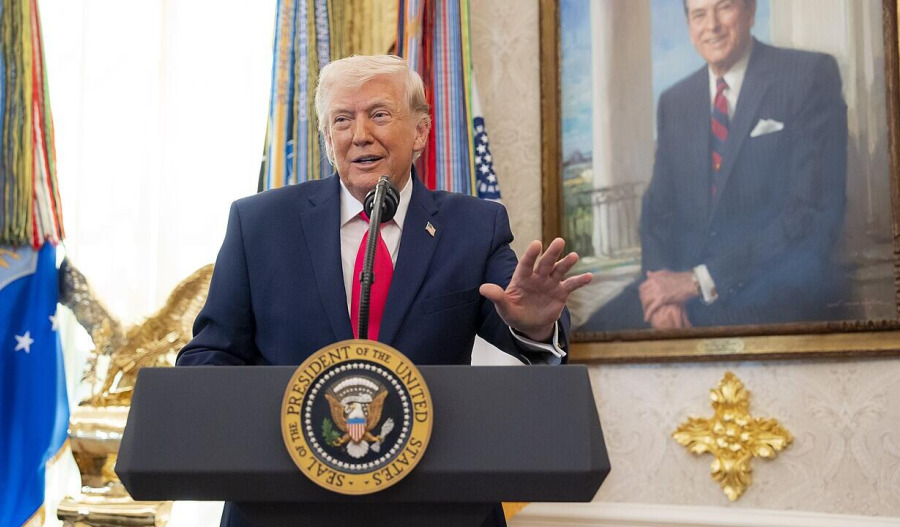
Oil prices surged on Thursday after United States President Donald Trump signalled that military operations against Iran would continue in the coming weeks, raising fresh concerns about supply disruptions across global energy markets.
By 2:45 pm AEDT (3:45 am GMT) Brent crude futures climbed $4.90 or 4.8% to US$106.06 per barrel, while U.S. West Texas Intermediate crude rose $3.96 or 4% to $104.08 per barrel.
In a televised speech, Trump said U.S. forces were close to achieving their objectives in Iran but stopped short of outlining a clear timeline for ending the war.
"We are going to finish the job, and we're going to finish it very fast. We're getting very close," he said.
Despite the suggestion that the conflict may soon conclude, Trump’s confirmation that attacks would continue, including on Iranian energy infrastructure, fuelled uncertainty around the near-term outlook for oil supply.
Concerns have intensified over the security of maritime routes in the region, particularly the Strait of Hormuz, a critical chokepoint for global oil shipments.
On Wednesday, an oil tanker leased to QatarEnergy was struck by an Iranian cruise missile in Qatari waters, according to the country’s defence ministry.

The potential for sustained disruption has prompted warnings from global energy authorities. The head of the International Energy Agency (IEA) cautioned that supply constraints could begin to weigh on Europe’s economy as early as April, noting that the region had previously been buffered by pre-war cargo shipments.
Analysts at ANZ highlighted the uncertainty surrounding the resumption of normal shipping activity through the Strait of Hormuz, particularly if U.S. forces withdraw from the region without securing the passage.
“It’s unclear how quickly traffic in the Strait of Hormuz could resume if the U.S. withdraws from the region,” analysts noted.
“If Iran maintains effective control, the disruptions in the oil market will only persist.”
ANZ added that the coming weeks would be critical for global supply dynamics. Should exports from Persian Gulf producers remain constrained, countries may be forced to cut production, with potential long-term consequences.
“The act of plugging or capping wells will see supply disruptions persist well beyond any reopening of the Strait,” the analysts said.
Meanwhile, U.S. inventory data pointed to rising stockpiles, offering a partial counterbalance to supply concerns.
The Energy Information Administration (EIA) reported that commercial crude oil inventories increased by 5.5 million barrels last week, significantly exceeding market expectations for an 800,000-barrel build.