


Australia's rental crisis continues to drive more households into financial hardship after the 2024 Rental Affordability Index report by SGS Economics and Planning and National Shelter revealed Australia's rental crisis has reached new heights.
Marking its 10th annual release the report showed rental affordability hit record lows in nearly every major capital city and region, with low-income renters affected the most by soaring rents.
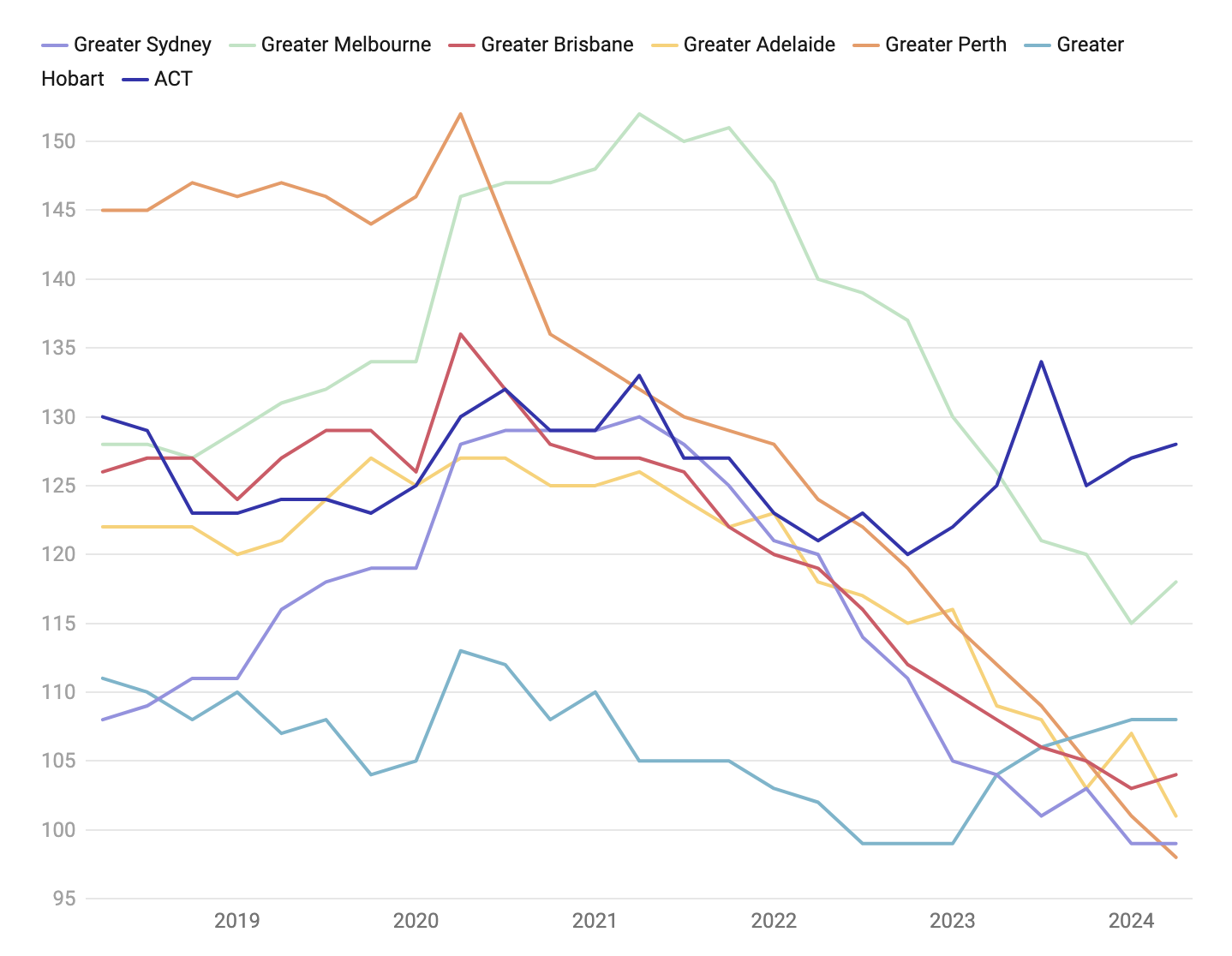
Over the past year, major capital cities — Sydney, Melbourne, Brisbane, Perth, and Adelaide — have recorded their worst affordability scores since the Index’s inception and for the first time Perth has overtaken Sydney as the least affordable city to rent.
Perth saw the steepest decline in affordability, tumbling by 13%, followed by Adelaide at 8%, Melbourne at 6%, Sydney at 5%, and Brisbane at 4%.
Perth’s median rents have reached $629, consuming 31% of median incomes—a sharp increase from just four years ago, when rent accounted for only 20% of income.
Sydney follows closely, with a median rent of $720, taking up 30% of median incomes.

Rental affordability for capital cities 2018-2024
Ellen Witte, Principal and Partner at SGS Economics and Planning and lead author of the report said: “Deteriorating affordability across the country has been driven by a number of factors, including increasing material costs, the increased cost of construction, rising interest rates, a return to pre-pandemic rates of population growth, and strong rent price increases.”
However, Tasmania and the ACT did experience slight improvements after the ACT benefited from rent increase limits introduced in 2019, with the regulatory measures appearing to have managed rent hikes and easing financial strain on renters.
Ellen Witte said: “Not only are rent rises hurting households, they are also exacerbating inflation. The ACT introduced rent increase limits in 2019, and rental affordability has improved there since. This suggests that guide rails that prevent excessive rent increases could serve a dual purpose of improving rental affordability and lowering inflation.”
This report was the first time the “critically unaffordable” category was introduced after Witte said: “Huge swathes of Australia are now unaffordable to even median income renters. We added the ‘critically unaffordable’ category to highlight there are now households that would have to pay 75% or more of their income or more on rent.”