
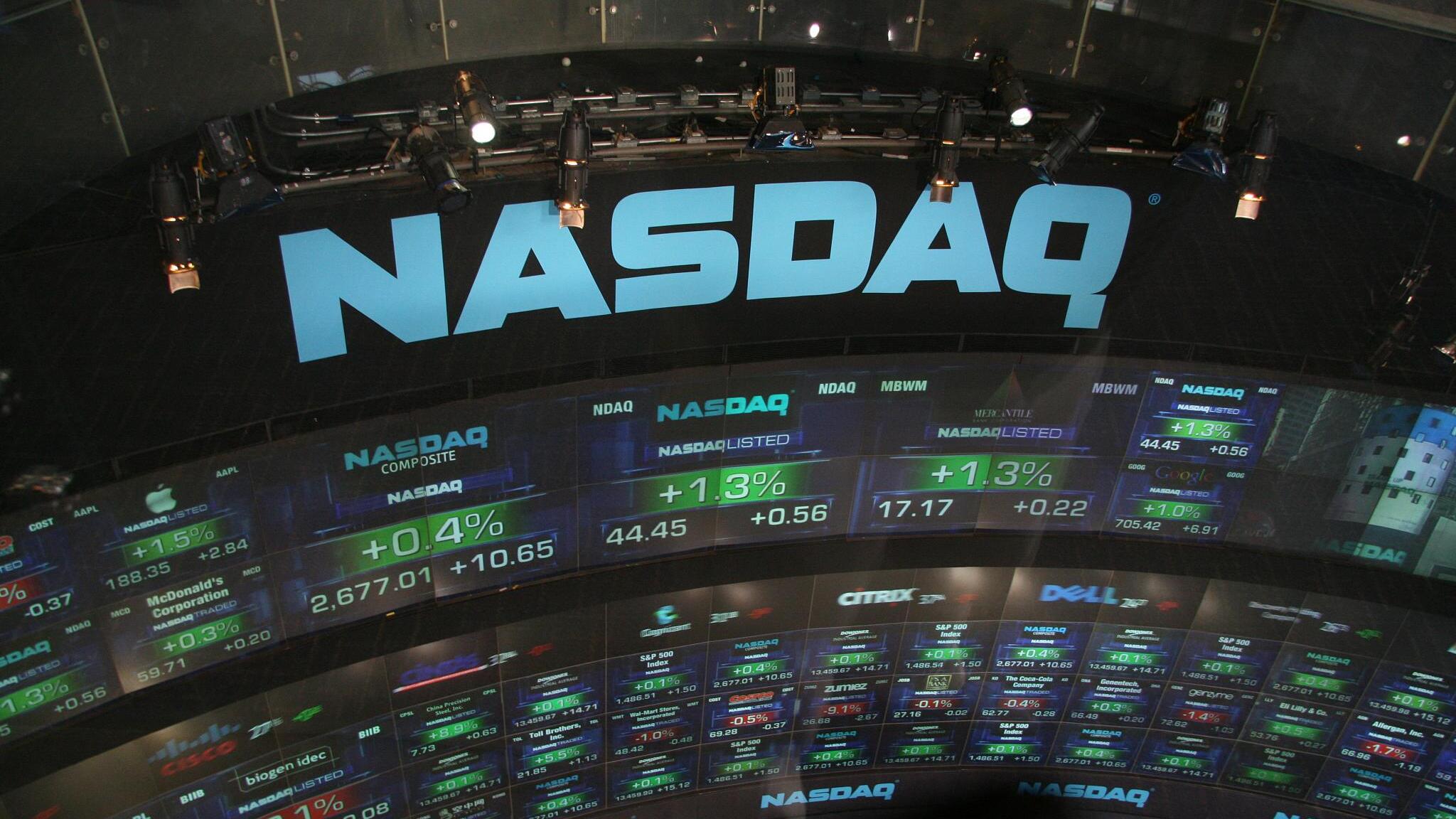
Despite mounting fears of the AI-driven tech sector in the United States overheating, there’s still a prevailing view that the tech-heavy Nasdaq composite Index (IXIC) – which hit an all-time high on 29 October, 2025 - can again hit double-digit growth in FY26.
Given that this would account for around half the Nasdaq’s growth this year (around 20%), it suggests that some of the hype impaled to the masts of tech stocks in 2025 is progressively starting to deflate as the sector’s backdraft eases.
While AI does look bubbly, stocks in the sector are, for the most part, underpinned by solid fundamentals.
Deepwater Asset Management, a technology-focused investment firm, expects the Nasdaq to increase by more than 10% in FY26, driven primarily by advancements and investments in AI.
According to Deepwater’s analysis, the current market environment indicates a sustained bull market, with controlled expectations offsetting the risk of a significant bubble formation.
Apple to outperform
While Deepwater expects small-cap tech companies to outperform relative to the broader tech market, the asset manager expects Apple be the top-performing stock among the ‘magnificent seven’ through to June 2026.
What could also boost trading activity next year are plans by the Nasdaq - one of the world’s largest exchanges - to roll out round-the-clock trading of stocks, as it looks to capitalise on a global demand for US equities.
The New York Stock Exchange and Cboe Global Markets also recently announced plans to move to round-the-clock trading for stocks.
Currently, Nasdaq operates three daily sessions during weekdays: the pre-market session from 4 am to 9.30 am Eastern U.S. time, the regular market session from 9.30 am to 4 pm, and the post-market session from 4 pm to 8 pm.
Over the course of FY25, the S&P 500 – of which the Magnificent 7 make up 35% has also performed well, up year to date by around 16%, well up on long-term historical average annual returns of roughly 10%.

ASX 200 vs S&P 500
A cursory glance at the main board of the Australian bourse, the S&P/ASX 200, shows why local investors are attracted to offshore growth markets like the U.S.
While the ASX 200 is up around 5% year to date, the S&P ASX All Tech Index – the closest thing Australia has to the Nasdaq is down around 12%, with key heavyweights within the index, like Wisetech, REA Group and Xero, down between 22% and 41% year to date.
Meantime, despite underlying pressures on the U.S economy, JP Morgan expects S&P 500 earnings to rise by another 13% in 2026.
Admittedly, FY26 may not live up to abnormally high growth this year.
But the asset manager expects profit growth to continue its remarkable run, with Magnificent 7 earnings growth decelerating slightly to 20%, while the rest of the S&P 500 index is expected to grow 11%, contributing 64% of overall profit growth.
More discerning bets
While all boats benefitted from a rising tide in FY25, investors may be forced to be more discerning as to where they place their bets in FY26.
Instead of relying on cyclical themes next year - like the broadening AI ecosystem and deregulation in financials – JP Morgan urges investors to prioritise quality and focus on secular themes.
“The AI theme also continues to power both public and private markets – but the key is to stay ahead of the evolving AI winners, especially as expectations have ratcheted higher and investors have started to focus more on the return for all that investment,” JP Morgan noted.
“Overseas, we expect other structural themes to power a narrowing of the earnings growth gap with the United States, including higher nominal growth, higher government investment and a focus on shareholder returns.”
The asset manager reminds investors that their biggest risk remains the elevated starting point for risk assets, especially in the U.S, and how offside portfolios have been to the broadening of asset class returns underway.
International equities
Meanwhile, next year, JP Morgan expects sentiment to continue supporting international equities, given the following dynamics at play:
- U.S. dollar is still 10% overvalued versus fair value.
- This year’s positive correlation between the dollar and U.S. equities is leading foreign investors to hedge more dollar exposure.
- U.S. equity premium over international equities is still at 34% (versus its 19% long-run average).
- U.S. still represents over 65% of global equity benchmarks.
- U.S. equities still have a record over 40% concentration in 10 companies (and in the AI theme).
“Those concerned about the increasing concentration of public equities in the AI theme and lofty valuations, with the Magnificent 7 making up 35% of the S&P 500, and the forward price/earnings ratio of the index touching 23X, may look to boost allocations to alternatives that have lower correlation to public markets,” JP Morgan notes.