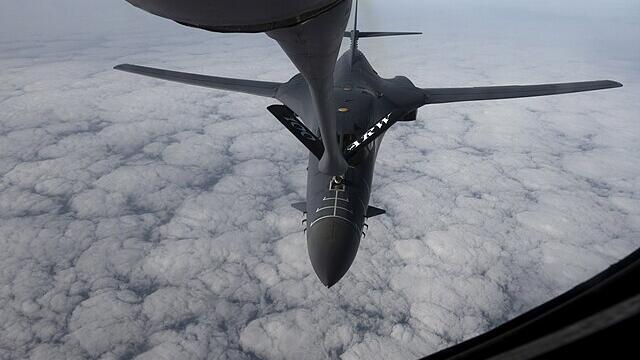
Due to surging oil prices, supply chain disruptions, and capital outflows to safe-haven assets, the bull run experienced by emerging markets (EMs) in 2025 – when the MSCI EM Index returned 34.3% - looks at risk of being derailed by the threat of protracted United States-Israeli air strikes on Iran.
While EM stocks continued their bull run in 2026, up 9% in January alone, the MCSI EM Index slid by around 2% at the start of this week.
Nowhere was that plunge more evident than in South Korea and Thailand, where share market indices plunged by more than 8% in early March 2026.
BlackRock has been a recent cheerleader of EMs – highlighting key drivers of a positive outlook for the asset class, and has also flagged China’s new economy as a strong EM theme, backing leaders in AI, as well as automation and renewable energy.
Only last month, Jean Boivin, head of BlackRock Investment Institute, concluded within his Staying positive on emerging markets commentary that the bullish themes that drove EM outperformance in 2025 are still playing out.
Based on trade policy uncertainty easing since last year’s so-called ‘Liberation Day’ tariff announcements, the firm expects EMs to continue to benefit from a risk-on stance, supporting capital flows and stronger currencies.
“We expect both EM stocks and bonds to be supported by resilient – if steady – global economic growth and a stable to softer U.S. dollar,” he noted.
“We focus on mega forces driving returns in EM stocks – notably in AI across tech hardware in Asia and commodity-linked shares in Latin America. We stay overweight EM assets and prefer hard currency debt.”
Reassessing EM robust exposures
However, three weeks is along time in investment markets, and recent falls appear to have spooked institutional investors, with recent Financial Times reports suggesting several hedge funds are now reassessing their EM robust exposures.
With the resilience of EM now being tested, Franklin Templeton fixed income CIO Sonal Desai believes the Iran war could trigger a turning point for the asset class, after a very strong start to the year.
She was quick to remind investors that the current Middle East crisis – that meets all the definitions of a war - reinforces the divide between oil exporters and importers, with the latter far more exposed.
“The resilience of emerging markets will now be tested, and here we might see the strongest impact after a very strong start to the year in EM assets,” Desai recently told Investor Daily.
Desai also noted that a stronger dollar, combined with higher oil prices, also raises the prospect of higher U.S. interest rates.
As noted by Lazard Geopolitical Advisory earlier this week, Asia is particularly vulnerable to the U.S.-Iran war, with around 80 to 85% of oil and LNG passing through the Strait flowing to Asian markets in 2024, including South Korea.
But while South Korea and Taiwan have been among the most popular EM trades - due to their central role in the AI supply chain - both stock markets are currently experiencing significant pressure with heavyweight stocks.
That's especially evident in the semiconductor sector with the likes of Samsung Electronics, SK Hynix, and TSMC, facing significant selling pressure as investors unwind positions due to rising risks.

Rising risks
Heightened fears appear to be a direct response to the impact of surging energy prices on economies that are large importers of fuel, including oil and natural gas.
The economies of Japan, South Korea and Taiwan are especially vulnerable to disruptions in the flow of natural gas and oil from the Middle East.
Breaking down the effects on EM assets at a sector level, Amundi Investment Institute head and chief strategist Monica Defend said energy and defence sectors could outperform on higher oil prices and increased defence spending.
By comparison, consumer cyclical sectors could lag sharply due to slower consumer demand and rising input costs.
For EM debt, she said oil prices and volatility spikes will be key as any risk-off phase penalises countries with low credit ratings.
“This means, we will see wider spreads (current level is at fair value but we may see a sell-off in some cases), and higher refinancing stress. In FX, countries that are oil importers are the ones most exposed, whereas currencies of oil exporters will be more resilient,” she said.