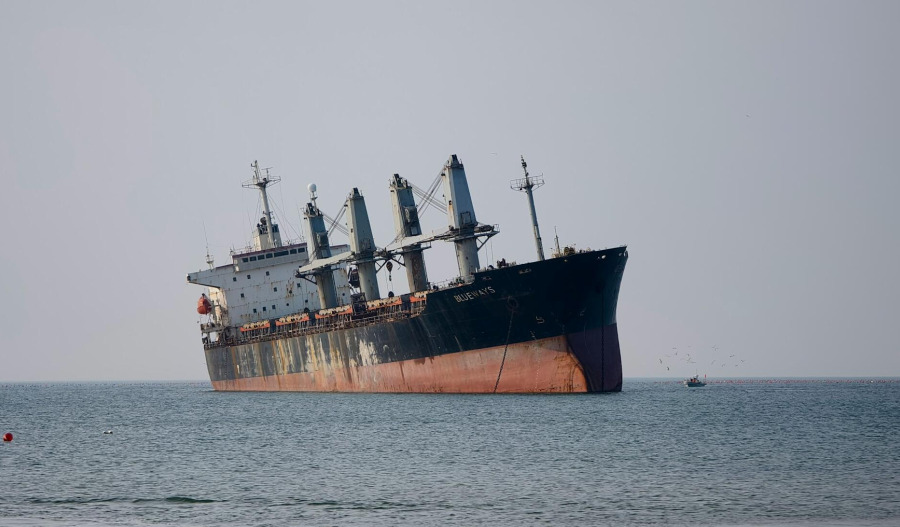
Iraq has declared force majeure on all its foreign-operated oilfields as the Strait of Hormuz, where most Iraqi oil exports would transit, remains largely closed.
Iran’s closure of the strait has halted Iraqi exports and caused storage capacity to reach its limits, Iraq’s Ministry of Oil said in a letter last week, Reuters reported.
“The international partners were unable to nominate tankers to lift crude, preventing exports despite the state oil company SOMO being ready to load shipments,” according to the letter.
“Based on the situation, the ministry ordered a full shutdown of production at affected concession areas, with no compensation arising from the measure under contract terms.”

The halt in exports will be reviewed periodically, the letter said, with Iraq’s government inviting companies to negotiate essential operations, costs, and staffing under the force majeure conditions.
Production at Iraq’s Basra Oil Company has been cut by around 70% to just 900,000 barrels per day, the country’s state news agency reported on Friday. The oil currently being produced has also been rerouted to operate domestic refineries.
Iran has said that the Strait of Hormuz remains open to ships not from the United States or Israel, but claimed it would fully close the strait if the U.S. followed through on its threat to destroy Iranian energy facilities.
Qatar also declared force majeure on all liquefied natural gas exports earlier in March after Iran struck its Ras Laffan industrial hub. Around 17% of Qatar’s LNG export capacity will be sidelined for three to five years, Qatari Minister of Energy and QatarEnergy CEO Saad al-Kaabi said last week.
Brent crude surged past US$112 per barrel on Saturday AEDT after the report, and was trading at $111.80 per barrel as of 12:35 pm AEDT today.