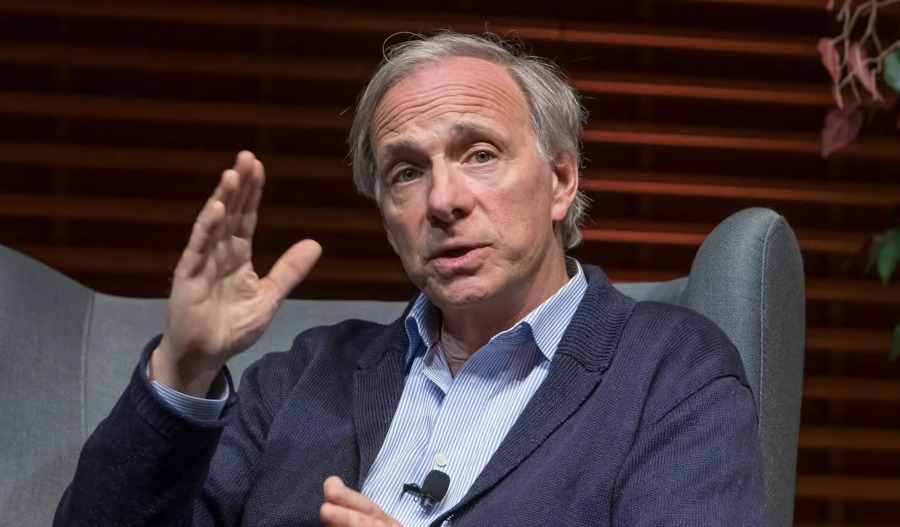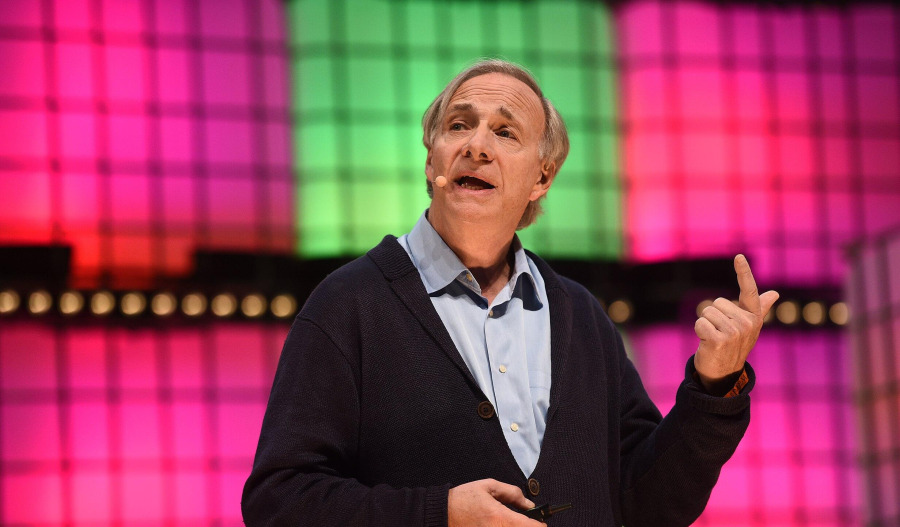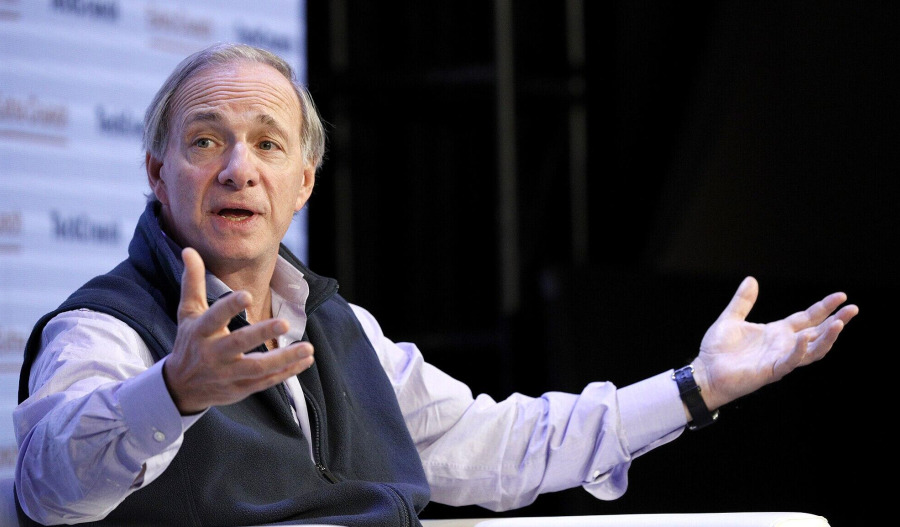
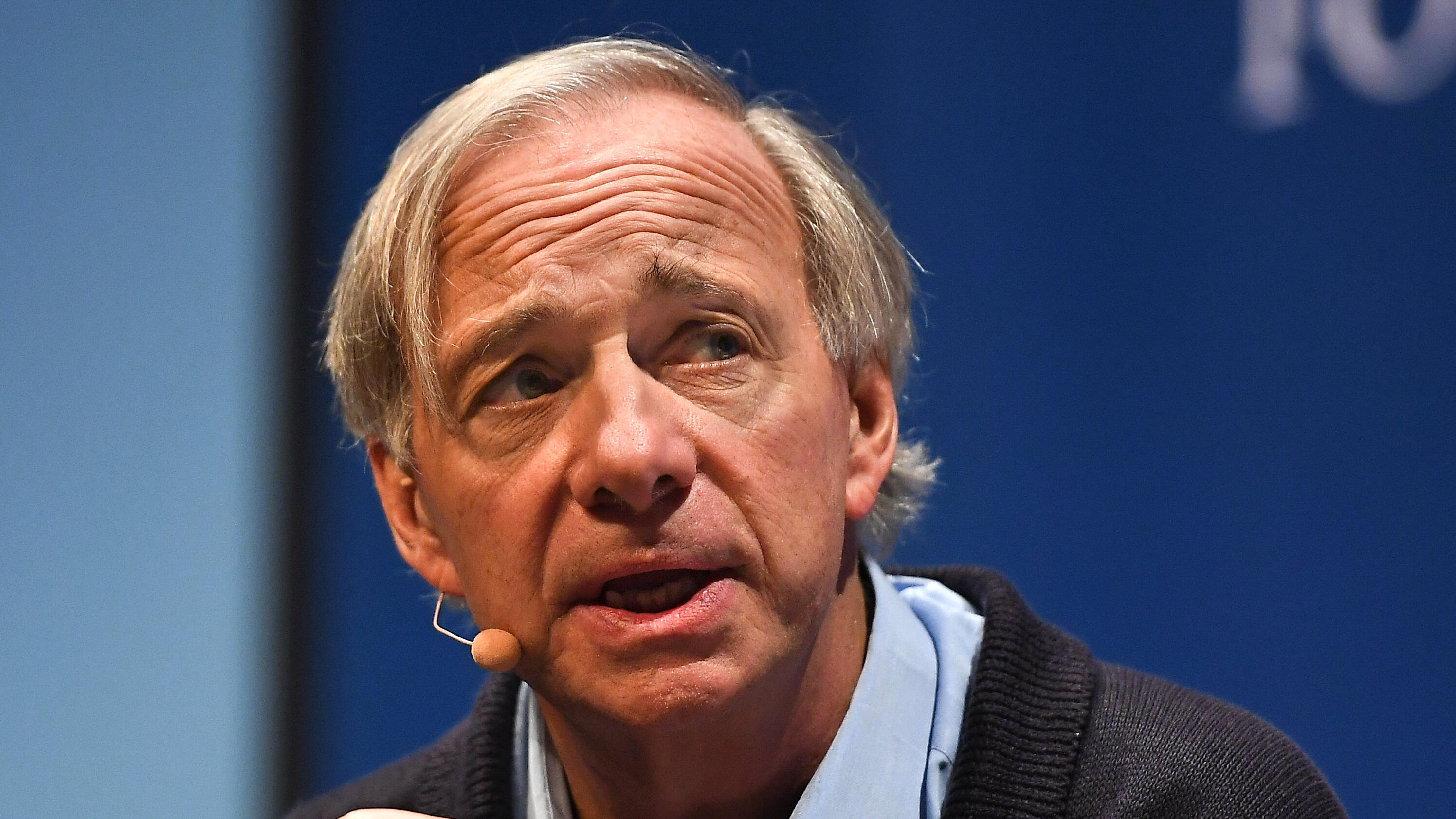
Bridgewater founder Ray Dalio says the global economy is teetering on the edge of capital warfare, with money set to become the next geopolitical weapon.
Speaking at the World Governments Summit in Dubai, the billionaire investor warned that escalating tensions over Trump's Greenland ambitions have pushed nations dangerously close to weaponising their financial systems.
"We are on the brink," Dalio told CNBC.
"That means not in, but it means we are quite close to [capital war], and it would be very easy to go over the brink into a capital war, because there are mutual fears."
Capital wars - when nations deploy trade embargoes, block access to capital markets, or leverage debt ownership as strategic tools - historically develop around major conflicts. Dalio pointed to U.S. sanctions on Japan before World War II as a historical precedent.
The Bridgewater Associates founder, whose firm manages over US$100 billion, says European holders of U.S.-denominated assets now fear potential sanctions, whilst America worries about foreign appetite for its debt drying up.
Greenland tensions
Trump's push to acquire Greenland from Denmark has sparked immediate market reactions. The president threatened 10% tariffs on eight NATO countries - rising to 25% by summer - if they don't facilitate the territory's sale.
Denmark, Sweden, France, Germany, Finland, Norway, the UK and the Netherlands are all targeted, though CNBC notes tariffs on one EU member effectively hit all 27 states.
Treasury prices tumbled this week as investors weighed renewed tariff threats, triggering a flight from U.S. assets.
"Capital, money, matters," Dalio said. "We're seeing capital controls taking place all over the world today, and who will experience that is questionable."

US debt reaches critical mass
America's debt pile has now surpassed US$38 trillion - a 120% debt-to-GDP ratio that former Fed Chair Janet Yellen warns is testing a "red line" economists have feared for decades.
The preconditions for fiscal dominance are clearly strengthening, Yellen said at an American Economic Association panel, noting debt is projected to hit 150% of GDP over three decades.
Interest payments alone have exploded past $1 trillion annually, now exceeding spending on both Medicare and defence. That makes debt servicing the government's third-largest expense behind Social Security and healthcare.
The Congressional Budget Office projects interest costs will climb to $1.8 trillion by 2035. Over the next decade, America will spend $13.8 trillion just servicing debt - more than the entire projected defence budget.
Sovereign wealth funds and central banks were already making provisions to prepare for capital controls, Dalio said.
He drew parallels to the 1930s-40s period, when four major democracies - Germany, Italy, Spain and Japan - abandoned democratic systems during economic crisis and chose autocratic rule.
"When you have conflicts, international geopolitical conflicts, even allies do not want to hold each other's debt," Dalio explained.
"They prefer to go to a hard currency. This is logical and it's factual, and it's repeated throughout world history."
The Bridgewater founder has been particularly vocal about what he calls a "debt death spiral" - where rising yields increase servicing costs, forcing more borrowing, which scares off buyers in a vicious loop.
Gold emerges as hedge of choice
Despite recent volatility that saw gold drop 16% from its high, Dalio maintains that the precious metal remains the safest store of wealth.
Gold is up 65% from a year ago and showing tentative signs of recovery after this week's sell-off alongside silver.
"Gold is up about 65% from a year ago, and down about 16% from its high, and I think people make the mistake of thinking, is it going to go up and down, and should I buy it?" Dalio said.
Instead, he argues central banks, governments and sovereign wealth funds should maintain a consistent allocation - between 5% and 15% of portfolios.
“Because gold is a diversifier, when the bad times come along it does uniquely well, and when the good times are prosperous, less so, [but] it's an effective diversifier.”
Goldman Sachs recently raised its year-end gold target to $5,400/oz - up 10% from its prior $4,900 call.
The bank expects central banks to purchase around 60 tonnes of gold monthly throughout 2026, whilst gold ETF holdings are forecast to increase as the Fed cuts rates.
JP Morgan is even more bullish, forecasting an average price of $5,055/oz in Q4 2026, with potential peaks reaching $5,200-$5,300/oz.
Global gold ETFs logged record inflows of nearly $89 billion in 2025, pushing holdings to all-time highs near 4,025 tonnes, according to the World Gold Council.
The shift from U.S. Treasuries to gold represents an unusual break from historical patterns. Commonwealth Bank analyst Vivek Dhar noted that typically when investors get nervous, they flee toward Treasuries and the dollar.
"But this time they're running away from them," Dhar said.
AI bubble compounds uncertainty
Adding to Dalio's concerns is what he calls the "early stages of a bubble" in artificial intelligence.
The AI boom had a big effect on everything, Dalio wrote in a 2025 retrospective, warning that the newly appointed Fed chair and committee appear inclined to keep rates low, which would support prices and inflate bubbles.
With Fed Chair Jerome Powell's term expiring in May, Trump has stated his pick will be "someone who believes in lower interest rates, by a lot" - raising questions about central bank independence.
Gold outperformed the S&P 500 by 47% in 2025, marking a dramatic shift in investor behaviour away from traditional safe-haven U.S. assets.
Emerging markets posted the strongest returns last year, with the MSCI benchmark index rising 33% - double the S&P 500's return.
"There were big shifts in flows, values, and, in turn, wealth away from the U.S., and what is happening will probably lead to more rebalancing and diversifying," Dalio said.