

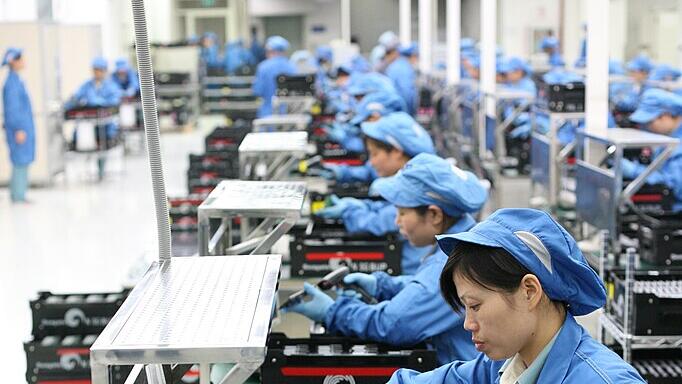
China's manufacturing sector continued its expansion at the end of 2024, though at a slower pace, as new orders and production growth softened. Falling export demand, declining employment levels, and tempered business optimism contributed to the deceleration, according to the latest Caixin China General Manufacturing Purchasing Managers’ Index (PMI).
The headline seasonally adjusted PMI fell to 50.5 in December, down from 51.5 in November and below 51.7 expected. While remaining above the neutral 50.0 threshold, signalling a third consecutive month of improvement, the latest reading indicated marginal growth compared to the previous month.
Dr. Wang Zhe, Senior Economist at Caixin Insight Group said: “Supply and demand expanded. Manufacturers’ output and demand continued to grow as the market improved. The gauge for output stayed in expansionary territory for the 14th consecutive month, while total new orders rose for the third straight month. However, both grew at a slower clip as the production and sales of investment goods fell.”
The moderation in new orders impacted employment levels, which declined for the fourth consecutive month, though the reduction was minimal. Backlogs of work continued to accumulate, albeit at a slower rate, as easing capacity pressures allowed firms to meet existing demand.

Purchasing activity rose for the third straight month, with manufacturers increasing safety stock levels. Stocks of purchases and post-production inventories also grew, though at slower rates. Vendor performance improved marginally for the first time since May, reflecting better supply chain conditions.
On the pricing front, manufacturers reduced their selling prices in December, marking the first decline since September. This contrasted with another rise in input costs, as firms opted to absorb price increases to support sales amidst challenging market conditions. Export charges also fell during the month.
Business confidence weakened to its lowest level since September. Concerns over growth prospects, trade uncertainties, and the impact of U.S. tariffs weighed on sentiment. While manufacturers remain hopeful for policy-driven and product-related sales growth in 2025, optimism about the near-term outlook has dampened.
Dr. Wang Zhe noted that “prominent downward pressures remain, with tepid domestic demand and mounting unfavourable external factors. Meanwhile, employment remains sluggish and profit margins have been squeezed, leading to a decline in market optimism. In December, some of the Caixin manufacturing PMI survey’s gauges declined, suggesting more time is needed to assess the consistency and effectiveness of previous policy stimulus”.