Boeing reported a wider-than-expected second-quarter loss as costs associated with its delayed Air Force One program weighed on earnings, although stronger revenue and better-than-expected cash generation signalled continued progress in the aerospace manufacturer's turnaround.
The company posted an adjusted loss of US$0.76 per share, wider than analysts' expectations for a $0.28 per share loss. Revenue rose to $24.56 billion, topping forecasts of $24.26 billion.
Boeing recorded a $280 million charge related to the program to deliver two next-generation 747 aircraft for use as Air Force One, reflecting increased investment as it works towards its targeted first delivery in 2028.
Speaking to CNBC's Squawk on the Street, Ortberg said the Air Force One project had moved beyond the design stage.
“It’s very important to our customer that we deliver that airplane on time,” he said. “We’re gonna put more resources on to make sure that we do that.”
The Air Force One program has attracted renewed attention after President Donald Trump this month took his first flight aboard a luxury Boeing 747 donated by Qatar, which was intended to serve as an interim presidential aircraft while Boeing completes the new jets.
The aircraft's security arrangements reportedly came under scrutiny following a trip to Turkey.

Despite the earnings miss, Boeing's underlying business continued to strengthen.
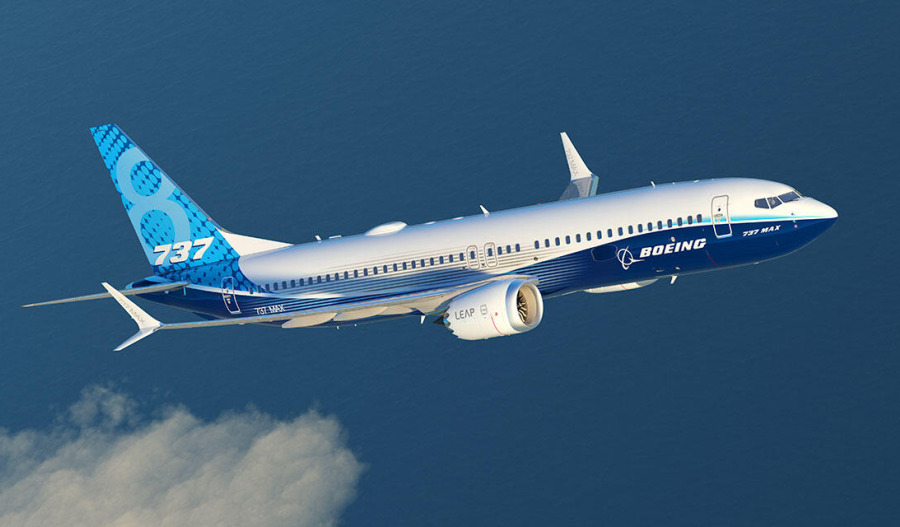
Second-quarter revenue increased 8% from a year earlier, supported by growth across all major divisions and higher commercial aircraft deliveries. The company has continued ramping up production of its best-selling 737 Max, reaching a monthly production rate of 47 aircraft, with further increases planned.
Commercial aircraft deliveries climbed 14% to 171 aircraft during the quarter, up from 150 a year earlier.
A standout result came from cash generation, with free cash flow of $631 million, significantly outperforming analysts' expectations for a $177 million cash burn.
The result also marked a sharp improvement from the $200 million cash burn recorded in the same period last year.
“While there is more work ahead in the second half of the year, the momentum we are building continues to move Boeing in the right direction,” Ortberg noted in the press release.
Investors will also be watching upcoming certification milestones, with Boeing expected to secure approval for the delayed 737 Max 7, the smallest member of the 737 Max family, before progressing other aircraft programs.
Boeing has a market capitalisation of approximately US$174.7 billion.