Blue Origin has announced the launch of ‘TeraWave’, a proprietary satellite communications network designed to rival Elon Musk’s SpaceX.
The system targets high-speed connectivity for enterprise and government clients, placing Jeff Bezos’ space company in direct competition with the market leader.
Network Specifications
Filings with the U.S. Federal Communications Commission (FCC) indicate the TeraWave system comprises 5,408 satellites, with the units operating in a combination of low Earth orbit (LEO) and medium Earth orbit (MEO).
Unlike consumer-focused broadband services, this network targets government contracts, military operations, and orbital data centres.
Blue Origin states that TeraWave utilises optical laser links for data backhaul - an architecture that supports symmetrical speeds reaching 6 terabits per second.
CEO Dave Limp stated the network is designed specifically for enterprise customers requiring throughput levels that existing providers cannot currently guarantee.

Market Position
The announcement introduces a direct challenger to SpaceX’s Starlink and Starshield divisions. Starlink currently holds a significant share of the LEO market.
Analysts note that TeraWave focuses on distinct high-value sectors, differing from Starlink’s consumer-heavy model, which relies on a larger quantity of smaller satellites.
Internal Competition
This project also places Blue Origin in competition with Amazon Leo (formerly Project Kuiper).
Amazon, founded by Bezos, is currently deploying its own constellation targeting similar enterprise and government clients.
Technical specifications diverge between the two; Amazon Leo offers gigabit speeds, whereas TeraWave claims capacity up to 6,000 times faster via its optical mesh.
It remains unclear if the two constellations will integrate or bid separately for government contracts.
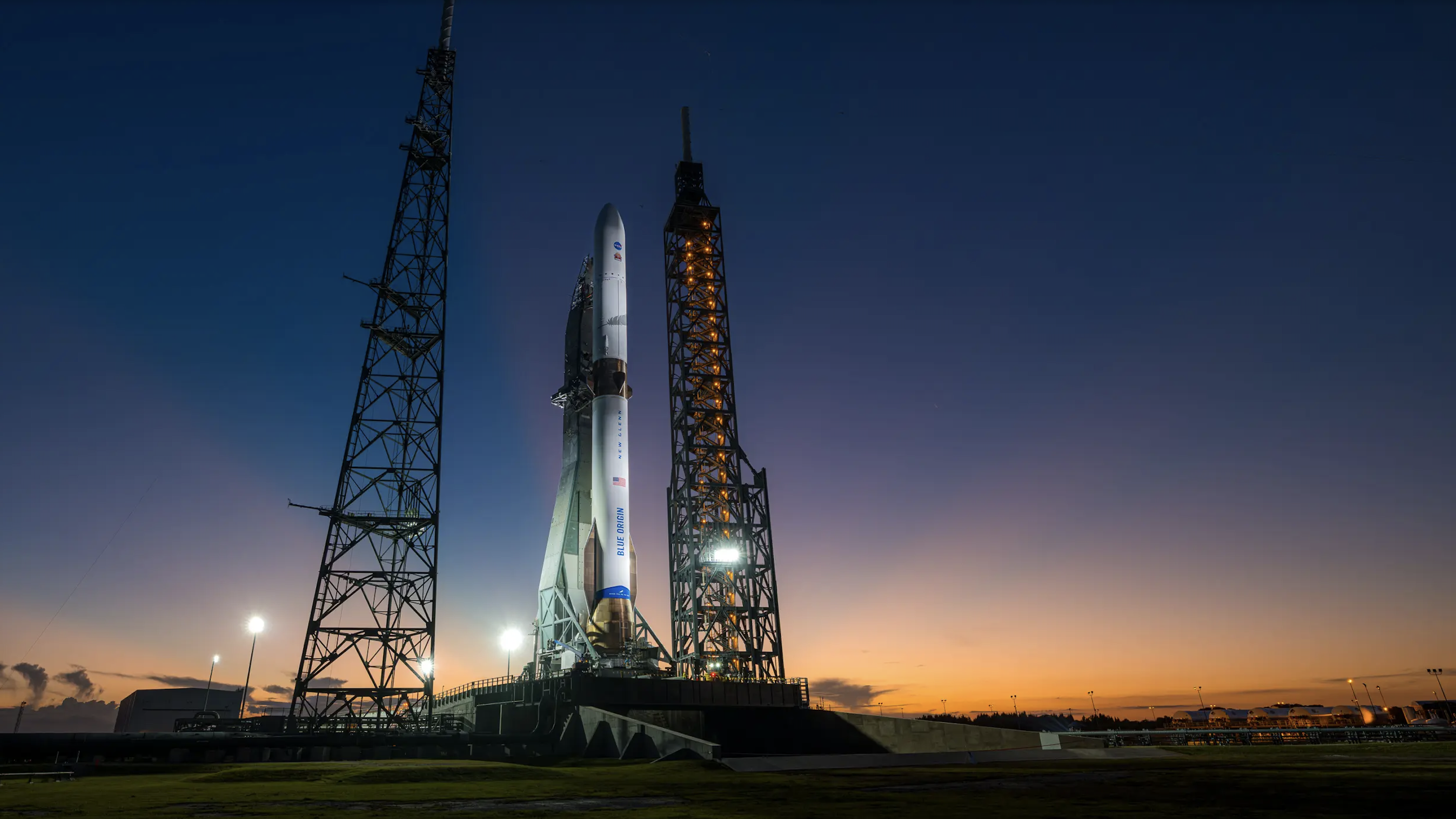
Deployment for TeraWave is scheduled to begin in late 2027 aboard the New Glenn rocket.