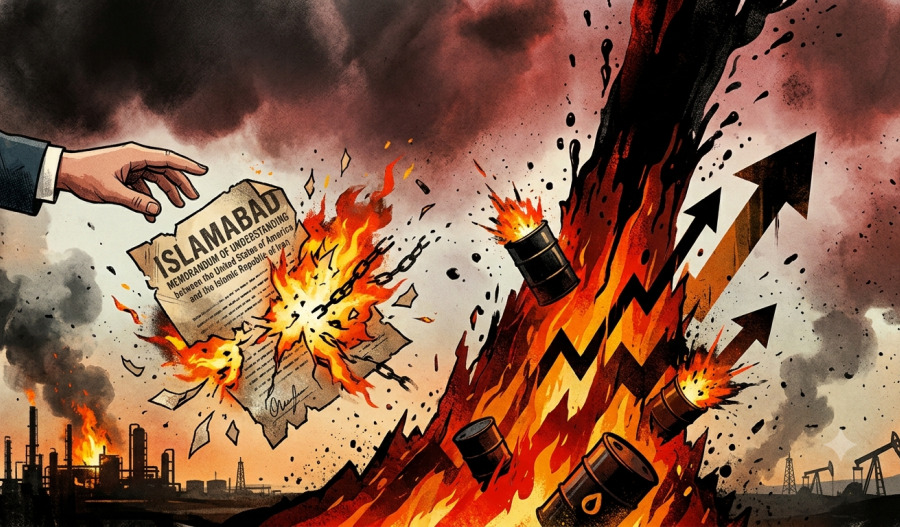
Asia-Pacific markets traded mixed on Thursday as renewed tensions between the United States and Iran pushed oil prices higher and weighed on investor sentiment.
By 11:45 am AEST (1:45 am GMT), Australia's S&P/ASX 200 was down 0.6%, while Japan's Nikkei 225 gained 1.9% and South Korea's KOSPI 200 rebounded 2.5%.
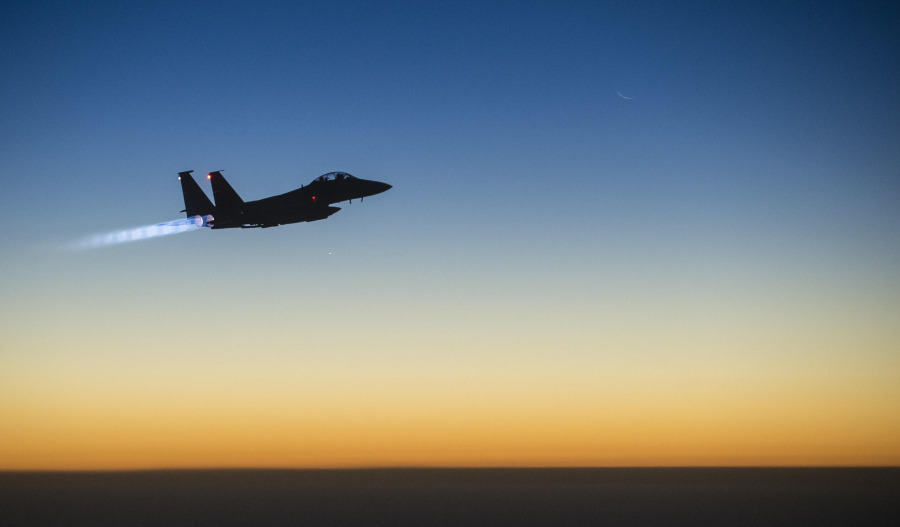
Investors continued to monitor developments in the Middle East after the U.S. launched further strikes against Iran following attacks on commercial shipping near the Strait of Hormuz.
The escalation pushed crude prices higher and raised concerns over renewed inflationary pressures.
Meanwhile, economic data from China showed consumer prices continued to recover in June. The consumer price index (CPI) rose 1.0% year-on-year, slowing slightly from a 1.2% increase in May, according to the National Bureau of Statistics of China.
The result was below market expectations for a 1.1% gain.
On a monthly basis, Chinese CPI fell 0.3% in June after declining 0.1% in May, compared with forecasts for a 0.2% decline.

The producer price index (PPI) increased 4.1% year-on-year in June, accelerating from a 3.9% rise in May and matching market expectations.
On Wall Street overnight, U.S. benchmarks closed mixed as investors assessed the impact of escalating Middle East tensions.
The Dow Jones Industrial Average dropped 1.1%, the S&P 500 declined 0.3%, while the Nasdaq Composite gained 0.2%.
In commodities, ICE Brent crude futures surged 5.2% on Wednesday to settle at US$78.02 per barrel, while spot gold eased 0.7% to finish at US$4,075.27 per ounce.
Chinese equities ended lower on Wednesday. The SSE Composite Index fell 0.5% to 3,970.9, marking its lowest close since 11 June, while the CSI 300 dropped 0.8% to 4,755.5.
Hong Kong's Hang Seng Index climbed 3.0% to 24,199.5, while India's BSE Sensex dropped 2.2% to 76,503.6.
European markets also finished lower on Wednesday. The UK's FTSE 100 declined 1.7% to 10,489.0, Germany's DAX slipped 2.2% to 24,897.5, and France's CAC 40 fell 2.2% to 8,252.7.