Asia-Pacific markets traded mixed on Thursday, with Japan and South Korea benchmarks trading at all-time high valuations as investors balanced a positive lead from Wall Street against ongoing uncertainty surrounding negotiations between the United States and Iran.
Trump extended a two-week ceasefire earlier in the week, citing what he described as a “seriously fractured” government in Tehran.
He indicated the ceasefire would remain in place until Iran submitted a proposal or discussions concluded, while U.S. military forces would continue enforcing a blockade on Iranian ports.
However, the outlook for diplomatic progress remains unclear. Iranian state media reported that Tehran’s negotiators would not participate in further talks, describing them as a “waste of time”.
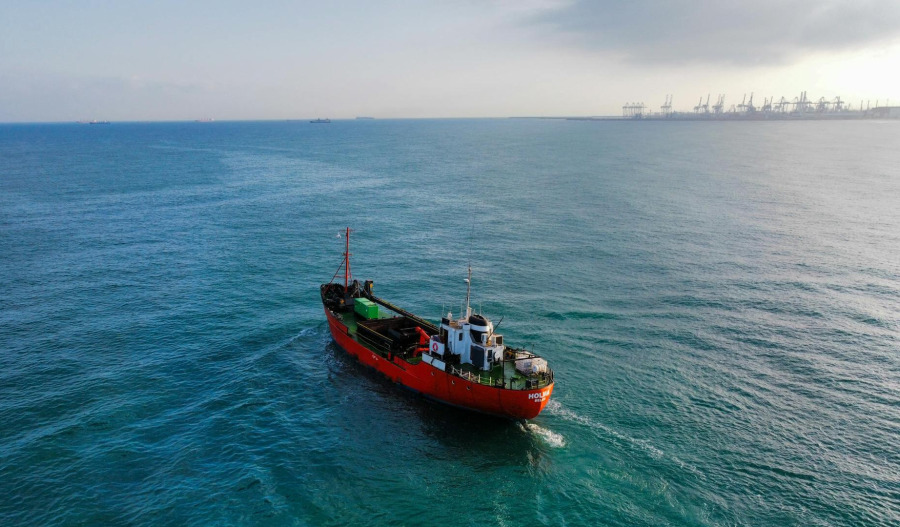
Tensions in the region were further heightened after Iran’s navy said it had seized two container ships in the Strait of Hormuz.
By 11 am AEST (1 am GMT), Australia’s S&P/ASX 200 had fallen 0.5%, while Japan’s Nikkei 225 traded 0.4% higher, and South Korea’s KOSPI 200 added 1.9%.
Economic data releases across the region painted a mixed picture of growth and sentiment.
South Korea’s economy expanded at its fastest quarterly pace in more than five years in the first quarter, supported by strong exports and resilient domestic demand.
Preliminary data from the Bank of Korea showed real gross domestic product rose 1.7% in the January–March period from the previous quarter, significantly above the central bank’s 0.9% forecast and marking the strongest growth since the third quarter of 2020.
However, separate data indicated weakening consumer confidence. South Korea’s Composite Consumer Sentiment Index fell to 99.2 in April, down 7.8 points from March and marking its lowest level in a year.
In Japan, S&P Global flash PMI data showed manufacturing activity accelerating sharply, with the manufacturing index rising to 54.9 from 51.6 previously and exceeding expectations of 51.2.
Services activity, however, slowed to 51.2 from 53.4.
The release noted: "A slower rise in service sector activity offset a rebound in manufacturing production growth in April.

"As a result, total Japanese private sector activity expanded at the softest pace in four months.
"Price pressures meanwhile intensified, most notably across the manufacturing industry, with firms often linking this to the impact of the war in the Middle East and strained supply chains.
"This in turn drove the steepest rise in composite selling prices on record."
In Australia, S&P Global flash PMI data indicated that private sector activity stabilised in April. The manufacturing PMI rose to 51 from 49.8, while the services PMI improved to 50.3 from 46.3.
The release noted: "The start of the second quarter saw business activity levels stabilise across Australia, according to April Flash PMI® data by S&P Global.
"However, the recovery in activity was confined to the service sector as manufacturing output was down for a third month running.
"Overall, domestic demand conditions remained soft across both broad sectors and price pressures continued to mount as war in the Middle East drove fuel costs up.
"Manufacturers also signalled severe supply chain disruption."
Overnight in the United States, major benchmarks finished higher, with the Dow Jones Industrial Average rising 0.7%, while the S&P 500 and Nasdaq Composite each reached fresh record highs, advancing 1.1% and 1.6%, respectively.
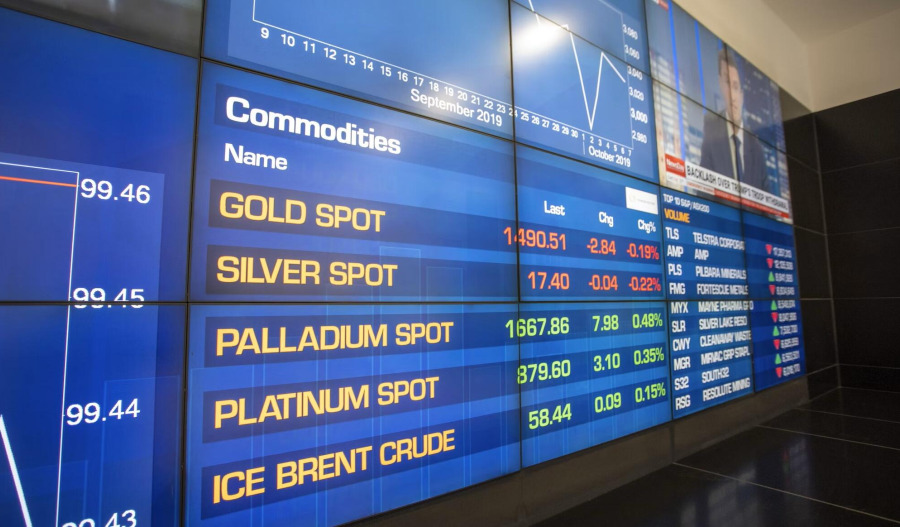
In commodities, Brent crude rose 3.5% to US$101.91 per barrel amid ongoing supply concerns, while spot gold edged 0.4% higher to US$4,737.90 per ounce.
Elsewhere, China’s Shanghai Composite Index gained 0.5%, while the CSI 300 rose 0.7%.
Hong Kong’s Hang Seng Index declined 1.2%, and India’s BSE Sensex fell 1%.
European markets closed lower overnight, with the UK’s FTSE 100 down 0.2%, Germany’s DAX falling 0.3%, and France’s CAC 40 declining 1%.