Taiwan Semiconductor Manufacturing Co.(NYSE: TSM) posted June revenue of NT$442.68 billion (A$19.85 billion), up 67.9% on the same month last year and 6.2% on May, breaking a seasonal pattern in which June sales have fallen from May in each of the past four years.
First-half revenue reached NT$2.4 trillion (US$74.99 billion), a 35.6% rise on the same period in 2025, and the stock added 1% on Monday even as the broader Asia Pacific index slid.
Sold out, not selling well
Sravan Kundojjala, an analyst at SemiAnalysis, said second-quarter revenue cleared TSMC's own high-end guidance of US$40.2 billion, and described the underlying numbers as robust across the board.
He added that the more significant detail is TSMC's N3 process, the node targeted by every leading AI GPU and CPU family this year, is now sold out.
Nvidia's Rubin, Google's TPU v7/v8, Amazon's Trainium3 and AMD's MI350X are all converging on the same 3-nanometre lines at the same time, and TSMC's wafer expansion has not kept pace with that combined demand.

The packaging squeeze
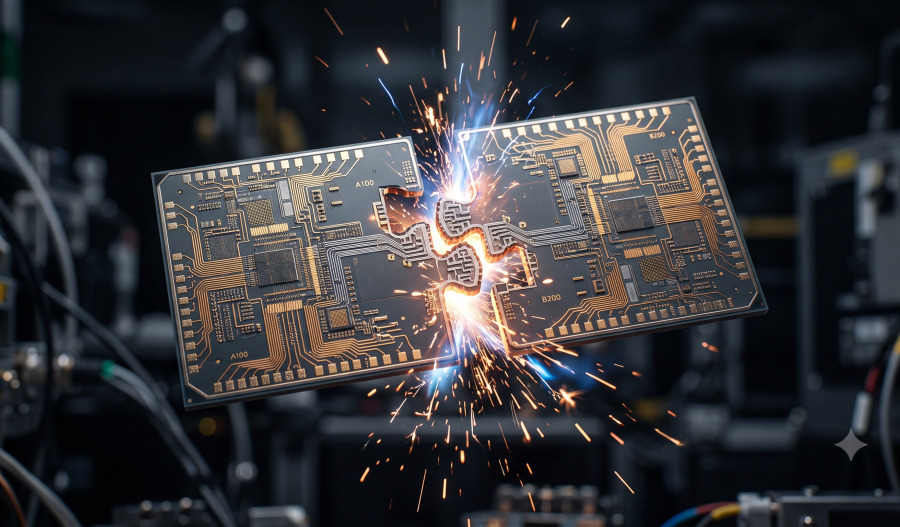
The tighter constraint sits one step further down the production chain, in advanced packaging rather than in the wafers themselves, where TSMC turns finished chips into deployable products.
CoWoS demand is tracking toward roughly one million wafers in 2026, up from about 370,000 in 2024, and TSMC has been expanding that capacity at close to 80% a year just to hold the shortfall steady.
Kundojjala estimates AI-related chip revenue will clear US$40 billion for the full year, close to a quarter of TSMC's total sales, a business mix that was still smartphone-led as recently as 2023.