
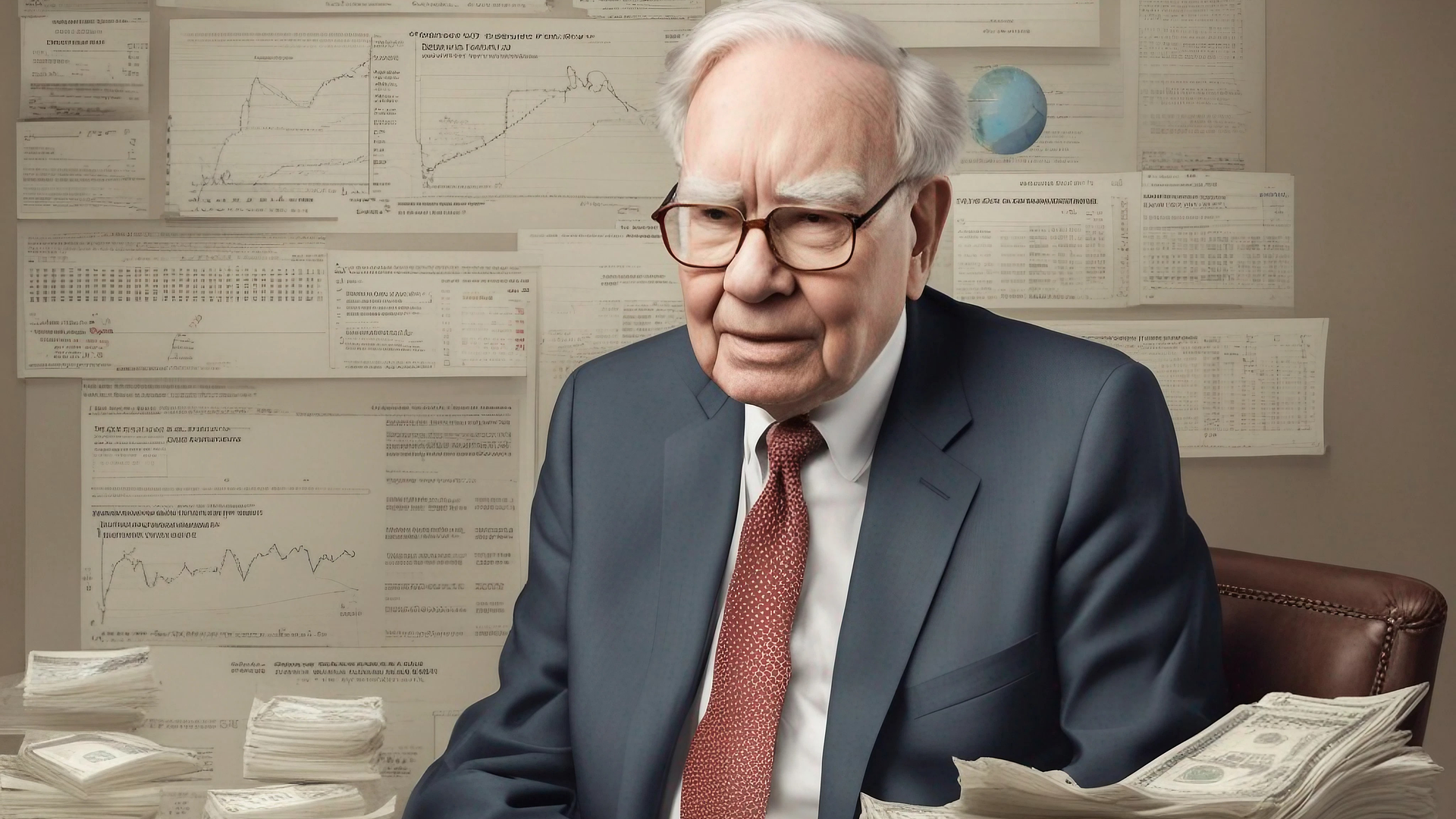
A five million percent return over 60 years is not just a good run — it is a once-in-a-century flex, which is why 95 year-old Warren Buffett’s exit from the CEO seat at Berkshire Hathaway feels less like a handover and more like the dimming of investing’s brightest lighthouse.
When Buffett took charge in the mid-1960s, Berkshire was a tired textile business trading at about US$19 a share.
Today, a single Class A share costs more than many houses.
Across six decades, Berkshire's returns compounded at nearly 20% a year, almost double the S&P 500, quietly turning patience into power and time into an accomplice.
Add it all up and you get returns north of 5.5 million percent — with a little extra icing in the final year.
While the magic was never flashy, Buffett used insurance float as cheap fuel, bought businesses that reliably threw off cash, and then did the most radical thing on Wall Street: he sat on his hands.
Coca-Cola, American Express, railroads, utilities, factories — not trades, but relationships ensued.
The simplicity of Buffett’s approach fooled people into thinking it was repeatable.

Yet, as one long-time shareholder put it, if this were easy, someone else would have already done it.
Now 63-year-old veteran businessman Greg Abel steps up as Buffett’s successor in 2025 while he stays on as chairman.
Abel inherits a company dripping in cash, famously allergic to hype, and built on a culture that prizes trust over control.
Unlike most listed stocks, Berkshire does not split its stock, nor does it issue guidance.
Managers run their businesses and capital decisions funnel back to head office in Omaha.
While this appears to be stubbornly slow it has also proved to be wildly effective.
Buffett’s influence stretched beyond returns.
His shareholder letters became essential reading for anyone who wanted markets explained without jargon or ego.
The annual meeting in Omaha — part lecture, part marathon Q&A — turned Buffett into a steadying voice during bubbles, crashes, and manias; When markets panicked, Buffett did not shout. He shrugged, explained and got on with it.
Even in his final year as CEO with inflation, geopolitical issues and tariffs threatening to undermine the U.S. and global economies - Buffett stuck to his knitting.
While markets chased artificial intelligence (AI) dreams and record highs, Buffett appear comfortable to sit and wait.
Berkshire sold more stocks than it bought, avoided pricey deals, and piled cash to nearly US$382 billion.
Doing nothing because nothing was priced right was an approach that came directly from the Buffett playbook that the market knew so well.
Interestingly, this restraint defines Abel’s starting point.
He’s not a clone, and no one expects him to be.
A former utility executive who once hustled empty soda bottles for pocket change, Abel is seen as more hands-on, more operational.
Buffett has made it clear he trusts him — perhaps more than any adviser alive — but the open question is not leadership style. It is investing edge.
Berkshire’s $300 billion equity portfolio looms large, and there is no obvious heir to Buffett’s stock-picking instincts at that scale.
Some expected the company to lean less on active investing over time, while there are those who think the culture will do what it’s always done: adapt slowly, deliberately, and without apology.
Buffett, for his part, has always warned shareholders not to confuse volatility with failure.
While Berkshire shares have dropped sharply before and recovered every time, Buffett’s faith was never in forecasts, but in America, discipline, and the power of compounding returns.
Six decades on, the numbers speak for themselves. The lesson does too: brilliance doesn’t need noise, just time.
Meantime, while the new CEO has only seldom made himself available to the press and investors, shareholders have had to draw on his comments at Berkshire’s annual meetings in Omaha, Nebraska, for clues on how he will size up investment opportunities.
Abel, a Canadian who rose up through Berkshire’s utilities division, has signalled the company’s investment philosophy will not change when he takes over.
Last year he told investors he would continue to target businesses that generate significant cash flows and the company’s long-term investment horizon would remain intact.
Investors clearly want to know if Abel will continue to use Warren Buffett’s annual shareholder letter in February to lay out his vision for Berkshire.
Investors will also be keen to know whether Abel was involved in Berkshire’s $4.3 billion investment in Google owner Alphabet in late 2025, or if it was Buffett who signed off on that be alone.
If Abel was a key driver of the investment, then investors could view that as a sign that Berkshire is open to making big bets on fast-growing technology companies.
“What is it in the capital allocation model that just made them decide to buy Alphabet now?” asked Christopher Rossbach, chief investment officer of J Stern & Co, a long-time Berkshire investor.
“What makes Berkshire special is the public equity portfolio. And the question is: is it really going to be Greg managing that in the way that Warren did?”