

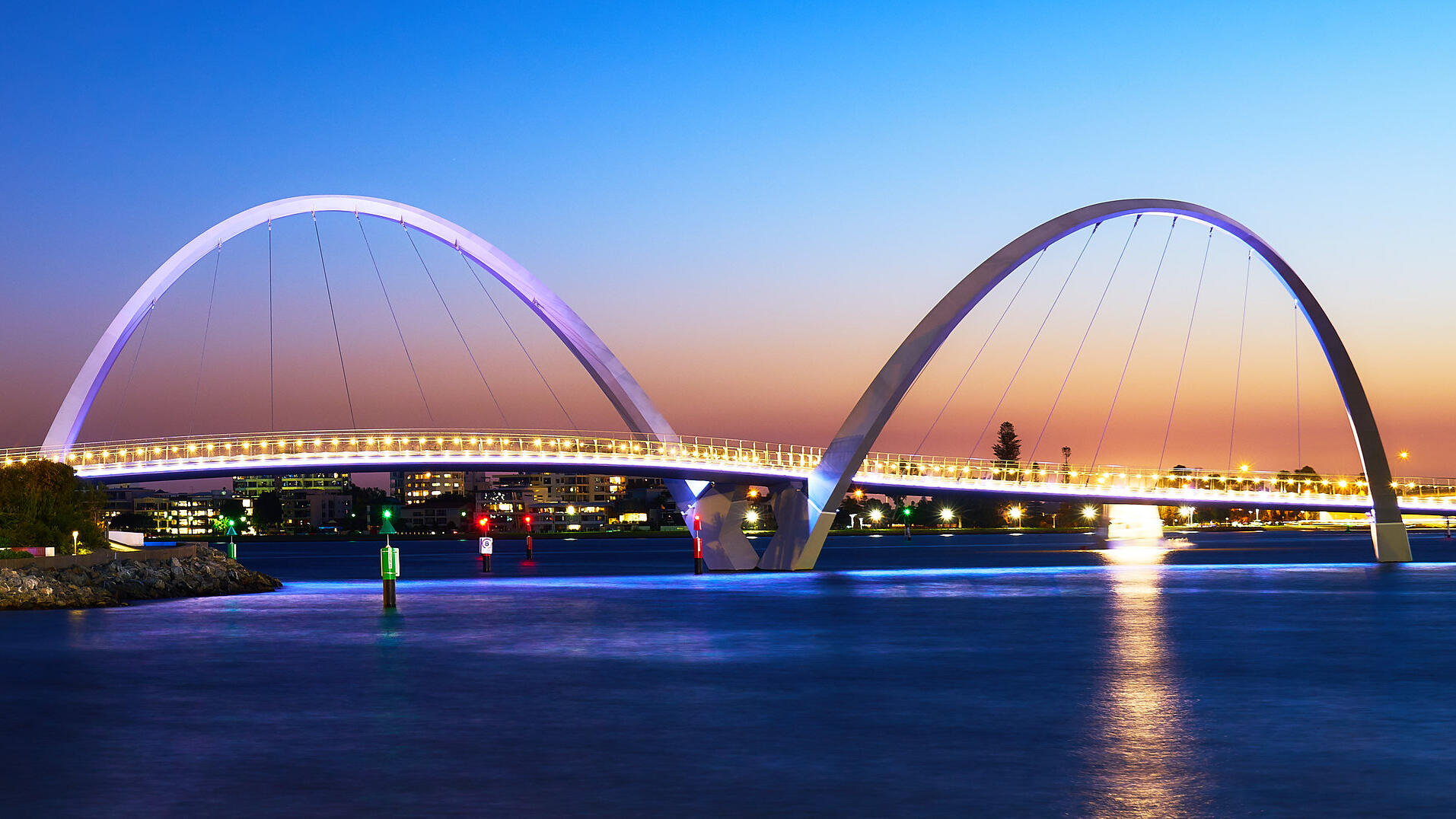
Talks of succession from America’s dystopian 50-state union are no means the exclusive domain of Texas, California and Hawaii, with fresh impetus emerging for Western Australia (WA) to operate as an independent nation with enough natural resources to fuel half the world’s industry.
Admittedly, talk of WA’s secession from Australia’s six-state and two-territory commonwealth is far from new.
Despite 66.2% of sand gropers – the colloquial nickname for residents of WA - voting in favour of secession in a 1933 referendum, the British Parliament at the time ruled it had no legal power to grant the request without the consent of the Australian Federal Government.
Fast forward the best part of a century, and while WA’s constitution still allows for unilateral withdrawal - through a state referendum and legislation - there still doesn’t appear to be any unilateral mechanism for a state to leave the Commonwealth.
In short, the state's hands appear to be tied, just as they are in a growing number of U.S. states where the ranks of voters eager to leave the union are also growing.
However, that reality hasn't stopped the notion of WA’s secession from becoming popular again.
WAxit
Dubbed WAxit, a new push for WA secession has recently emerged with the launch of a 400-page book in March 2026, led by former barrister Julian Gillespie, titled Secession by Western Australia.
A former barrister who led challenges against covid policies, Gillespie’s book argues that the country’s golden west continues to be marginalised by the nation’s capital, which lies 3,000km to the east.
Overall, he believes WA’s secession would benefit onshore miners while financing the fiscal stability of the nation and redistributing wealth.
Gillespie also argues that despite WA generating over 45% of the nation's exports - often driven by the mining sector - most of its wealth fails to stay in the state.

Federal project superfluous
Comparing WA to energy-rich global powerhouses like Qatar and Norway, Gillespie’s book makes a base case for a 20% tax on natural resource miners and oil and gas producers, which would make up for zero income tax on the new republic’s businesses and individuals.
“No one in Qatar pays [personal income] taxes, and they’ve got one of the greatest sovereign wealth funds globally, and their people are enriched, and they have a fantastic quality of life,” says Gillespie.
He argues that 125 years on from federation, Australia’s states no longer need what he refers to as the ‘federal project’.
“We’ve got this enormously expensive governance layer that was applied to all Australians from 1901 onwards… we’ve had a doubling of energy bills since 2019; housing has become increasingly unaffordable. Where’s the value add?” he ponders.
While Gillespie’s book covers everything from defence and health to a new monetary system and a new currency, to what happens to the miners, the North-West Shelf, the new corruption system, and the policing system, the final chapter is a full-blown draft of a new constitution.
Pathway to breakaway
While the question of secession could only be presented after the next state election in early 2029, Gillespie argues that changes to legislation, especially the 1986 Australia Act, may provide a pathway for WA to unilaterally break away.
What this act effectively did was make all Australian law independent of the British Parliament and legal systems, whereas before this, the monarch could disallow any state law within two years.
Unsurprisingly, the Albanese government dismisses Gillespie’s book as an “idiotic” concept that would harm WA.
Meanwhile, Patrick Gorman, assistant minister to the prime minister and federal member for Perth, reminds the state’s voters that secession would leave Western Australia with a weaker economy and no defence force.
Secession idiotic
He claims the book represents fringe views and uses secession “as cover for radical right-wing tax policies that have failed to stand on their own".
“… now is not the time for idiotic ideas like secession… Global conflict is a sobering reminder that Australia is stronger together. It will also waste billions of dollars and many years on bureaucratic adjustments,” he concluded.
Nevertheless, one of the books co-authors, Prof Gigi Foster, an economist at the University of NSW reminds Canberra that West Australians see themselves as diametrically different from those in the eastern states.
“There’s definitely a sentiment, a sort of identity, that is separate from the eastern states that the Western Australians have really nurtured and cultivated and still adhere to,” said Foster, who sees WA becoming a “beacon” for eastern Australia.
Rather than a rejection of everything Australian, the book’s co-authors believe their call for self-governance is about embracing “Australianness”.
“It is out of loyalty to these Australian ideals,” they conclude, “that we can no longer abide a system that so routinely betrays them.”
Interestingly, there are strong parallels between the U.S state of Hawaii and WA, with both states wedded to a federal system amid broad opposition.
There are also strong parallels between WA and the U.S. state of California, which would be the world's fourth or fifth largest economy if it were ever to become an independent nation.
