Major United States benchmark averages finished Tuesday's session (Wednesday AEDT) in the green as traders weighed shifting expectations for a December Federal Reserve rate cut and reacted to the latest developments in the artificial intelligence sector.
The Dow Jones Industrial Averages climbed 664.2 points or 1.4% to 47,112.5, the S&P 500 gained 60.8 points or 0.9% to 6,765.9, and the Nasdaq Composite added 153.6 points or 0.7% to 23,025.6.
Market attention remains firmly fixed on the Fed’s next policy decision. According to the CME Group FedWatch Tool, traders are pricing in an 82.7% probability of a 25-basis-point rate cut in December.
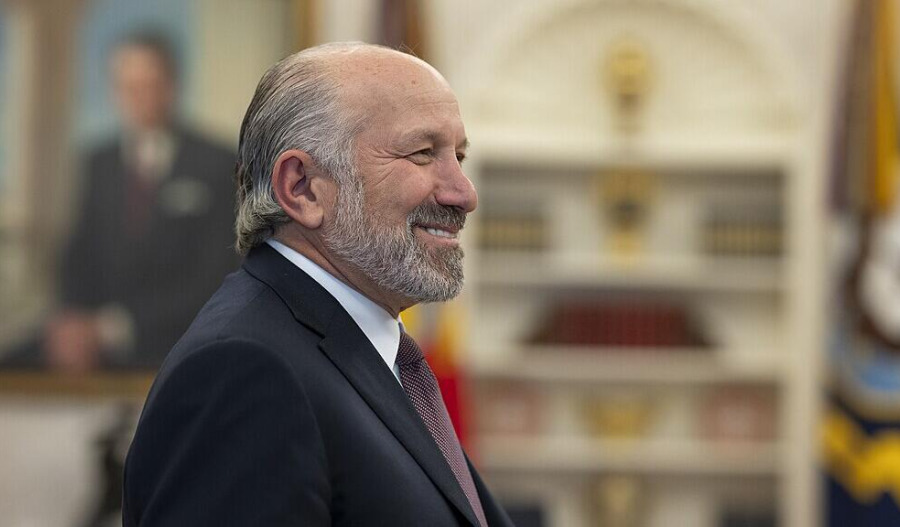
Sentiment strengthened after Bloomberg reported that White House National Economic Council Director Kevin Hassett is being considered as the leading candidate to become the next Fed chair.
Investors view Hassett as more inclined toward the lower-rate environment favoured by President Donald Trump.
Treasury Secretary Scott Bessent also told CNBC on Tuesday there is a “very good chance” Trump will “make an announcement before Christmas”.
Expectations for cuts have already been rising, following remarks on Friday from New York Fed President John Williams, who noted that there was “room for a further adjustment in the near term”.
Alphabet was one of the key winners of the session, rising 1.6% and touching a record high after The Information reported that Meta Platforms is considering spending billions of dollars on its AI chips.
The development follows Alphabet’s unveiling of its upgraded AI model, Gemini 3 last week.
Market commentators suggested that Meta’s potential interest in Alphabet’s chips - combined with more efficient compute costs - could support broader economic productivity gains as more companies adopt advanced AI tools.

However, Nvidia shares fell 2.6% on the news.
Despite Tuesday’s gains, all three major U.S. benchmarks remain on track for a losing month. The S&P 500 is down roughly 1% in November, the Nasdaq has slid about 3%, and the Dow is lower by around 1% month to date as concerns persist over stretched technology valuations.
Among the S&P 500’s 11 sectors, healthcare led gains, while utilities posted the steepest declines.
Consumer caution remains a point of concern. Softer-than-expected retail sales and weak consumer confidence readings have fuelled worry about household spending, which underpins about 70% of the U.S. economy.
Even so, better-than-forecast earnings from several retailers lifted the S&P 500 retail index by 2.2%.
Kohl’s jumped 42.5% and Abercrombie & Fitch surged 37.5% after both companies upgraded their annual profit forecasts.
Burlington Stores tumbled 12.2% after its third-quarter revenue missed expectations.
Elsewhere, U.S.-listed shares of Alibaba slipped 2.3% despite the Chinese e-commerce group beating quarterly revenue expectations.
Crypto-exposed names Coinbase and MicroStrategy fell 0.7% and 3.8%, respectively, as bitcoin weakness continued.
On the bond markets, the 10-year and 2-year Treasury yields were down 0.8% and 1.2% to 4% and 3.459%, respectively.