Major United States benchmark averages closed higher on Wednesday (Thursday AEDT) as weaker-than-expected U.S. employment data fuelled hopes that the Federal Reserve will cut interest rates at its final policy meeting of the year next week.
The Dow Jones Industrial Average gained 408.4 points or 0.9% to 47,882.9, the S&P 500 added 20.3 points or 0.3% to 6,849.7, and the Nasdaq Composite advanced 40.4 points or 0.2% to 23,454.1.
Payrolls processor ADP reported that private payrolls unexpectedly fell by 32,000 in November, defying economists’ forecasts for a 10,000 increase.
Despite the disappointing reading, traders interpreted the weakness as reinforcing the case for an interest rate cut, even as the broader economic picture remains steady.
In a separate release, the Institute for Supply Management said U.S. services activity was little changed in November at 52.6, compared with 52.4 in October.
The prices paid component edged lower but remained elevated, underscoring ongoing inflation pressures. The data preceded Friday’s delayed personal consumption expenditures report, the Fed’s preferred inflation gauge.
According to the CME Group FedWatch Tool, markets are now pricing in an 89% probability of a cut, a notable jump from expectations in mid-November.

Hopes for a lower-rate environment buoyed financial stocks, with shares of Wells Fargo and American Express rising 3.5% and 2.1%, respectively, as investors bet that cheaper credit would encourage loan growth and support economic activity.
Among individual stocks, Marvell Technology jumped 7.9% after announcing it would acquire semiconductor start-up Celestial AI in a US$3.25 billion deal.
Microchip Technology rallied after lifting its third-quarter outlook.
American Eagle Outfitters surged 15.1% after raising its annual comparable sales forecast, citing strong early holiday demand.
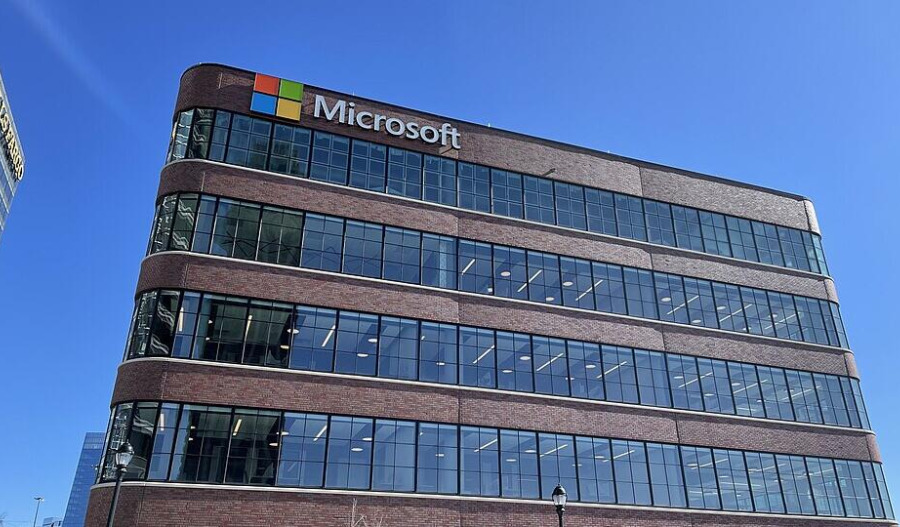
Microsoft, however, came under pressure, falling 2.5% after The Information reported the company was cutting software sales quotas tied to artificial intelligence. The stock pared losses after Microsoft denied lowering quotas.
Meanwhile, “The Big Short” investor Michael Burry warned that the artificial intelligence boom could begin to unwind over the next two years.
“What you see in every prior one was the relevant stock market peak was before you were even halfway done with the capital expenditure,” he said on Michael Lewis’s podcast “Against The Rules: The Big Short Companion.”
On the bond markets, 10-year and 2-year rates were down 0.7% apiece at 4.061% and 3.486%, respectively.