
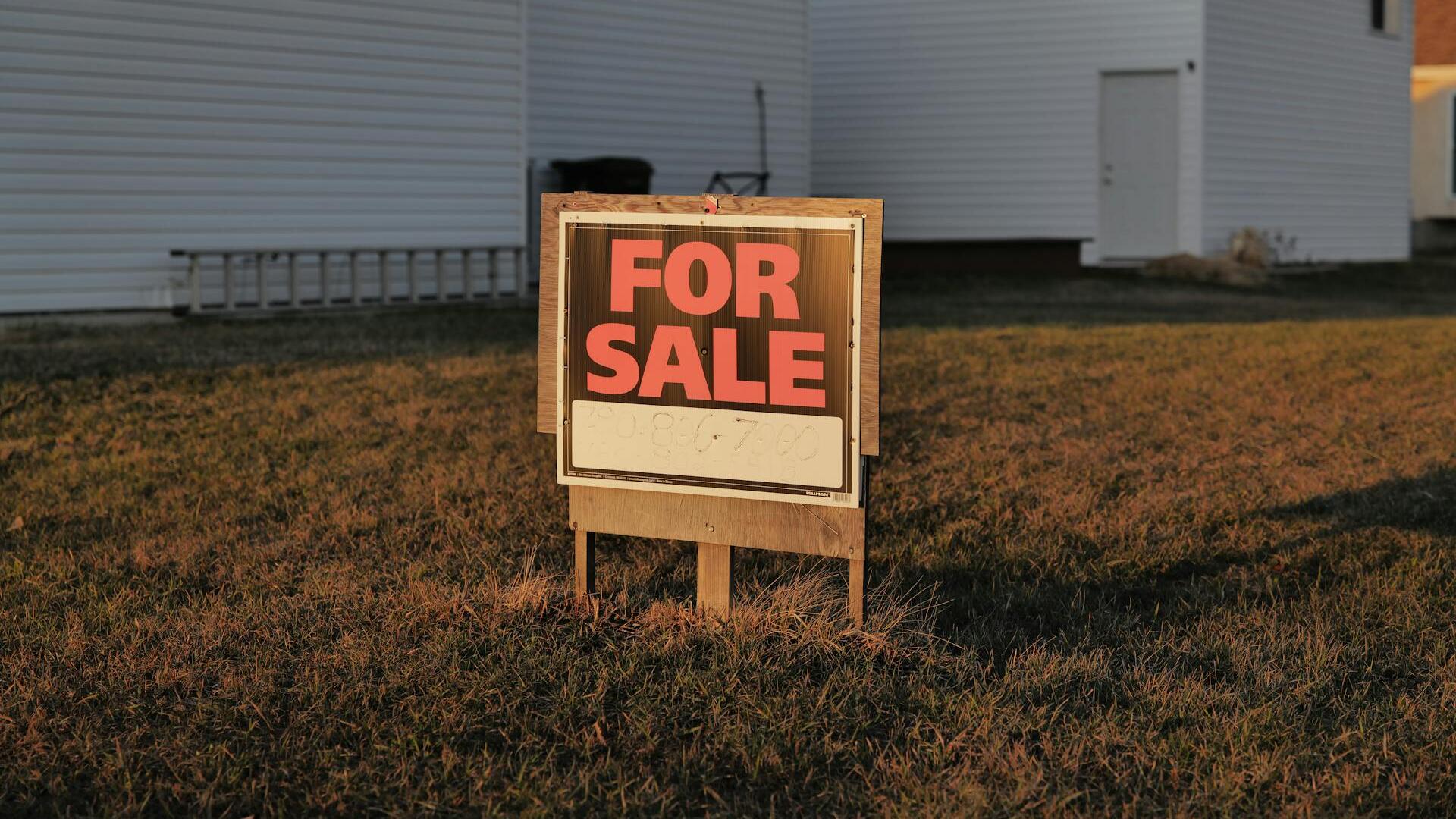
The United States housing market has been under pressure in recent months, beset by both low inventory and economic stress from the Iran war.
Existing-home sales fell by 3.6% month-over-month in March, per the National Association of Realtors (NAR). Median housing prices also rose for a 33rd consecutive month.
Even before the Iran war began, 75% of surveyed Americans said they were hesitant to make a real estate move due to economic concerns, The Harris Poll found. Since then, inventory has continued to lag, and mortgage rates have spiked.
However, the turmoil may persist throughout 2026, as proposed legislative solutions have stalled and the fallout of the Iran war has continued.
The inventory strain
The U.S. housing market is struggling with a lack of inventory amid flagging construction.
In March, inventory was 1.36 million units, or 4.1 months of supply. The inventory-to-sales ratio has remained below historical norms in recent years, according to NAR, with roughly another 300,000-500,000 houses needed to restore normal conditions.
U.S. housing supply growth has slowed drastically since the Global Financial Crisis, per Goldman Sachs analysts. “The rental and homeowner vacancy rates—the share of the total housing stock available for rental and sale, respectively—currently stand below the rates they had reached in the two decades preceding the Great Recession,” they wrote in 2025.
The slowdown in construction is in part due to strict land use regulations, with about 60% of residential land in the U.S.’ 240 largest metropolitan areas limited to a maximum height of two to three stories in 2023.
The White House’s 2026 Economic Report of the President additionally argues that regulations add more than US$100,000 in expenses to single-family home construction, including compliance costs and zoning approval fees. These additional fees represent about 29.5% of the cost of building a new home, it says.

The Iran war's economic stress
Economic turmoil from the Iran war has also contributed to depressed sales, as mortgage rates rise and consumer sentiment collapses.
While existing-home sales dropped in March, sales had climbed by 1.7% in February. The war began on 28 February.
The average 30-year fixed-rate mortgage was 6.18% in March, and 6.35% in the week ending 17 April. While this is below the 6.65% rate seen in March 2025, 30-year mortgage rates in February 2026 averaged just 6.05%. Mortgage rates climbed each week from the war’s beginning until the ceasefire announcement on 7 April.
NAR has revised its full-year existing-home sales growth forecast down to just 4% due to this increase in mortgage rates, after projecting 14% growth for the year in December. It also expects flat new-home sales, well below its prior guidance of a 5% rise.
Consumer confidence has also plummeted during the war. Sentiment had plunged 11% in early April, according to the University of Michigan’s Surveys of Consumers.
One-year expected business conditions collapsed by 20%, while assessments of personal finances fell by 11%. “Buying conditions for durables and vehicles worsened, again on the basis of high prices,” wrote Surveys of Consumers director Joanne Hsu.
How could the pressure end?
Both the U.S. House of Representatives and Senate have passed bills to lower regulatory barriers to housing construction, with bipartisan support.
The 21st Century ROAD to Housing Act, the Senate’s latest version of the bill, “will boost housing supply and bring down costs”, according to Senate Banking, Housing, and Urban Affairs Committee Ranking Member Elizabeth Warren. Both bills would streamline environmental reviews and offer grants to push state and local governments to reform zoning rules.
However, the Senate’s bill has stalled indefinitely while under consideration in the House, partly due to a newly-added provision banning large institutional investors from buying some single-family housing.
The White House’s Office of Management and Budget has voiced support for the bill, including the Senate’s amendments. However, President Donald Trump has said he will not sign any legislation until the SAVE America Act voter registration law is passed.
Trump signed an executive order in March directing federal agencies to identify and cut regulations delaying housing construction, but he has also said that the administration would seek to keep housing prices high.
“I want to drive housing prices up for people that own their homes, and they can be assured that’s what’s going to happen,” he said in January.
Meanwhile, it remains unclear when the Iran war will reach a conclusive end. Even if the war remains limited in scope, global economic growth is set to slow to 3.1% this year, the International Monetary Fund has said.
Mortgage rates have begun to decline during the ceasefire, with both purchasing and refinancing applications rising last week. “Despite the geopolitical uncertainty, housing demand is being supported by a still resilient job market, and homebuyers are experiencing a buyer’s market in most of the country given the higher levels of inventory relative to last year,” wrote Mortgage Bankers Association SVP and chief economist Mike Fratantoni.
U.S. economic growth could rebound in 2027 if the war is not prolonged, Oxford Economics has projected. “We expect growth to pick up in 2027 as we think the disruption related to the U.S./Israel war with Iran will prove short-lived,” its chief U.S. economist, Michael Pearce, wrote.