
United States stock futures were little changed on Wednesday night (Thursday AEDT), following a solid start to the second quarter for Wall Street, as investors turned cautious ahead of a key geopolitical update from President Donald Trump.
By 10:20 am AEDT (11:20 pm GMT), futures tied to the Dow Jones Industrial Average, S&P 500, and Nasdaq 100 were trading within a narrow range of ±0.1%.
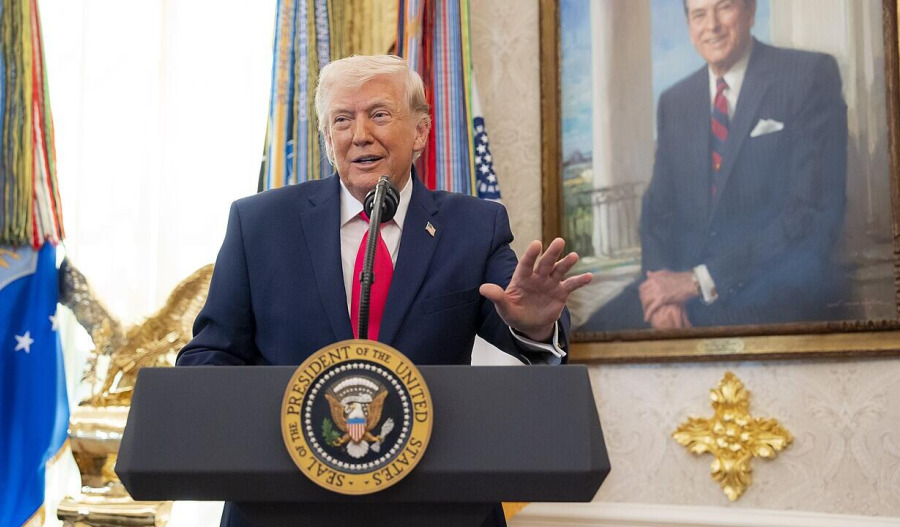
Market participants remained focused on developments in the Middle East, with Trump scheduled to deliver an address at 9 pm ET (12 pm AEDT) to provide what the White House described as an “important update on Iran”.
The speech is expected to be closely watched, given its potential to influence both energy markets and broader risk sentiment.
Oil prices have been a central driver of market volatility since the conflict began in late February, with Brent crude futures having surged nearly 40% over that period. Any indication of de-escalation could have significant implications for inflation expectations and equity markets.
During regular trading on Wednesday, all three major U.S. indices posted gains, supported by growing optimism that the conflict between the United States and Iran may be approaching a resolution.

The S&P 500 rose 0.72%, while the Nasdaq Composite gained 1.16%. The Dow Jones Industrial Average added 224.23 points, or 0.48%.
Energy markets showed signs of easing, providing additional support to equities. West Texas Intermediate crude futures fell 1.24% to settle at $100.12 per barrel, while Brent crude declined 2.7% to $101.16 per barrel.
Investor sentiment was also shaped by comments from Trump earlier in the day. In a post on Truth Social, the president said that Iran’s leadership had requested a ceasefire.
However, he indicated that the United States would only consider such a proposal if the Strait of Hormuz was “open, free, and clear”, adding that “until then, we are blasting Iran into oblivion or, as they say, back to the Stone Ages!!!”
The remarks followed comments made at the White House on Tuesday, where Trump said he expected U.S. military forces to withdraw from Iran within “two or three weeks”, raising hopes that the conflict may not become prolonged.
Looking ahead, Thursday marks the final trading session of the week due to the Good Friday holiday, which will see U.S. markets closed.
Despite the shortened trading week, key economic data releases remain in focus. Investors will monitor initial jobless claims for the week ending 28 March, while the March nonfarm payrolls report is expected to provide further insight into the strength of the U.S. labour market.