
Washington has authorised a US$11.1 billion (A$16.8 billion) arms procurement for Taiwan, a more hardened stance under the second Trump administration, with arms prioritising mobility over prestige.
Notified to Congress yesterday, the agreement steers Taipei away from legacy platforms towards a 'porcupine' defence posture designed to make amphibious operations prohibitively costly.
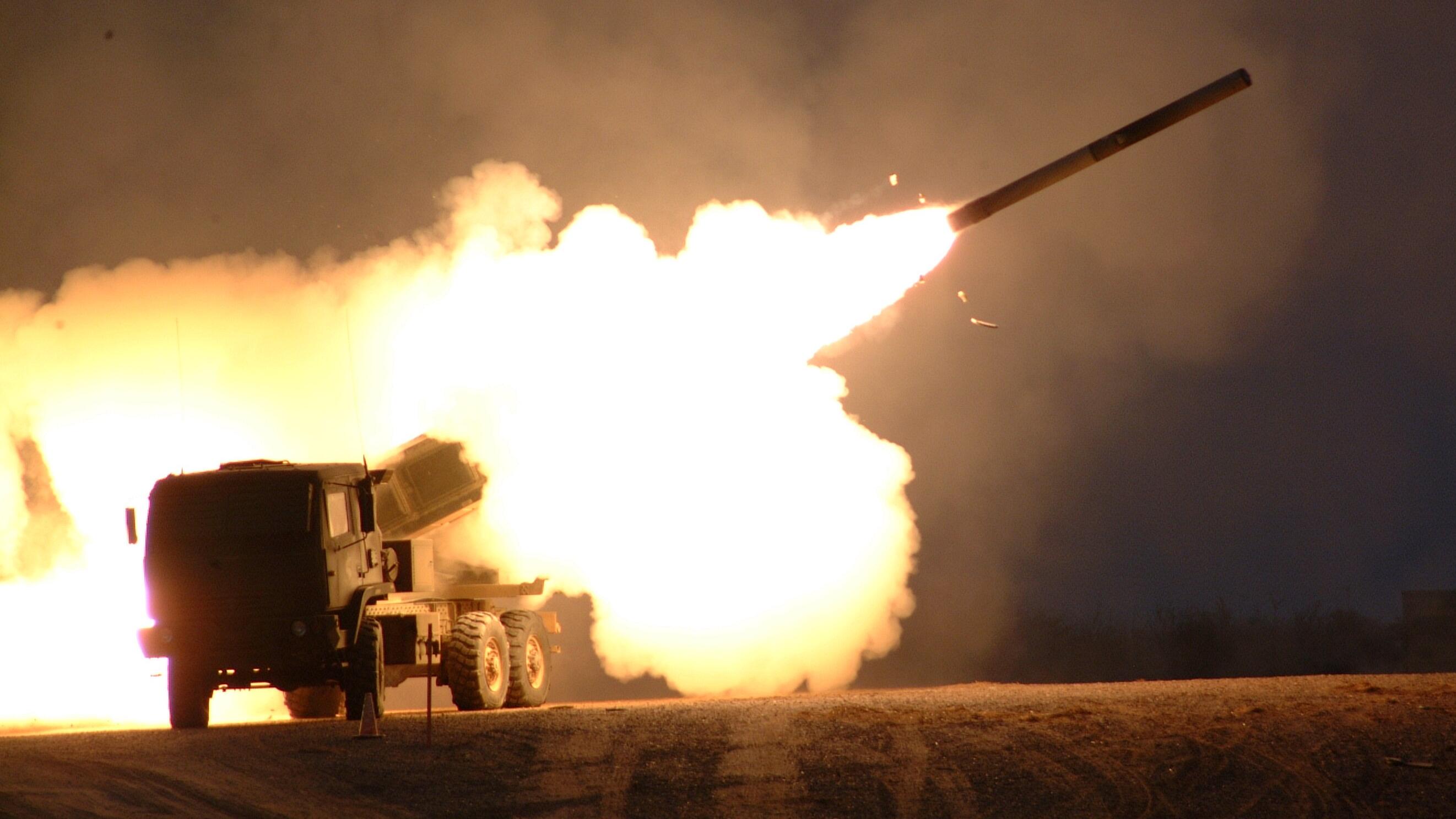
Details released by the U.S. Defence Security Cooperation Agency confirm the package comprises eight distinct notifications headlined by 82 High Mobility Artillery Rocket Systems (HIMARS) valued at roughly $4.05 billion.
These truck-mounted launchers allow operators to discharge precision-guided rockets and relocate rapidly, complicating counter-battery targeting by hostile forces and ensuring survivability in a saturation environment.
Arming up
Unmanned aerial systems form a core component, with a $1.1 billion allocation securing Altius 600M and 700M loitering munitions produced by Anduril Industries.
These platforms offer extended endurance and autonomous target recognition, providing a volume-based mechanism to degrade amphibious fleets without risking manned assets.
Coupled with a $1.01 billion Tactical Mission Network suite, the acquisition aims to close the sensor-to-shooter loop across dispersed units and integrate data feeds for real-time targeting.
Conventional ground capabilities receive a kinetic refresh via 60 M109A7 Paladins, which utilise a chassis sharing commonality with the Bradley Fighting Vehicle to reduce logistics overhead.
Javelin and TOW 2B anti-tank missiles complete the manifest, targeting the hardening of coastal defence zones against armoured landing operations.

Financial stress
Procurement is occurring as President Trump continues to press allies regarding defence outlays and has publicly urged Taiwan to commit 10% of GDP to military spending.
With current capex hovering around just 2.5%, President Lai Ching-te has tabled a special NT$1.25 trillion ($40 billion) budget to bridge the gap, though legislative hurdles remain.
Opposition KMT lawmakers have stalled portions of the funding, citing concerns over long-term fiscal sustainability and the pacing of disbursements amidst the aggressive timeline.
Beijing has responded with anticipated censure and threats of ‘resolute countermeasures’; the notification solidifies long-term revenue streams for prime contractors involved in the deal.
Anduril Industries secures a position in the Foreign Military Sales (FMS) pipeline alongside legacy primes, marking an expansion of the supplier base for critical asymmetrical systems.
FMS notifications carry weight, as they represent binding bureaucratic momentum regardless of political rhetoric.
With funding cleared, supply chain throughput and delivery schedules remain the primary variables for implementation and revenue recognition.
Deal Breakdown by System & Contractor