Azzet reports on three stocks with price moving updates today.

Heavy Rare Earths leaps on promising assay results at Radium Hill ~
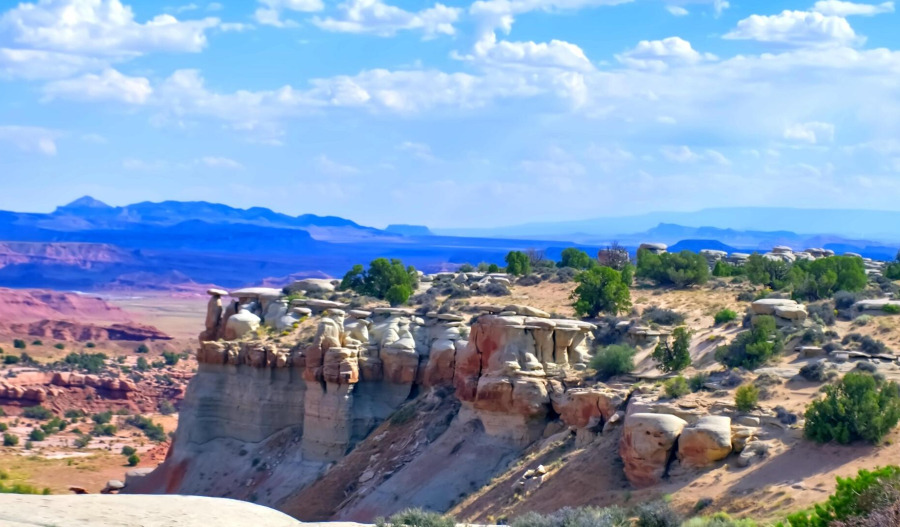
Shares in Heavy Rare Earths (ASX: HRE) were up 22.2% by 2:10 pm AEDT (3:10 am GMT) after the uranium and rare earth explorer/developer announced promising assay results from their recent reconnaissance rock chip sampling program at Radium Hill - located near Olary in eastern South Australia - revealing high-grade scandium, yttrium, and uranium.
While the assayed uranium grades were strong as expected, the consistent presence of high-grade Scandium (up to 969ppm Sc2O3) and Yttrium (up to 2236ppm Y2O3) close to the historic mine and up to 5km from the mine, further positions the miner as a key player in the critical minerals sector.
Rock samples were collected across the 8km-long linear SW to NE extension from the historic Radium Hill mine and assessed with a multi-element analysis.
Commenting on today’s update, chair Gabriel Chiappini told the market that reinterpretation of aerial geophysical data, collected by HRE in 1H 2025, coupled with intense investigation of historical data, is refining the miner’s knowledge of an 8-kilometre structural corridor, enriched in a suite of critical minerals, including from the Radium Hill mine.
It’s understood that this corridor, corresponding to the axial plane of a regional fold, outcrops for only half of its interpreted extent and, where it does outcrop, there are numerous examples of historical mining efforts dating back more than a century.
“Given this structural corridor is a geological extension of Australia’s first uranium mine, we anticipated receiving positive uranium samples but are encouraged to find anomalous values for a range of critical minerals," he said.
“We feel there is considerable potential for discovery from a suite of critical minerals in a historical mining camp which has not been tested by a single drillhole in the past 64 years, and where previous mining focussed almost solely on one commodity, uranium.”
While sampling at Bristowe’s Prospect confirmed multiple lodes of high-grade U-REE-Y-Sc mineralisation with up to 721ppm Sc2O3,1728ppm Y2O3, and 0.36% U3O8, of greater significance were samples from Bonython Hill.
These samples show the strongly anomalous nature of U-REE-Y-Sc mineralisation continues for up to 5 kilometres along strike from Radium Hill mine, with up to 284ppm Sc2O3,1309ppm Y2O3 and 0.15% U3O8.
The Company’s evolving geological model suggests there is considerable potential to discover mineralised extensions to the main Radium Hill mine lodes, predominantly northeast, but also southwest of the Mine, where 954,000 tonnes of ore @ 0.12 U3O8 were mined and processed between 1954 and 1961 to produce 850t of U3O8.
Today’s market update follows the company’s announcement last week of highly encouraging historical drill hole assay results from the Prospect Hill Project, which lies in the northern Flinders Ranges of South Australia.
These confirm the presence of high-grade Silver, Copper, Zinc, and Lead, alongside the previously reported high-grade Tin assays from the same project.
Chiappini told the market that the initial findings from the analysis of the extensive historical database acquired with the Prospect Hill project, indicates the project appears to have strong potential as a polymetallic deposit, with RC drill intercepts grading up to 282 g/t Ag, copper grades up to 1.87%, zinc grades up to 3.48%, and lead up to 3.16%.
The miner’s other projects include:
- Cowalinya Project (Western Australia): This is HRE's key rare earth exploration project, located near Esperance. It is an ionic adsorption clay-hosted deposit with a substantial JORC Inferred Resource.
- Perenjori Project (Western Australia): A 100%-owned rare earth project targeting heavy rare earth-enriched ion adsorption clay deposits in the Mid West region.
- Lake Namba-Billeroo Project (South Australia): HRE is earning an 80% interest in the uranium rights for this project, which features unexplored prospective palaeochannels.
- Duke Project (Northern Territory): A rare earth project located near Tennant Creek, situated close to the Stuart Highway and the Darwin-Adelaide rail line.
As of the most recent quarter ended June 30, 2025, the miner had total cash and cash equivalents of $1.94 million.
Heavy Rare Earths has a market cap of $9.5 million; the share price is up 76% in one year and up 27% in the last week.
The stock’s shares appear to be in a near-term downtrend confirmed by the relationship between the 5 and 20-day moving averages.
Nickel Industries lifts after updating on Hengjaya Mine
Shares in Nickel Industries (ASX: NIC) were trading around 0.9% higher after the biggest pure-play nickel producer listed on the ASX received approval from the Indonesian government to increase 2025 RKAB nickel-ore sales at its Hengjaya Mine quota from 9 million wet metric tonnes (wmt) to 10.5 million tonnes.
This decision allows the company to immediately restart sales of stockpiled ore into the Indonesia Morowali Industrial Park by haul road and barge.
The approval follows the recent sign-off of the mine’s AMDAL environmental assessment by Indonesia’s Ministry of Environment.
While the RKAB licence is issued annually, the AMDAL is valid for five years.
It’s understood that this longer-term environmental approval supports an application for an expanded RKAB for 2026 - currently undergoing final approvals – which is targeting 19 million wmt per annum.
The company's environmental permit allows for Indonesia's first in-pit tailings storage, with a dedicated pipeline between the Excelsior Nickel Cobalt (ENC) High-Pressure Acid Leach (HPAL) plant - associated processing plant in Indonesia being developed by Nickel Industries Limited and its partners - and the Hengjaya Mine.
It’s understood that the ENC project is expected to produce around 72,000 tonnes of nickel metal annually.
This approach is designed to improve traceability for end users and reduce environmental impact.
Approval of the five-year AMDAL not only supports higher production for 2025 but also underpins the company's application for a substantial increase to the nickel ore quota in 2026.
Sales of stockpiled ore to the Indonesia Morowali Industrial Park (IMIP) have already recommenced, boosting near-term revenue potential.
Commenting on today’s update, Nickel Industries’ managing director Justin Werner told the market that the AMDAL approval is the first of its kind to permit the use of a pipeline to return HPAL tailings to the mine for storage, re-contouring and revegetation.
“This innovation will significantly contribute to our goal of positioning ENC as the lowest carbon and cost-intensive HPAL globally, producing diversified class 1 and intermediary nickel products,” he said.
Nickel Industries’ diversified portfolio of nickel mining and processing operations and projects in Indonesia also includes:
Rotary Kiln Electric Furnace (RKEF) Operations
- Ranger Nickel Project: Also at the IMIP, this project has a nameplate capacity of 15kt of nickel per annum.
- Angel Nickel Project: Located at the Indonesia Weda Bay Industrial Park (IWIP), this project has a nameplate capacity of 36kt of nickel per annum and an integrated 380MW power plant.
- Oracle Nickel Project: Located within the IMIP, this project has a nameplate capacity of 36kt of nickel per annum and an integrated 380MW power plant.
High-Pressure Acid Leach (HPAL) Operations
- Huayue Nickel Cobalt (HNC) Project: The company holds a 10% interest in this operating project, which produces MHP for the EV supply chain.
Mining Operations and Resource Projects
- Sampala Project Nickel Industries is acquiring a 60% interest in this advanced resource project, located near the IMIP. It is being developed with an initial production target of six million wet metric tonnes (wmt) per annum.
- Siduarsi Project: The company holds a 51% interest (with rights to increase to 100%) in this 6th generation Contract of Work (CoW) area in West Papua, which has confirmed potential for both HPAL and RKEF processing.
Nickel Industries has a market cap of $3.2 billion; the share price is down 17% in one year and up around 6% in the last month.
The stock’s shares appear to be in a near-term downtrend confirmed by its 20-day moving average.
Consensus is Strong Buy.
Austal falls after Hanwha cleared to increase its stake
Shares in Austal (ASX: ASB) were down around 1.1% - after exiting a recent trading halt this morning - following revelations that Treasurer Jim Chalmers has granted permission for Hanwha to buy another 10% stake in the ship builder – taking the spurned South Korean suitor’s stake to 19.9%.
As a result, Hanwha now exceeds Andrew and Nicola Forrest’s private Tattarang group (19.28%) as Austal’s largest shareholder.
Despite appeals by now-retired Austal founder John Rothwell to Chalmers to not approve Hanwha’s push, CEO Paddy Gregg said the company respected the treasurer’s decision and the conditions attached to the approval.
“With the clarity provided by this decision, the board and management are firmly focused on delivering value for all Austal shareholders as Australia’s sovereign shipbuilder under the strategic shipbuilding agreement, a major contributor to the U.S. defence industrial base, and with significant growth opportunities at our U.S. and Australasia operations.”
Meanwhile, with this issue now off the table, market attention will now refocus on Hanwha’s interest in matching the two board seats that represent Tattarang group’s interests.
Hanwha has previously indicated it would seek to partner with Austal on shipbuilding opportunities.
Clearly, given the diverging interests of its two largest shareholders, Austal board meetings are likely to be interesting.
While Hanwha has made no secret of its interest in acquiring Austal, the Tattarang group’s stake may help prevent this from ever happening.
The Foreign Investment Review Board (FIRB) spent more than 10 months scrutinising Hanwha's pitch to lift its stake in Austal from 9.9% to 19.9% after the Australian shipbuilder rejected an earlier takeover bid from the company.
It’s understood that the approval includes limits on the South Korean multinational conglomerates' access to sensitive data and stringent criteria for any Hanwha nominee to Austal’s board.
Over the past 12 months, Austal shares have risen 123%, outperforming the S&P/ASX 200 Index (ASX: XJO), which has risen 3% over the same period.
While Hanwha has not commented on today’s decision, it's understood that it will remain a minority shareholder and cannot increase its stake higher.
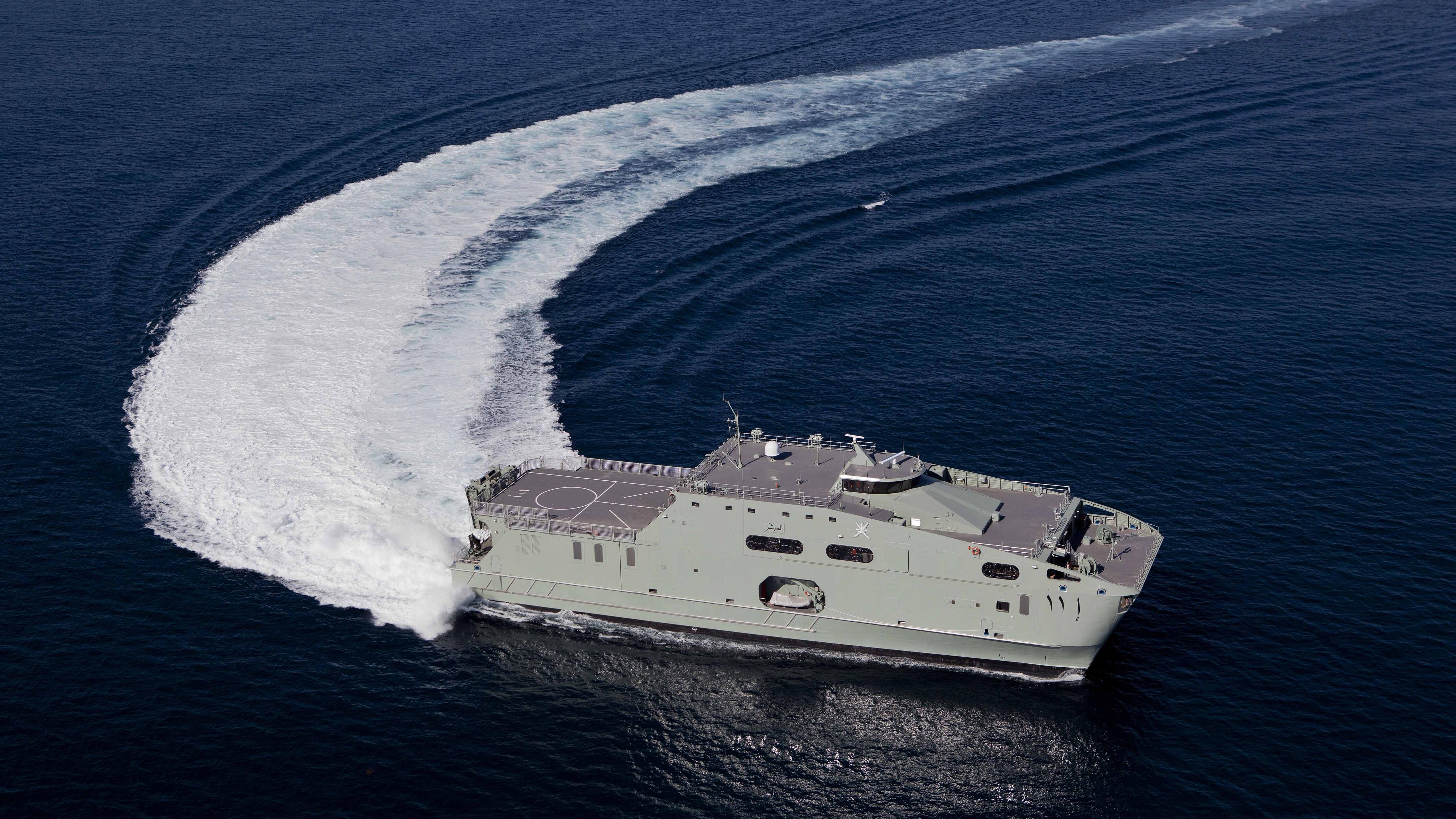
Austal is the only major shipbuilder in Australia, and holds big defence contracts, including three worth a combined $7 billion with the U.S. Navy.
Its order book stands at more than $14 billion, and the company has operations in Perth, the U.S. state of Alabama, the Philippines and Vietnam.
Austal has a market cap of $2.6 billion; the share price is up 116% in one year and down 6% in the last week.
The stock appears to be in a long-term uptrend.
Its 200-day moving average is upward sloping and shows that there has been investor demand for the stock over the long term.
Consensus is Moderate Buy.
This article does not constitute financial or product advice. You should consider independent advice before making financial decisions.