Azzet reports on three stocks with double digit price moving updates today.

DroneShield tanks on CEO exit ~
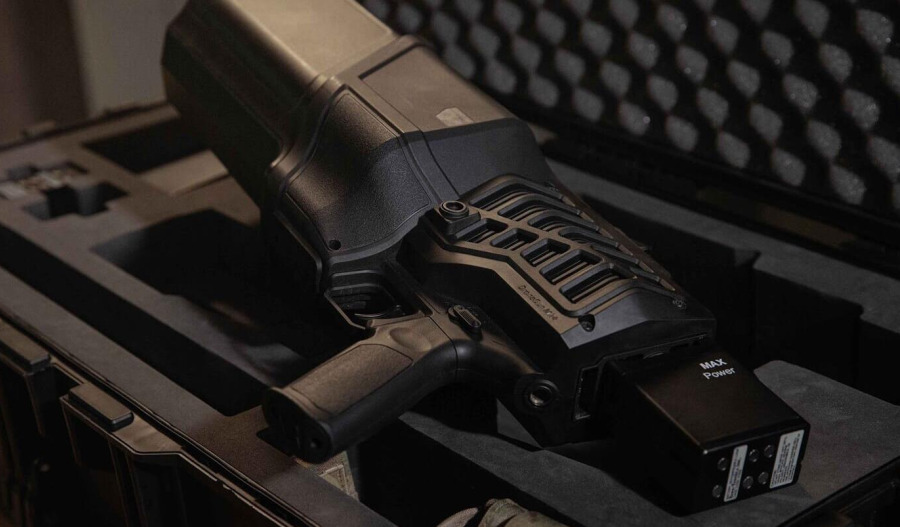
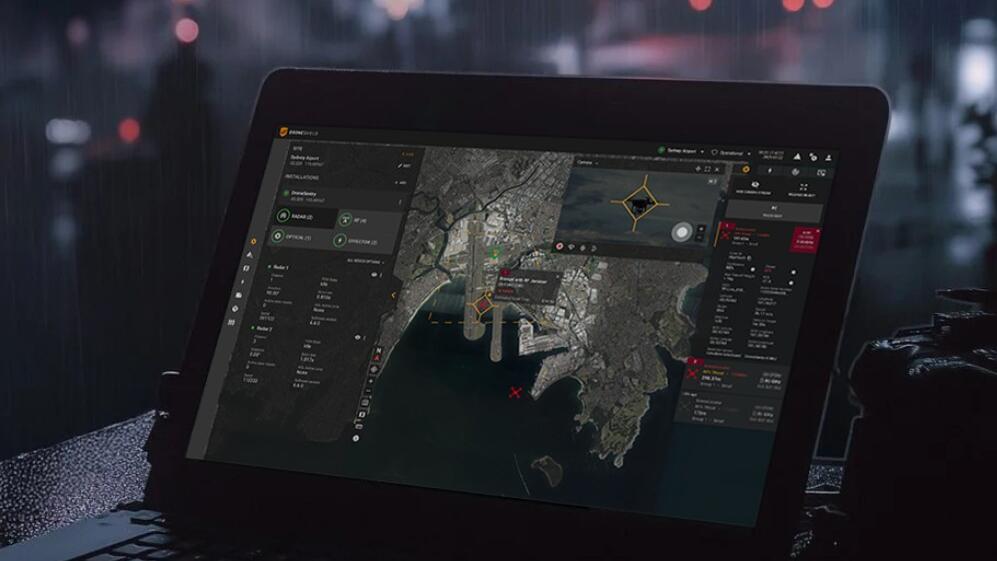
Investors who suspected that the decision taken late last year by DroneShield (ASX: DRO) CEO Oleg Vornik to sell down his sizable personal holding in the anti-drone stock was a prelude to an exit were right on the money, with the company’s top dog calling it quits this morning.
While DroneShield’s share price swings wildly at the best of times, due to persistent short selling, today’s missive that Vornik will step down immediately after more than 10 years in the role was not received well by the market.
With the share price tanking 17.3% by 1:35 pm AEST (3:35 am GMT), the market made it clear that it has little confidence in Vornik handing the baton to insider Angus Bean, the company’s chief product officer.
While Vornik – whose held the top job for over a decade - will stay on as an adviser for the next three months to support a smooth transition, investors may be forgiven for wanting him to sever all ties with the business now.
Today’s bombshell was accompanied by revelations that chairman Peter James – who also sold down a major personal holding in the stock last year – is also heading for the exit.
It’s understood that former News Corp executive and REA Group chair Hamish McLennan will become a director and chair-elect from 1 May, while James will not be seeking re-election.
Given that he’s held senior technology roles in the company since 2016 and has led development of the company’s core counter-drone systems, Bean’s appointment appears a logical one.
However, the jury’s clearly out on what McLennan’s appointment can do to steer DroneShield through what is arguably its most important next stage of growth.
Given that the race by anti-drone stocks to create and defend competitive moats is more critical than ever, today’s note by the incoming chair appears superficial and underwhelming.
“I have followed DroneShield’s trajectory closely and am looking forward to contributing to the next phase of the Company’s development both within Australia and abroad,” McLennan said.
McLennan is vowing to strengthen governance, discipline and operational maturity; however, in light of last year’s sell-down and miscommunication blunders, these strengthened compliances should already be locked down.
Given that Bean and McLennan are taking over at a time when the stock is looking to be in great shape, the market will rightfully expect a lot from their leadership.
The stock ended the March quarter with $63 million of revenue, up 87% on the previous period, and customer cash receipts at an all-time high of $77 million – up 361%.
Total committed revenue is currently at $140 million.
DroneShield’s market cap is $3.1 billion; the share price is up 288% in one year and down 16% in the last month.
The stock appears to be in a long-term uptrend; its 200-day moving average is upward sloping and shows that there has been investor demand for the stock over the long-term.
Consensus is Moderate Buy.
Santos’ strong Alaskan update defied by today’s routing
By all accounts, revelations by Santos (ASX: STO) this morning that the company is expecting first oil at its Pikka phase 1 site - which is 49% owned by Spanish major Repsol - in the coming weeks should have sent the stock higher.
However, today’s update by Santos was caught in the eye of revelations that there will now be a two-week ceasefire between the U.S.-Israel and Iran, which saw West Texas Intermediate crude tumble 15.7% to US$95.18 a barrel.
International benchmark Brent for June delivery also lost more than 15% to $92.21 per barrel.
Unsurprisingly, on the strength of this news, the Energy sector was trading 7.9% lower, with Santos shares down 4.9%.
On calmer tides, today’s update by Santos would have met with positive investor sentiment, even following revelations that the company has missed its end-of-March target.
It’s understood that the Quokka-1 appraisal well on Alaska’s North Slope successfully encountered 143 feet of net oil pay in the Nanushuk formation, flowing at 2190 barrels per day after fracture stimulation.
The well sits six miles (10 kilometres) from the 2020 Mitquq-1 discovery and supports plans for a two-drill-site development with production potential comparable to Pikka phase 1.
Santos has begun development planning and will conduct a 3D seismic survey during the 2026‑2027 winter to optimise field design.
Meanwhile, Pikka phase 1 is mechanically complete, with first oil expected in the coming weeks and plateau production of 80,000 barrels per day targeted by mid‑2026.
The company is also preparing the Barossa Gas Project to restart full-rate production in mid-April following maintenance and commissioning activities.
Shares in Santos, which produces LNG in both Australia and PNG, peaked yesterday at $8.18, exceeding levels they reached during the Abu Dhabi-led takeover proposal for the company last year.
Santos has a market cap of $24.7 billion; the share price is up 34% in one year and down 4% in the last week.
The stock is in a strong bullish trend, confirmed by multiple indicators.
Consensus is Moderate Buy.
Mount Ridley Mines flat after REE update
Shares in Mount Ridley Mines (ASX: MRD) were trading over 6% higher at noon before paring gains to trade flat after the small cap miner told the market that a review of historical metallurgical testwork reveals strong leach responses for heavy rare earth elements (REE) across the Grass Patch Complex, located around 55km northeast of Esperance, WA.
Given that the Mount Ridley Project - located within a Fraser Range sub-basin, was initially acquired for its nickel and copper sulphides potential - the historical test work, predating the company’s current focus, was not originally designed to target heavy rare earth dominant mineralisation.
However, today’s results achieved heavy rare earth recoveries of up to 86.5% and light magnetic rare earth (NdPr) recoveries of up to 85.2%, alongside beneficiation upgrades of up to 202% in feed grade.
The current HREE Mineral Resource contains 41% HREO, including high-value heavy rare earths such as Dysprosium (Dy), Terbium (Tb), and Yttrium (Y).
Metallurgical performance is strongest within the mafic-dominated lithological setting of the Grass Patch Complex, which differs from typical regolith-hosted REE systems.
Light magnetic rare earth (NdPr) recoveries also reached up to 85.2%, with Vincent averaging 76.9% recovery under optimal conditions.
It’s understood these results provide a robust technical baseline for further metallurgical optimisation, strengthening the project’s critical mineral credentials and support management’s efforts to advance a scalable processing pathway for its Grass Patch mineralisation.
Commenting on today’s update, management told the market that these historical metallurgical results show a strong heavy rare earth response across the Grass Patch Complex and provide a solid technical foundation for further metallurgical work.
“Initial beneficiation testwork achieved upgrade factors of up to 202%, demonstrating the potential to significantly improve feed grade prior to leaching,” said CEO Allister Caird.
The company plans to incorporate scandium and gallium into the broader heavy rare earth development program, with discussions underway with Australian and international research groups to design optimised extraction and purification pathways.
Following completion of the 3c option underwriting, the stock had cash of approximately $2.83 million as at 30 January 2026.
Last November, Caird told the market that gallium underpinned plans to shift the focus towards WA, with Mount Ridley well positioned to have such a large resource in the state that has already been earmarked as a hub of gallium supply.
Mount Ridley Limited has a market cap of $42 million; the share price is up 1,362% in one year and down 3% year to date.
The overall trend picture for Mount Ridley is mixed.
It appears to be bullish in the long and short-term; however, the medium term, represented by the relationship between a 50-day moving average and a 5-day moving average, is bearish.
Consensus does not cover this stock.
This article does not constitute financial or product advice. You should consider independent advice before making financial decisions.