

Foreign military contingents in Ukraine have not been ruled out by the United Kingdom or France, a leading French newspaper has reported.
Donald Trump's victory in the presidential election is believed to come with a number of risks, according to Le Monde.
Both the UK and France have strategic interests in stability and security in Eastern Europe.
Supporting Ukraine counterbalances Russian influence in the region and reinforces European borders integrity.
A stable Ukraine aligns with NATO's broader goals, of which both countries are key members, in maintaining peace and promoting democracy.
According to Le Monde, Macron launched the first initiative in February. Germany led some European countries' opposition at the time. However, the scenario didn't go away.
The potential deployment of foreign military contingents in Ukraine could significantly escalate tensions in the region.

It may prompt reactions from other global powers, potentially leading to further diplomatic strain or military posturing.
Such a move could alter the balance of power in Eastern Europe and impact ongoing negotiations and peace efforts.
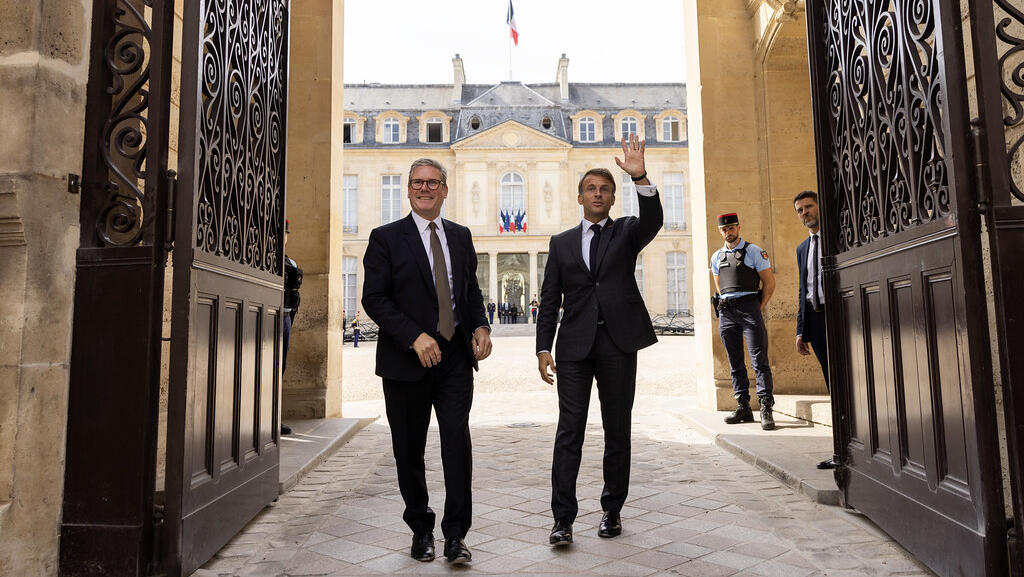
It seems like the initiative has been revived in recent weeks, according to the agency. Especially after Keir Starmer's visit to France on November 11.
Last week, French Foreign Minister Jean-Noel Barrot told the BBC not to draw red lines in their support for Ukraine. Nevertheless, he said they don't rule out sending Western troops to the country.
Macron had previously suggested sending NATO troops to help Ukraine, which sparked a wide discussion among allies.
French officials later clarified it wasn't about participating in combat operations, but about training missions. Others, like Lithuania, Latvia, Estonia, and Canada, are willing to talk about such options.
"You and I do not know to what extent these reports correspond to reality," a Kremlin spokesman said.
"Earlier, of course, such ideas were heard from different European capitals, but various counterarguments were also voiced not in favour of this idea.
"There is no unanimity among the Europeans on this score, but, of course, some hotheads appear," he added.