Microsoft reported better-than-expected quarterly earnings and revenue, but its shares fell around 4.8% in extended trading after the company posted a modest slowdown in cloud growth and flagged heavy capital spending linked to artificial intelligence infrastructure.
The software group said adjusted earnings per share (EPS) came in at $4.14, ahead of the $3.91 consensus forecast.
Revenue rose to $81.27 billion, topping expectations of $80.31 billion.
Despite the headline beat, the stock dropped about 5% after hours as investors focused on decelerating growth in Azure and rising investment costs.
“We are only at the beginning phases of AI diffusion and already Microsoft has built an AI business that is larger than some of our biggest franchises," said Satya Nadella, chairman and chief executive officer of Microsoft.
“We are pushing the frontier across our entire AI stack to drive new value for our customers and partners.”
“Microsoft Cloud revenue crossed $50 billion this quarter, reflecting the strong demand for our portfolio of services,” said Amy Hood, executive vice president and chief financial officer of Microsoft.
“We exceeded expectations across revenue, operating income, and earnings per share.”
Revenue increased 17% year on year in Microsoft’s fiscal second quarter, which ended on 31 December. Net income rose sharply to $38.46 billion, or $5.16 per share, compared with $24.11 billion, or $3.23 per share, a year earlier.
Adjusted figures exclude the impact of investments in OpenAI.
The company recorded $9.97 billion in other income, compared with other expenses of $2.29 billion in the same period last year.
The swing followed a restructuring at OpenAI, in which its for-profit arm became a public-benefit corporation. As Microsoft’s proportional ownership stake declined, the company recognised a dilution gain.
At the end of the quarter, commercial remaining performance obligation, a measure of contracted but unrecognised revenue, stood at $625 billion, up roughly 110%.
Microsoft attributed the surge largely to OpenAI’s $250 billion cloud commitment during the quarter, with 45% of the total tied to OpenAI.
Commercial bookings growth jumped to 230%, up from 112% in the previous quarter.
Cloud growth moderates
Meanwhile, Revenue from Azure and other cloud services grew 39%, slightly below the 40% pace recorded in the prior quarter, signalling a marginal slowdown in the company’s key growth engine.
The Intelligent Cloud segment, which includes Azure, generated $32.91 billion in revenue, up nearly 29%.
Microsoft’s Productivity and Business Processes division delivered $34.12 billion in revenue, an increase of about 16% and above the $33.48 billion consensus. The unit includes Office, Dynamics and LinkedIn.
By contrast, the More Personal Computing segment - spanning Windows, Xbox, Surface and Bing - posted revenue of $14.25 billion, down around 3% and below expectations of $14.38 billion.

AI spending ramps up
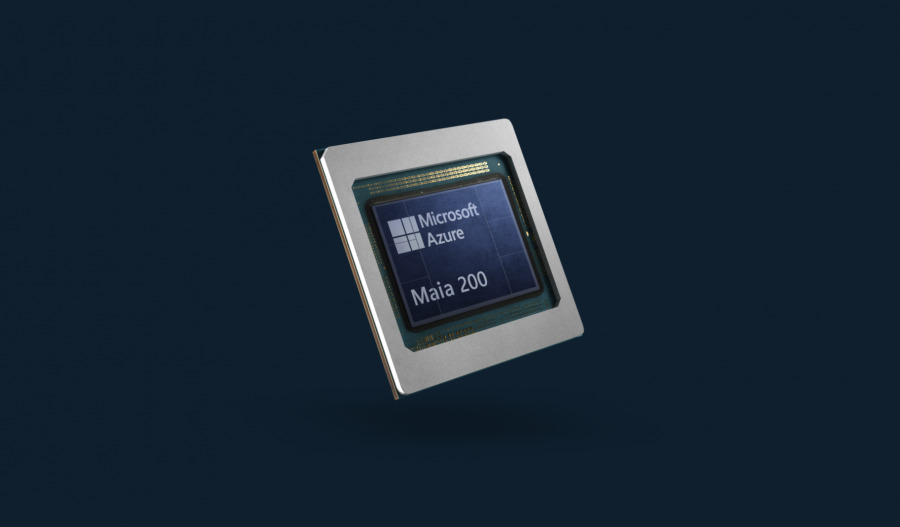
Like its major cloud peers, Microsoft is investing heavily in data centres and specialised chips to support generative AI workloads. The company also leases capacity from providers such as CoreWeave and Nebius.
Capital expenditures and finance leases totalled $37.5 billion in the quarter, up 66% and above the $34.31 billion analysts had forecast.
During the period, Microsoft announced price increases for commercial Office subscriptions.
Separately, AI firm Anthropic unveiled plans to purchase $30 billion in cloud services from Microsoft and contract up to a gigawatt of additional computing capacity.
Over the past three months, Microsoft shares have declined about 11%, underperforming the S&P 500, which has risen roughly 1%.
Investors continue to weigh whether the rapid rise of generative AI could disrupt traditional software revenue streams even as it drives demand for cloud infrastructure.
Executives are scheduled to discuss the results and provide forward guidance on a conference call with analysts beginning at 5:30 pm ET (9:30 pm GMT).
Microsoft (NASDAQ: MSFT) shares closed 0.2% higher at $481.63 on Wednesday (Thursday AEDT), capitalising the company at $3.58 trillion, before falling 4.9% to $457.97 in after-hours trading.