

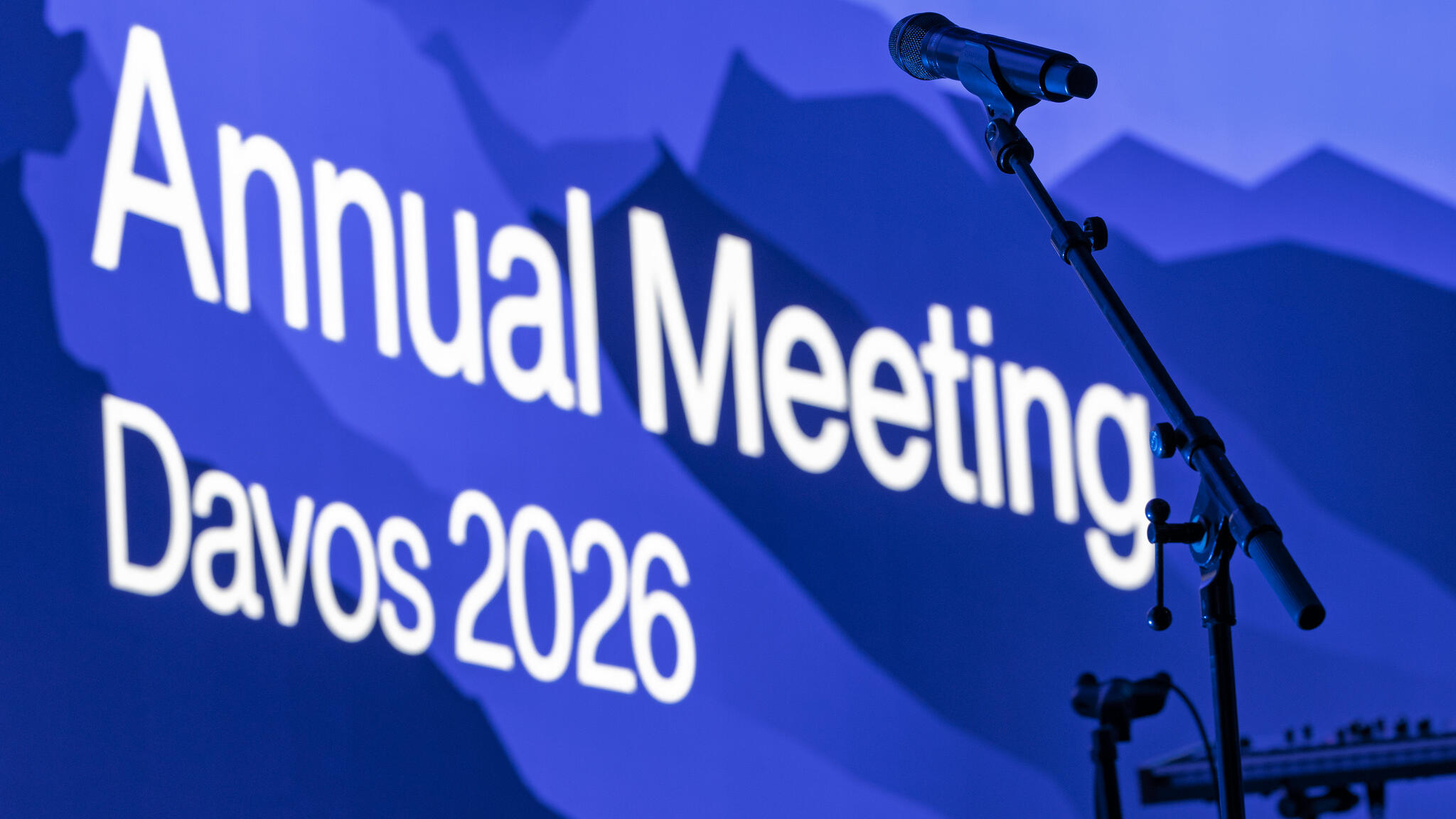
Corporate leaders and government officials from around the world are descending on Davos, Switzerland this week for the World Economic Forum’s annual meeting, as concerns over inequality, geopolitical tension and a shifting global order loom large over the elite gathering.
United States President Donald Trump is set to attend in person for the first time since 2020, arriving with what organisers describe as the largest U.S. delegation ever.
His presence is expected to dominate proceedings at an event that promotes dialogue and economic progress, even as critics point to widening wealth gaps and growing unease among the public.
The four-day forum, which opens Tuesday, is hosted by the World Economic Forum under the theme “A spirit of dialogue” and its longstanding motto of “improving the state of the world".
One of the central questions hanging over the meeting is whether Trump will speak with attendees — or at them.
High-profile attendees include JPMorgan CEO Jamie Dimon, Ukrainian President Volodymyr Zelenskyy and Nvidia CEO Jensen Huang, who is making his Davos debut.
Organisers say close to 3,000 cross-sector leaders are expected, including a record 400 political leaders, 850 chief executives and around 100 tech pioneers.
However, the list of absentees is also drawing attention. Chinese President Xi Jinping is not attending, nor are the leaders of Brazil or India.
Danish government representatives have opted out amid an escalating dispute over Greenland, following Trump’s recent threat to impose tariffs on European nations resisting his attempt to annex the Arctic island.
“Any decisions on attendance are a matter for the government concerned. We can confirm that the Danish government will not be represented in Davos this week,” a WEF spokesperson said.
Trump’s return to Davos comes at a time when U.S. allies are unsettled by his America First agenda, including his ambitions over Greenland, efforts to gain access to Venezuela’s oil, and confrontational tactics toward Federal Reserve Chair Jerome Powell.

His peace initiatives, including a forthcoming announcement on a “Board of Peace”, are also expected to feature in discussions.
“It’s really going to be a discussion at a very important moment ... geopolitics is changing,” said Mirek Dušek, a WEF managing director responsible for programming.
“Some people think we’re in a transition. Some people think we’ve already entered a new era. But I think it’s undeniable that you are seeing a more competitive, more contested landscape.”
China and the European Union are set to take centre stage early in the event, with EU Commission President Ursula von der Leyen scheduled to speak on Tuesday morning, followed by Chinese Vice Premier He Lifeng, described by Dušek as China’s “economic czar”.
This year’s forum will proceed without its founder, Klaus Schwab, who stepped down in April after 55 years. The event is now overseen by new co-chairs Larry Fink of BlackRock and Andre Hoffman of Roche.
Beyond geopolitics, inequality and trust in institutions are emerging as dominant themes. Edelman’s latest Trust Barometer, based on surveys of nearly 34,000 people across 28 countries, found trade and recession fears at record highs and a growing sense of “insularity”.
“People are retreating from dialogue and compromise, choosing the safety of the familiar over the perceived risk of change,” said Edelman CEO Richard Edelman. “We favour nationalism over global connection and individual gain over joint progress. Our mentality has shifted from ‘we’ to ‘me’.”
Oxfam, meanwhile, released a report ahead of the meeting showing billionaire wealth rose by more than 16% last year to over US$18 trillion (A$26.84 trillion), three times faster than the five-year average.
The advocacy group said the $2.5 trillion increase alone would be enough to eradicate extreme poverty 26 times over, while nearly half of the world’s population continues to live in poverty.
The organisation criticised what it described as a “pro-billionaire agenda” under the Trump administration, pointing to tax cuts for the wealthy, booming AI-related stocks and resistance to higher corporate taxes.
Oxfam is calling for higher taxes on the ultra-rich and stronger measures to curb their influence on policymaking.
