
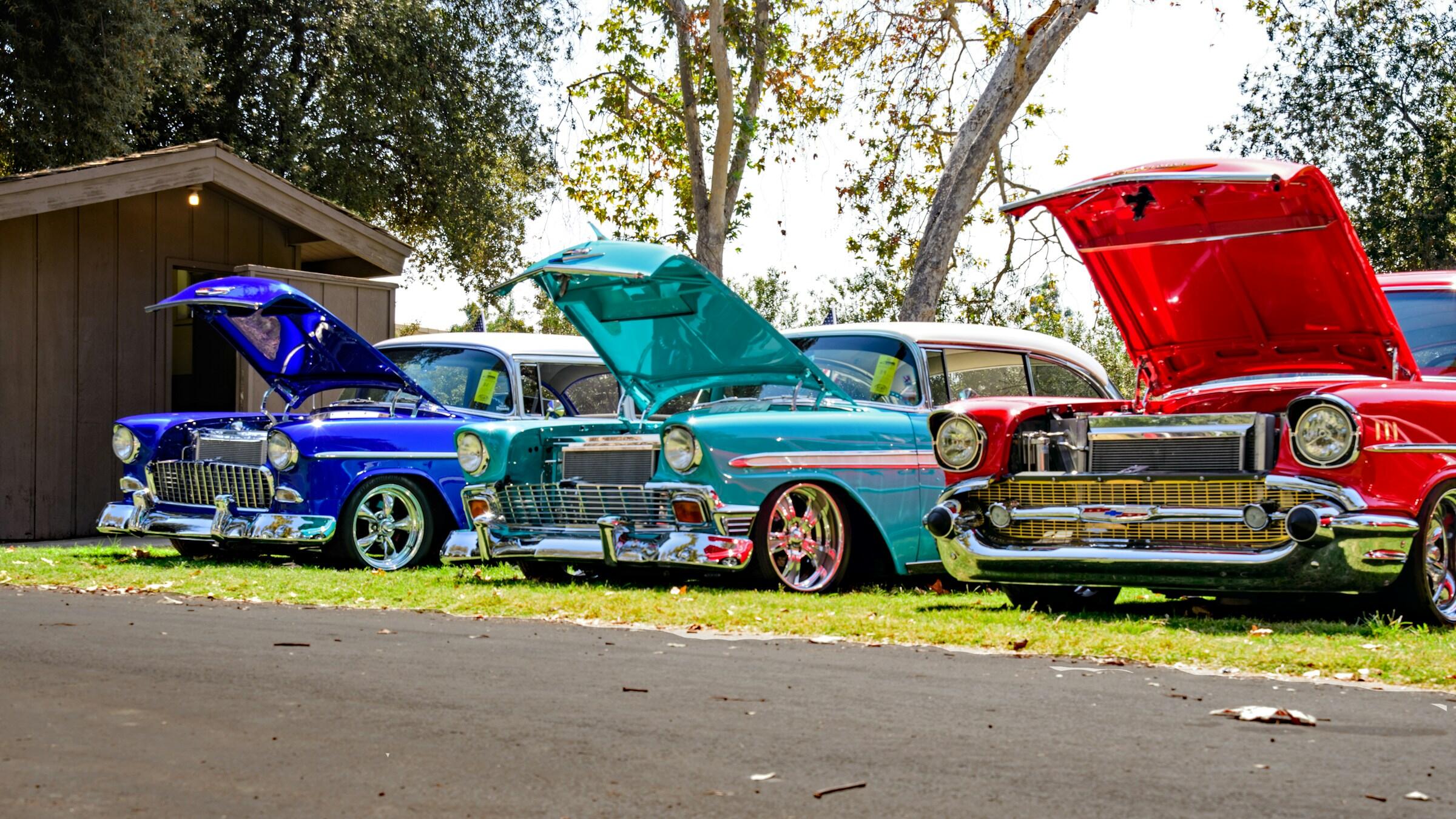
Despite major declines in the stock market due to the war in Iran, global collectors still spent more than US$600 million on classic cars and fine art, signalling strength at the top of the economy.
Last week, London art sales were up over 50% from last year, topping $550 million, according to Sotheby’s, Christie’s and Phillips auction houses.
Some works sold for more than double their estimates, and records were set for several artists with bids pouring in from 40 countries.
The Broad Arrow Auctions hosted its most successful auction ever at the Amelia Island Concours in Florida last week, which totalled $111 million.
The sale included a $15 million 2003 Ferrari Enzo and a $6.7 million 2005 Porsche Carrera GT and followed a strong auction a week earlier by RM Sotheby’s at ModaMiami that reached $74 million.
These strong sales come as consumer volatility picks up and oil markets surge amid the war in the Middle East.
The Strait of Hormuz, where around 20% of global oil flows through, continues to be closed due to the ongoing conflict, causing crude oil to surge over $100 per barrel.
However, experts said the global turmoil may have helped demand for rare collectibles as the wealthy search for safe long-term investments in an increasingly uncertain world.
“It’s surprising, yet not surprising,” said Drew Watson, head of art services at Bank of America.
“It’s surprising with all that’s going on geopolitically. But when times are uncertain, and I think we’re in a broader era of uncertainty, people go with the tried and true.”
The strong prices follow a rapid decline in collectibles over the past year.
In 2023 and 2024, art auction totals fell 40% from their 2022 totals, despite soaring stock markets and falling interest rates.
President Donald Trump’s tariff announcement in April last year only added to pessimism in the collectibles market.

Despite this, collectibles sprang back to life.
Last August, the classic car auctions at Monterey and Pebble Beach reached their second-highest total ever of $430 million.
The next month, a Sotheby’s sale in London of the collection of British socialite Pauline Karpidas fetched $135 million, soaring past its estimate. The strength continued in Paris and the big New York sales in November, followed by big crowds at Art Basel Miami in December.
Broad Arrow president Kenneth Ahn said the current era of classic collectors differs dramatically from those of the past.
In the past, buyers were mainly baby boomers and were highly sensitive to market swings and economic cycles.
There are more Gen X, millennial and even Gen Z buyers stepping into the market.
These younger collectors are buying from a wider range of collectibles, including sneakers, handbags, Pokémon cards and sports memorabilia.
However, they are also beginning to step into the art and car markets and adding to the buyers' pool.
“I do think we’re very much in the middle of a generational transition,” Watson said.
“We have seen a lot of the collectors who have driven the postwar and contemporary market over the past couple of decades starting to age out. And we have the rising generational cohort moving in. ”
Sotheby's lead auctioneer Oliver Barker said buyers are more likely to bid on works by famous artists rather than more speculative works by younger artists.
“It’s a perfect moment where there is a greater supply of great material, and there is also an extraordinarily hungry buyer class,” Barker said.
“We’re seeing not only the depth of bidding that we’ve not experienced recently, but a much, much deeper depth of quality material.”
The extra spending on collectibles also comes as America’s wealthiest 1% saw their wealth nearly double since 2020, to over $55 trillion, according to the Federal Reserve. Analysts believe the increased activity in the collectibles market is expected to continue.