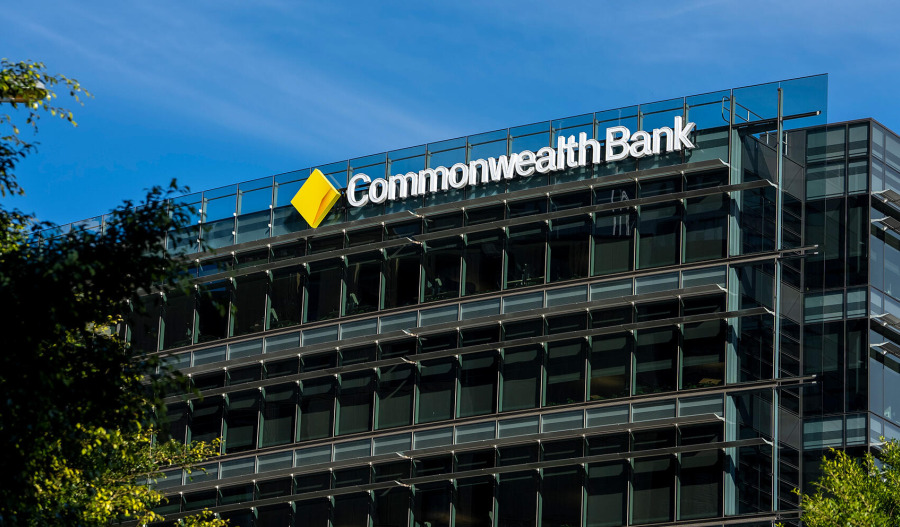

Commonwealth Bank of Australia (ASX: CBA) may well be Australia’s most valuable brand, according to data from Brand Finance, but the country's largest listed stock is seriously on the nose with investors and there’s no sign of this changing any time soon.
Given the bank’s weighting on the ASX200 index - accounting for a whopping 10% by market cap – it’s easy to conclude why brokers struggle to see the main Board of the Australian bourse delivering similar mouthwatering returns as last year.
What the market doesn’t like about CBA is the glaring gap between its high valuation - which has afforded it the moniker the world's most expensive bank - and its earnings.
This explains why the consensus on Commbank is Strong Sell, and there are currently no Buy recommendations from the majority of analysts.
The banking giant has enjoyed ‘share market darling’ status since enjoying a stellar run up from a low of around $53 early March 2020 to a peak of around $192 early June last year.
However, since then, the bank has bounced around 21% lower and is currently down 4.8% in the last month.
While the CBA share price is down around 5% in the last year – 8.3% lower in CY26 so far - its global peers are up on average around 7.59% over the same time frame.
Given that CBA continues to trade on a current price-to-book (P/B) ratio of between 3.27x and 3.92x, with a P/E ratio of 26.68 – a significant premium to its historical average and its major Australian and global peers – the stock appears highly susceptible to further falls.
By comparison, Westpac Banking Corp (ASX: WBC) trades at a P/E of approximately 19.64, National Australian Bank Ltd (ASX: NAB) at around 19.20, and ANZ Group Holdings Ltd (ASX: ANZ) at about 18.67.
With a consensus target price of $117.30 – based on the six brokers that cover the stock on FNArena – the share price appears to have downside risk of 20%.
The trouble with CBA is that with the golden years of growth now seemingly behind it, the last few ‘ho hum’ market updates offer little for the market to get too excited about.
But to be fair, none of CBA’s big-four peers are considered high-growth tech plays either.
Sadly, while CBA, along with the other three Big Four banks, remain intrinsically good businesses, they’re now regarded as plodders rather than trailblazers.
By all accounts, CBA's net interest margin (NIM) – often regarded as the lifeblood of bank profitability - has struggled in recent years.
Overall, CBA’s NIM has fluctuated over the last three financial years (FY2023-FY2025), initially rising significantly in FY23 before declining in FY24 due to competition, and then stabilising with a slight increase in FY25.
While analysts clearly regard CBA's dominance in home lending as one of its long-term strengths, they question whether the capital in bank stocks is working hard enough relative to other sectors offering better growth, value or income.
Based on TradingView data, 13 out of 15 analysts have a sell or strong sell rating on CBA shares.
The average 12-month target price is $124.90 a piece, which implies a 19% drop at the time of writing.
The average 12-month target price [of these 15 analysts] is $124.90 a share, which implies a 17% drop at the time of writing.
For the full year FY25, CBA delivered cash net profit after tax (NPAT) of $10.3 billion, earnings per share (EPS) of $6.12, a return on equity of 13.5%, and a full-year dividend of $4.85 – fully franked – alongside an extended share buyback.
The net interest margin held steady at 2.08%, and the loan impairment expense fell, aided by stable home loan arrears and a still-low unemployment rate.
The home loan book expanded 6% to $600 billion, while business lending grew 11% to $161 billion.
The market’s reaction to the result was brutal, with the share price down 5% on the day.
When asked to explain their reaction, analysts and traders pointed to the absence of an earnings upgrade, the prospect of net interest margin (NIM) pressure from deposit competition and rising operating costs.
Fast forward to January FY26, and not much has changed.
While the outlook for ASX-listed banks in 2026 is broadly stable, there are earnings headwinds, primarily due to expected interest rate cuts from the Reserve Bank of Australia and ongoing competition for loans and deposits.
This pressure is expected to impact net interest margins (NIMs), slowing earnings per share (EPS) growth across most major banks.

This article does not constitute financial or product advice. You should consider independent advice before making financial decisions.