Australian shares closed marginally lower on Tuesday, with losses in energy stocks offsetting gains in rate-sensitive sectors, as investors monitored developments in the Middle East ahead of a key ceasefire deadline between the United States and Iran.
The S&P/ASX 200 fell 3.90 points, or 0.04%, to 8,949.4, with six of the 11 sectors finishing higher in a choppy session.
Oil prices eased slightly in Asian trade, with Brent crude down 0.5% to around US$95 per barrel, as market focus shifted to whether Washington and Tehran can resume negotiations in Pakistan following an initial round of talks in Islamabad that ended without agreement.
The energy sector was the weakest performer on the index. Woodside Energy fell 1.8%, while Santos declined 1.5%.
Healthcare stocks were also under pressure, with major names including CSL dipped 0.3%, Sonic Healthcare lost 0.9%, ResMed fell 0.8%, and Pro Medicus finished 1.8% lower.
The big four banks closed out the session in a mixed fashion, with Commonwealth Bank down 0.3%, National Australia Bank up 0.5%, Westpac gaining 0.6%, and ANZ declining 1.7%.
Rate-sensitive sectors outperformed, with technology stocks such as WiseTech Global adding 0.2%, and Xero posting gains of 1%.

Real estate investment trusts edged higher, with Goodman Group up 0.7%, and Charter Hall lifting 0.4%.
The Consumer Staples sector also finished higher, with Coles and Woolworths gaining 0.7% and 0.9%, respectively.
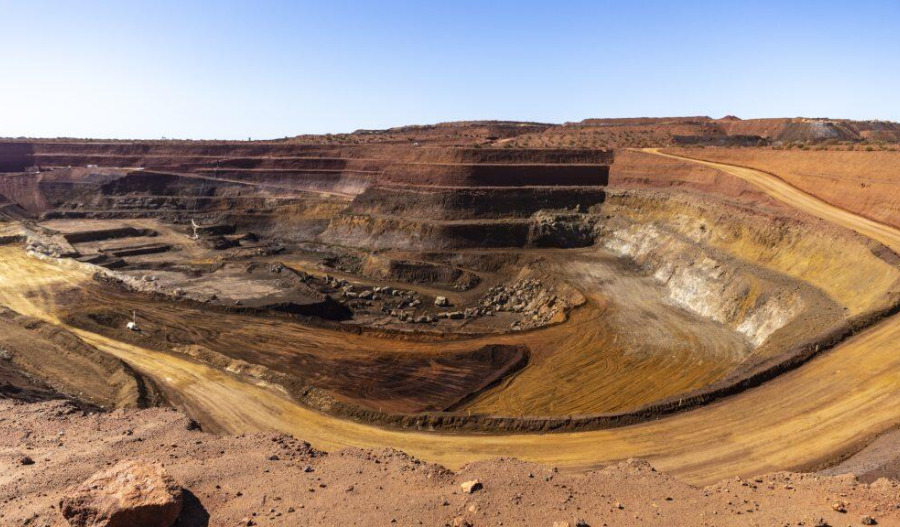
Among individual names, Rio Tinto rose 0.8% after reporting copper production that exceeded expectations by 4% to 6%, while iron ore output remained resilient despite cyclone disruptions during the March quarter.
Lynas Rare Earths fell 2.1% despite reporting gross sales revenue of $265 million for the March quarter, up 115% year-on-year and marking its highest quarterly revenue since 2022.
Management attributed the strong result to a 25% increase in the average neodymium-praseodymium (NdPr) selling price and higher rare earth sales volumes.
HUB24 dropped 7.8% as March quarter net inflows missed market expectations despite rising 9% on the previous corresponding period, amid weaker gross inflows, a one-off institutional withdrawal and more negative market movements than anticipated.
On the bond markets, Australian government bond yields declined, with the 10-year yield falling 0.4% to 4.913% and the 2-year yield easing 0.3% to 4.584%.