Asia-Pacific markets began the week on a mixed note, with most indices advancing despite renewed diplomatic setbacks between the United States and Iran, while elevated oil prices reflected ongoing geopolitical tensions.
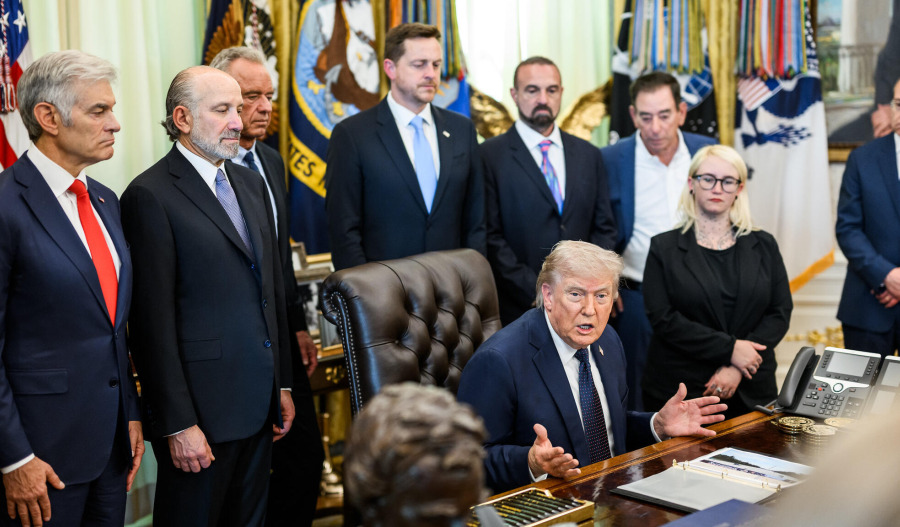
Investor sentiment remained relatively resilient even after U.S. President Donald Trump cancelled plans to send envoys to Pakistan for negotiations with Iran.
“Too much time wasted on traveling, too much work! Besides which, there is tremendous infighting and confusion within their ‘leadership’,” Trump wrote in a post on Truth Social.
Crude prices rose sharply following the collapse of plans for a second round of peace talks. Brent crude futures climbed 1.7% to US$100.81 per barrel, while U.S. crude rose 1.7% to $95.98.
Tensions remain elevated around the strategically critical Strait of Hormuz after reports that Iran’s Revolutionary Guard boarded two cargo ships near the vital maritime route.

By 11:20 am AEST (1:20 am GMT), the S&P/ASX 200 declined 0.6%, diverging from gains across North Asia. Japan’s Nikkei 225 rose 0.9% to a fresh record high, while South Korea’s KOSPI 200 gained 1.6%, also reaching new highs.
The mixed regional performance followed a similarly uneven session on Wall Street, where the Dow Jones Industrial Average slipped 0.2%, while the S&P 500 and Nasdaq Composite rose 0.8% and 1.6%, respectively, both closing at record levels.
Commodity markets were volatile at the end of last week. Brent crude fell 5.7% on Friday to $99.13 per barrel, while spot gold edged up 0.3% to $4,707.41 per ounce.
In mainland China, the SSE Composite Index declined 0.3% to 4,079.9, and the CSI 300 dropped 0.4% to 4,769.4.
Hong Kong’s Hang Seng Index added 0.2% to close at 25,978.1, while India’s BSE Sensex fell 1.3% to 76,664.2.
European markets ended lower on Friday, with the UK’s FTSE 100 down 0.8% at 10,379.1. Germany’s DAX slipped 0.1% to 24,129.0, and France’s CAC 40 fell 0.8% to 8,157.8.