
Asia-Pacific markets opened in negative territory on Tuesday as the conflict in Iran entered its fourth day, dampening investor sentiment across the region.
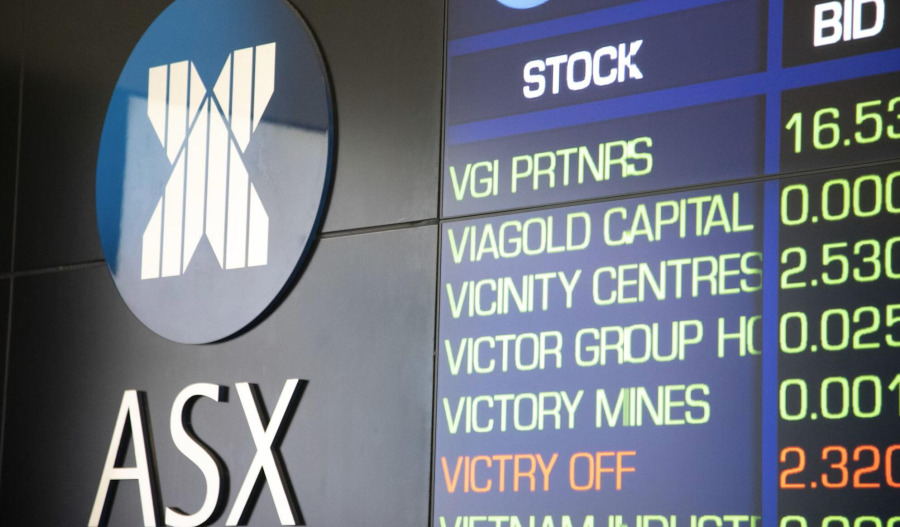
By 11.40 am AEDT (12.40 am GMT), Australia’s S&P/ASX 200 was down 0.8%, Japan’s Nikkei 225 had shed 0.8%, and South Korea’s KOSPI 200 was 1.3% lower.
Among data releases, South Korea's latest S&P Global manufacturing PMI was little changed at 51.1, compared with 51.2 in the previous month, indicating continued expansion in factory activity.
The report noted: “Firms reported stronger output growth amid a solid uptick in new order volumes. Manufacturers often cited a strengthening semiconductor sector, boosting sales to both domestic and external clients, while also influencing purchasing decisions during February.
"That said, company restructuring and the non-replacement of resigning employees contributed to the steepest fall in headcounts since September 2020.”
In Japan, the unemployment rate rose to 2.7%, slightly above expectations of 2.6%, signalling a modest softening in labour market conditions despite ongoing economic recovery efforts.
Data from the Australian Bureau of Statistics showed Australia’s current account balance fell by $2.8 billion in the December quarter 2025, in seasonally adjusted terms, to a deficit of $21.1 billion.
Jonathon Khoo, ABS head of international statistics, said: “The current account balance recorded its second consecutive fall, as the net primary income deficit widened by $2.5 billion.”
The wider primary income deficit reflected a $1.6 billion rise in income paid to overseas investors, driven by stronger dividends from Australian firms, alongside a $0.9 billion decline in income earned from Australian investments abroad.

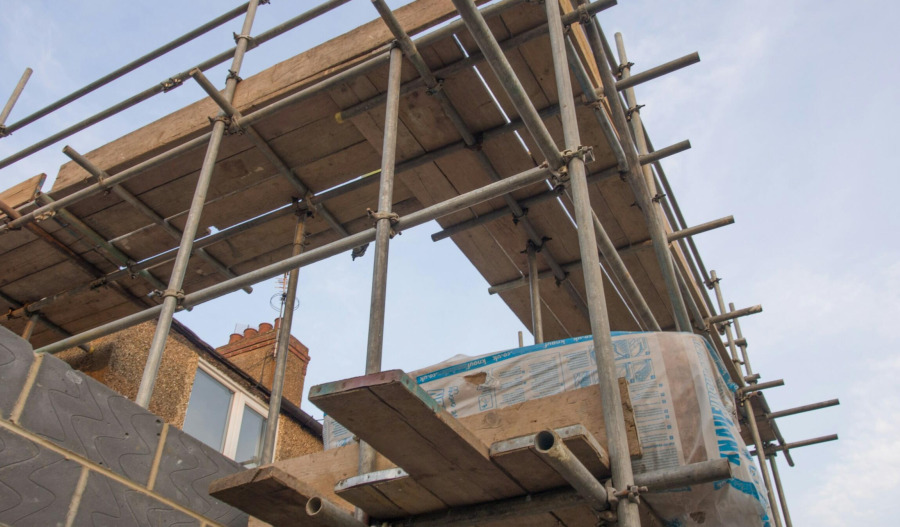
In a separate release, the ABS reported that total dwellings approved fell 7.2% in January to 14,564.
Daniel Rossi, ABS head of construction statistics, said: “The drop in total dwellings approved was driven by a 24.5 per cent fall in private dwellings excluding houses.
“This is the second consecutive fall in private dwellings excluding houses, following a 30.7 per cent drop in December.”
The cautious tone followed mixed closes on Wall Street overnight, where the Dow Jones Industrial Average slipped 0.2%, while the S&P 500 edged up 0.04% and the Nasdaq Composite gained 0.4%.
Commodity markets remained volatile. Brent crude rallied 6.7% to US$77.74 per barrel on Monday as investors weighed the risk of supply disruption stemming from the escalating Iran conflict.
Spot gold settled 0.8% higher at US$5,321.94 per ounce.
In China, the SSE Composite Index gained 0.5% to close near an 11-year high of 4,182.6, while the CSI 300 rose 0.4% to 4,728.7.
Hong Kong’s Hang Seng Index fell 2.1% to 26,059.9, and India’s BSE Sensex declined 1.3% to 80,238.9.
European markets also finished lower on Monday. The FTSE 100 lost 1.2% to 10,780.1, Germany’s DAX dropped 2.6% to 24,638.0, and France’s CAC 40 fell 2.2% to 8,394.3.