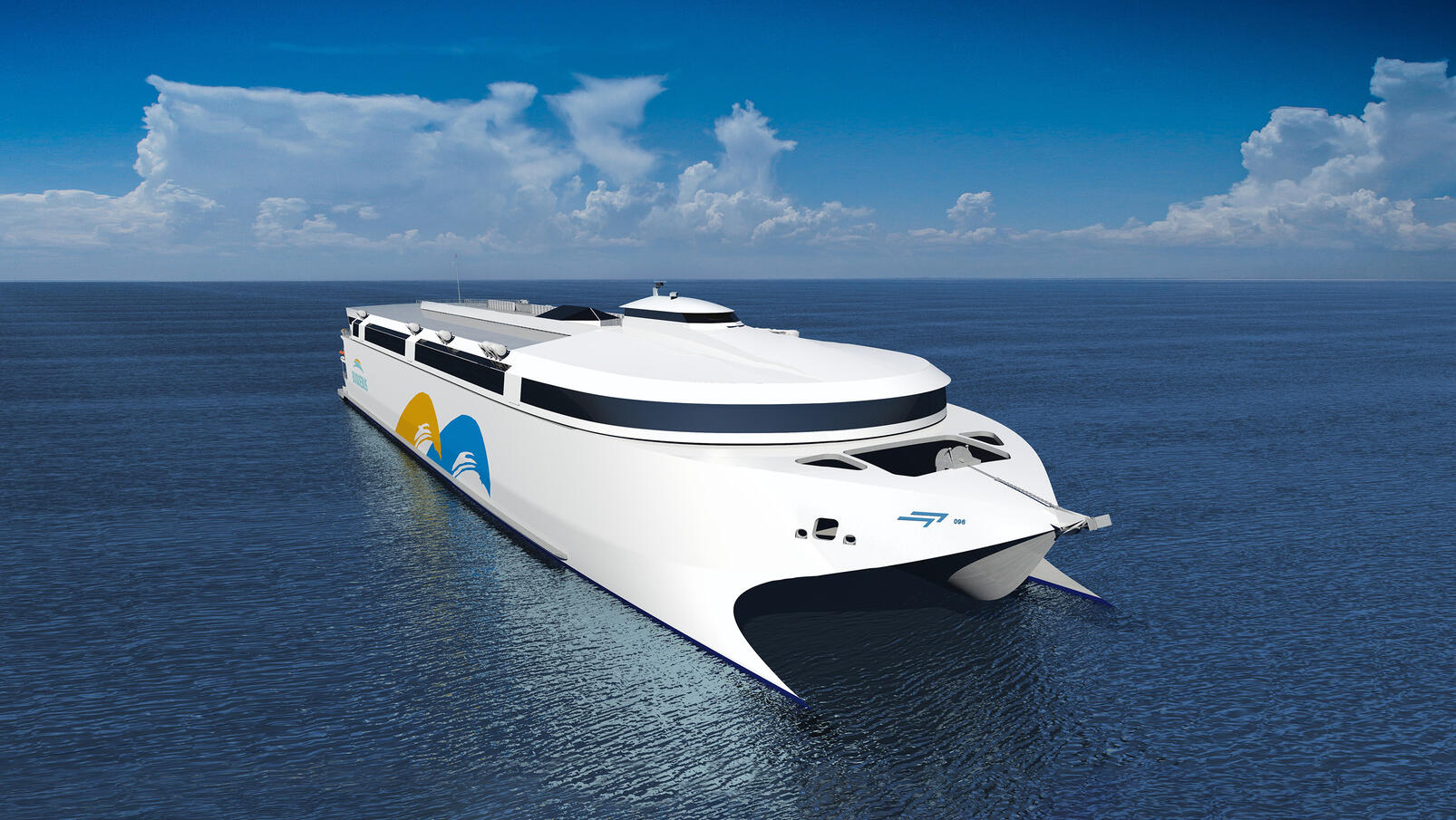
Tasmania has achieved a historic milestone in maritime manufacturing with the launch of the world’s largest battery-electric ship, Hull 096, at Derwent Park.
Built by Incat, a leading Tasmanian shipbuilder, the vessel is set to operate on the River Plate in South America, marking a significant advancement in sustainable maritime transport.
Premier Jeremy Rockliff praised Incat’s innovation and craftsmanship, emphasising that the project positions Tasmania as a global leader in zero-emission technology.
Hull 096 represents a breakthrough in clean energy shipping, equipped with over 250 tonnes of batteries and an energy storage system exceeding 40 megawatt-hours — four times larger than any previous maritime installation.
The vessel will be powered entirely by electricity, carrying up to 2,100 passengers and 225 vehicles at speeds of up to 25 knots per hour. Charging stations will be installed at its ports in Argentina and Uruguay, with a full charge expected to take 40 minutes.

The Tasmanian government has played a crucial role in supporting this project, providing a $60 million low-interest commercial loan through the Tasmanian Development Board.
Premier Rockliff highlighted that Incat’s achievement strengthens Tasmania’s reputation for advanced manufacturing and maritime innovation. The shipbuilder has a long-standing partnership with South American ferry operator Buquebus, which commissioned Hull 096 to enhance its fleet’s sustainability.
Beyond its environmental impact, Hull 096 is expected to boost Tasmania’s economy by strengthening its shipbuilding sector and creating jobs.
The vessel’s construction showcases the state’s ability to deliver world-class engineering solutions, further solidifying its position in the global maritime industry. Incat Chairman Robert Clifford described the project as the most ambitious and complex in the company’s history, underscoring its significance for the future of electric shipping.
As the global shipping industry moves toward decarbonisation, Hull 096 sets a precedent for large-scale battery-electric vessels. Investors and industry leaders will closely watch its performance, as it could pave the way for further advancements in sustainable maritime transport.
With Tasmania at the forefront of this transition, the successful deployment of Hull 096 may influence future investments in clean energy infrastructure worldwide.